Category Archives: technology

On online trust, reputation, satire and misquotation on Twitter and beyond

The issue of online trust deeply resonates with me. People can and do lose jobs or opportunities because of social media. I do not find intentional misquotes of someone, particularly any journalist or government official, funny. It’s happened a couple of times to me recently, so I thought I’d offer some personal reflections on why I asked those who did so not to change my updates or to substitute words I never used.

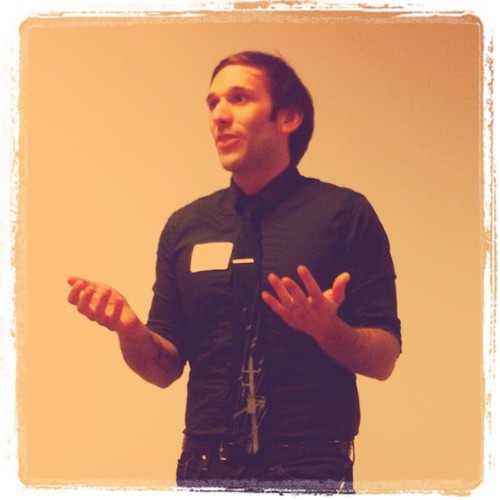
Andy Carvin talks with Jeff Jarvis

Andy Carvin talks with Jeff Jarvis at the 2011 SXSWi Twitter Retreat

1) The size of someone’s following is irrelevant. One tweet to 100 can easily be picked up globally. Context that one person has is also irrelevant to the choice, because the update can be quickly shorn of its origin.

2) I’ve heard that I shouldn’t ask others not to intentionally misquote me because it will “hurt public engagement” or diminish the interest of others in amplifying my signal. I accept that it could affect “engagement” with those I challenge. I prefer to correct the record, especially while history’s rough draft is still being written, to protect my reputation against a misinterpretation of something I never said than that abstraction.

3) With respect to tone, I don’t believe that asking someone politely, directly, to please retract or correct a update is unduly “harsh.” Similarly, I don’t think that objecting to someone else changing my words without indicating that alteration is insulting. In either case, I can also choose to share my request more broadly with an entire audience or use stronger language, though neither is my first or second recourse.

4) Whenever I have asked others to respect the integrity of my writing, whether it’s in 140 characters or 140 paragraphs, I stand by that choice. I’ve been making it for many years and will continue to do so. I’ve reviewed those decisions against the advice of journalism professors and open government advocates and am now in a relatively good position to make a judgment myself, often in a short period of time. It’s quite straightforward to natively RT someone without changing any text, or to share words on Facebook, Tumblr or Twitter.

5) I don’t see my presences here, on Facebook or Twitter as simply “personal accounts,” as I use them all professionally. I don’t see them as 100% professional, either, since my words any of them do not represent the official views of my employer unless they are shared on corporate accounts. My own accounts also travel with me between positions. Certainly, updates sent to family and friends via circles or closed groups are at least expected to be treated differently, though there’s no guarantor of it, aside from trust in the recipients. Over time, some number of people have chosen to regard me as a trusted source in those contexts. That’s a series of relationships that I’ve built carefully on several platforms over many years, with a great deal of time and attention built to accuracy and focus upon what matters.

6) With respect to scope, If anyone thinks his or her own “personal account” couldn’t inadvertently do damage to that reputation with a joke that went viral, I believe that they are very much mistaken. Here’s a Twitter-specific reference: The decision to place different weight on tweets @attributed to me is based on my history, reputation and trust, along with years of accumulated algorithmic authority. When someone tweets “RT @user: quote,” it indicates to everyone who reads it that the named @user wrote the tweet. To date, I haven’t seen those kinds of issues on Google Plus. Regardless, if someone keeps doing that after being asked politely to stop, the next step is to expose them and then, failing changed behavior, block them.

7) Satire is absolutely approved on social networks, including satiric impersonation. (Ask Rahm Emanuel!). If someone sends out a satirical tweet, update or ‘plus’ that “quotes” me, another writer or a public figure with a goofy picture, it wouldn’t be out of tune with what the Borowitz Report or @MayorEmanuel do. That’s fair game, like SNL skits. Updates that imply actual words (like RT @user”fake quote”) are not, at least in my book.

Are fake updates “allowed?” Governments, corporations, and all kinds of other agents put them up. I think we’ll see more of it. Someone can lie or obfuscate of they want — I think it’s increasingly difficult to do so, though it will continue to happen, particularly in conflict zones. The role of editors and journalists on these networks — and open government advocates or technologist — is to sift the truth from the fiction.

8 ) With respect to whether social media is used differently by journalists, whether different rules apply or whether there are “formal rules” applied to it, I’ve seen enough policies emerge to know that the same standards that apply to those employed by media organizations that distribute journalism on television, public radio or print magazines.

I’ve seen a lot of thought given to the issue of trust and its relationship to media using social networks, particularly by big journalism institutions and those that work for them. This isn’t about rhetoric: it’s about created trusted relationships online over time, where authority and truth aren’t simply stamped by a masthead by given by networks of friends, followers, colleagues and networks. The idea that you don’t need a reputation to succeed, at least as a writer of non-fiction, strikes me as patently false. Trust and reputation is why your pitch is accepted, why you are hired or retained, followed or unfollowed, feted or fired.

When journalists really get things wrong, they can lose trust, reputation and, in some cases, their jobs. And yes, that can include satire gone wrong. My point tonight was to recognize that the professional and the personal have crossed over on these networks.

What I say or what is incorrectly said on my behalf can and does have significant offline effects. In other words, it’s more than a personal problem, and it’s one that you can expect me to defend against now and in the future.

Leave a comment

Filed under blogging, journalism, social bookmarking, social media, technology, Twitter

Thank you, Steve Jobs

The world has lost one of the rarest of men: someone who not only thought differently but helped create objects that opened all of our eyes too. Tonight, the Associated Press reported that Apple co-founder Steve Jobs had passed away. A letter from Apple’s board went online. And then apple.com changed to an iconic, arresting new image. Steve Jobs

Wired.com went black. Google.com linked to apple.com.

Social networks worldwide lit up with tweets and updates about the death of Steve Jobs.

And, at least for a night, the Web itself felt united in its grief.

Jobs told us “how to live before you die” in a 2005 commencement speech at Stanford University.

“Your time is limited, so don’t waste it living someone else’s life. Don’t be trapped by dogma — which is living with the results of other people’s thinking. Don’t let the noise of others’ opinions drown out your own inner voice. And most important, have the courage to follow your heart and intuition. They somehow already know what you truly want to become. Everything else is secondary.”

While I listened to the speech, I ventured onto a Web absolutely ablaze with sadness, memories, elegies, celebrations and eulogies to Jobs. Following are a few of the voices and perspectives I found.

“Michelle and I are saddened to learn of the passing of Steve Jobs. Steve was among the greatest of American innovators – brave enough to think differently, bold enough to believe he could change the world, and talented enough to do it.

By building one of the planet’s most successful companies from his garage, he exemplified the spirit of American ingenuity. By making computers personal and putting the internet in our pockets, he made the information revolution not only accessible, but intuitive and fun. And by turning his talents to storytelling, he has brought joy to millions of children and grownups alike. Steve was fond of saying that he lived every day like it was his last. Because he did, he transformed our lives, redefined entire industries, and achieved one of the rarest feats in human history: he changed the way each of us sees the world.

The world has lost a visionary. And there may be no greater tribute to Steve’s success than the fact that much of the world learned of his passing on a device he invented. Michelle and I send our thoughts and prayers to Steve’s wife Laurene, his family, and all those who loved him.”-President Obama.

“Jobs proved the appeal of well-designed intuitive products over the sheer power of tech itself”-Wall Street Journal

Apple transformed “not only product categories … but also entire industries”-John Markoff

“Bill Gates put a computer on every desk. Steve Jobs put one in every pocket, purse, dorm room and bedroom.”-New York Times

“He completely changed how we interact with technology”-Wired

“The world rarely sees someone who has had the profound impact Steve has had, the effects of which will be felt for many generations to come. For those of us lucky enough to get to work with him, it’s been an insanely great honor. I will miss Steve immensely.”-Bill Gates

“Steve Jobs saw the future and brought it to life long before most people could even see the horizon”-Mike Bloomberg

Steve Jobs “realized what we wanted before we understood it ourselves”-Ted Anthony

Jobs’ career merged the ’60s and Silicon Valley “in a way that re-imagined business itself”-Steven Jay Levy. “Steve Jobs’ reality field actually came into being. And we all live in it.”

Think back: “There’s about to be a new delivery vehicle in higher education in America”-Steve Jobs, 1987, C-SPAN.

“May the uncompromising vision of Steve Jobs live on, inspiring others, making them reach further, do better.”-Tim O’Reilly

“The people who are crazy enough to think they can change the world are the ones who do”-Gizmodo

“His ambitions took him, and us, to extraordinary places”-Harry McCracken

Steve Jobs “brought together art, humanities and tech: he was one of a kind”-Laura Sydell

Walt Mossberg wrote about “The Steve Jobs I Knew.”

“Yesterday, I lived on a world with a Steve Jobs in it. Tonight, I don’t.”-Andy Ihnatko

“Every generation has its heroes.”-Om Malik

Jobs embodied “a glorious piece of what it is to be American with all our contradictions”-Alexis Madrigal

Steve Jobs said “don’t let the noise of others’ opinions drown out your own inner voice.” I won’t.

He gave us inspiration to write our own melodies, to insist on hearing the songs in our heads voiced to the world, whether that vision was wrought in gleaming glass and aluminum, drawn in fanciful pixels or published, echoing Gutenberg’s first revolution.

Thinking back, my first computer was an Apple II+. In 1985, I wrote a story on it. In 1995, I made my first Web site on a Mac. In 2011, I share my world on an iPhone. 27 years later, I’m making my living on a Macbook Pro and tapping on an iPad.

Thank you, Steve Jobs.

2 Comments

Filed under art, personal, technology, video

William Gibson on writing, science fiction and digital panopticons in the 21st century [VIDEO]

Almost exactly this time last year, I went to see a book reading by William Gibson, one of the greatest science fiction writers of our time.

After he did a reading from his most recent novel, Zero History, he answered questions from the audience at Politics and Prose, a wonderful independent bookstore in Cleveland Park in Washington, D.C.

Appropriately, given that I filmed the questions and answers and subsequently uploaded the videos to YouTube, one of the questions posed to Gibson was about living in a digital panopticon. BoingBoing recently published an excellent interview with Gibson, if you’d like his most recent thoughts on our historical moment.

On Digital Panopticons in the 21st Century

On Writing

On Academia

On Characterizations and Numbers

On Entrepreneurs and Business Models

On Narrative Structure and Genre

3 Comments

Filed under art, scifi, technology, video

The Web is what we make of it

I saw a Google Chrome commercial twice tonight that struck a chord with me. The extended version, embedded below, has been online since May.

On the one hand, it’s a slick ad for a search engine giant’s Web browser that features a glowing treatment of a megacelebrity and her happy fans.

On the other, it’s a view into a changed world that still feels very much of the moment, months after its debut. It reminded me that the Internet has fundamentally changed how we can directly connect with the people who inspire us and on another.

There’s something both deeply joyful and poignant seeing Lady Gaga’s fans dance and sing along with her to that particular song.

On a night where I also saw so much pain, anger, fear, cruelty and misunderstanding flow over the same global electronic network of networks, it felt good to be reminded of how much more connected we can be. If we choose, we can reach out and connect to hundreds of other millions of humans, who are both different and fundamentally the same, looking at a growing mobile Web of billions of screens, small, medium and large.

We can see, share and celebrate the best of human nature in real-time or mourn, censor and condemn that which is worst in us. We go online and find ourselves, for good or ill, and leave a Web that is what we make of it.

Every time we log on, we have an opportunity to change how we think or connect with someone else around this pale blue dot.

Thank you for sharing that journey and teaching me something new, every day.

4 Comments

Filed under art, friends, music, personal, social media, technology, video

Can we still quit Facebook?

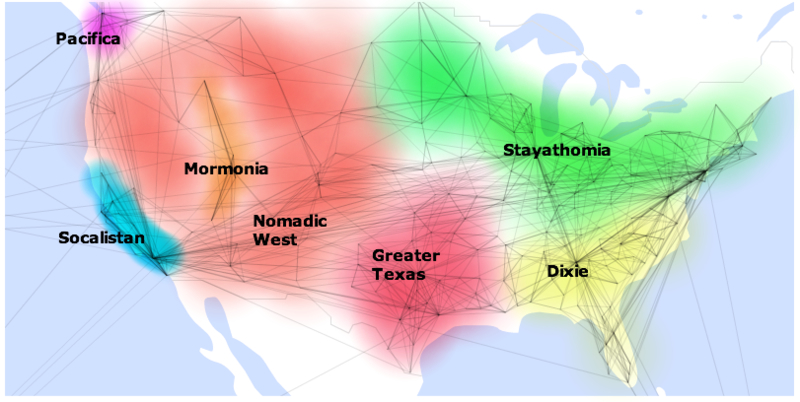
"How to split up the US" by Pete Warden

I’ve been thinking a lot about an essay I wrote last year on the failure of Quit Facebook Day. It was one of the most popular articles I’ve ever published on my personal blog. I think the piece holds up well, given the passage of time, and given recent changes at Facebook, it may become relevant again.

Over at Mashable, Christina Warren writes that “You won’t quit Facebook” in a new op-ed. (Side note: Mashable is a media partner for Facebook’s social news reader. I was surprised that neither Warren nor her editor disclosed that in her op-ed and will leave it to Micah Sifry to ask whether Facebook’s media partners can cover it objectively.)

I’m not so sure of Warren’s larger point. Comments there suggest a few Mashable readers have left, which is minimum an interesting data point, given the rather social audience we know visits the site. BrianBoyer left tonight and livetweeted his exit, linking to a post on “why logging out isn’t enough for partial explanation.

As a news application developer – a so-called “hacker journalist” – Boyer has a different relationship with technology than many members of the media and public. He makes the platforms and works at a newspaper company that sells ads against them. He’s commented on journalists using Facebook before and now has acted on his convictions.

Whether many others follow, I think, will depend upon whether there are substantive harms to users that result from the changes that are subsequently publicized by print and broadcast media, changing the perceived risk around usage. When whether anyone in the social journalism group would quit Facebook (closed group), the overwhelming answer was: no. That’s not surprising from that particular cadre of the media, of course. There’s a vibrant discussion around this post over at my first draft on Google Plus where others feel differently. (The convergence of Google and online privacy deserves its own post, which I have written elsewhere.)

I’m not predicting that will happen but I can foresee several different scenarios where unexpected sharing of reading or socializing behavior could have consequences to work, employment, education or relationships. @Mat Buchanon of Gizmodo explored the new Facebook integration more eloquently than I and at some length here:

There are significant benefits to be gained from social sharing, as my publisher Tim O’Reilly has outlined at Radar and in his talks. I have enjoyed many of them, given my frequent user of social media, and expect to continue to do so, with care.

That said, I do not want to have all of my actions online shared, nor would I wish those of marginalized segments of society to be made public if it endangered their safety.

I’ve talked with senior executives at Facebook several times, including its CTO and chief security officer and chief privacy officer. My sense remains that they all want to do the right thing by the people on their network, providing them with better tools to share information, keep them safe and give them better privacy controls… although the persistent cookies that remain upon logout pose an issue on the latter counts.

All that said, I can’t help but wonder if these changes will tilt the balance for more users. We’ll learn more over the coming months.

Caveat Lector

If you use Facebook, you need to read this New York Times article on new changes and think carefully about how much of your activity online you want to share here publicly.

From reading to listening to watching to buying, anything connected to Facebook will be tracked, logged and added to the growing body of information about your life online.

As with so many other aspects of our lives, we all owe it to ourselves to be educated about our digital choices.

Digital privacy is about much more than Facebook

To be clear: while Facebook is the biggest social network on the planet, with some 800 million users that spend more time on it than any other site, the issue of digital privacy is much larger, as anyone who has read the Wall Street Journal’s “What do They Know?” series or followed the issues knows well.

I covered all of last year’s FTC privacy hearings and was reminded of just how broad and deep the issue of digital privacy runs. New online privacy frameworks are lagging far behind industries that are crunching unprecedented amounts of data to try to target and personalize everything we buy, read, eat or watch. Location-based services have new bearing on online privacy. Last year, online privacy debates heated up in Washington. Expect more of the same.

2 Comments

Filed under blogging, journalism, social media, technology

New digital journalism tools and platforms to connect, present and inspire

“It doesn’t have to be like this,” said Alexis Madrigal. “You don’t have to write bad stuff to get people to come to a website”
Tonight at the August meeting of the Online News Association in D.C., +Madrigal shared several of the tools that he’s been experimenting with to connect with his audience and rethink the way he shares information in his work as senior editor at the Atlantic Monthly.

You can find his digital journalism at www.theatlantic.com/alexis-madrigal and on Twitter at @alexismadrigal.

I’ve been reading his book on green energy, “Powering the Dream,” over the past few months. It’s excellent. Alexis also co-founded longshot magazine and wrote for Wired for years.

Given that context, when he talks about the digital tools that he’s using for work and the new applications or platforms that he’s experimenting with online these days, I paid attention. Here’s the breakdown of some of the tools he shared tonight.

First, Google Forms. Alexis described them as “frictionless, easy to set up, and then pull into spreadsheet. He referenced Amanda Michel‘s work using them in her crowdsourcing work at ProPublica.

Second, SoundCloud. That was a new one to me. Time to experiment.

Third, Twitter. This one was not new to me. Alexis said Twitter worked very well for Longshot. He did, however, say “the retweet is dying.” There’s an issue of splitting the incentive model, between “native” vs “manual” RTs, and tracking. Alexis said that he’s noticed all around that retweeting is way down, which has made Twitter less effective.

So, off to explore new places.

One such platform is Tumblr. The problem, said Madrigal, is that Tumblr has its own ecosystem. (I agree with this.) There’s no natural move over from another social media platform, he said, and that sad fact is that you have to put in the same damn work, and then see what moves. On that count, they’ve brought in curator to the Atlantic video channel who’s deeply immersed in the culture but it’s still challenging.

Another new destination is Google Plus. Alexis likes Plus conceptually, given how it allows back and forth, but doesn’t know exactly what he’s going to do with it yet. Alexis said he has largely left Facebook and streamlined his social media use. His Google Plus use went way up during the first couple of days and then leveled out. Now he needs to decide what to do with it. (I know the feeling). Alexis is experimenting with “The Atlantic Tech Plus,” which he described as a behind the scenes look at what his team is working on. He’s not sure what’s next. The digest has driven little traffic to date, but Alexis feels like he “has to be here and know how it works.”

Alexis moved from tools for publishing or sharing to presentation tools. He’s interested in timed slideshows and made the analogy that they’re like “full bleed” in a magazine. He used to think they’re just a way to get pageviews but now he thinking that they’re “a way to get content horizontally. ”

Two points here: beautiful tools are awesome and people are limiting themselves in the way they think about them. In that context, Alexis wants to exploit the behavior readers exhibit in compulsive clicking through a slideshow for good. This sort of thing is “gamification,” though Alexis notes that they just ran a story “called gamification is BS.”

Given this list of of tools, I asked him about Facebook for journalism. Alexis said that he chose to keep who he is as a person vs his work separate there. He hasn’t started a Page but knows people like science writer Steve Silberman who have had “wonderful generative conversations there.”

Finally, Alexis shared two sites that are doing work that can push us to think differently about what an editorial product can be online.

DomusIT (http://domusweb.it) is an Italian art magazine website worth looking at because of its vibrant, colorful and dynamic design:

Zeega (http://zeega.org) is a next generation content management system. Zeega pushes website design to a “crazy extreme,” with HTML5 in fully full bleed experience, including video, animations. Alexis suggested that Zeega can enable a different kind of publication online, something “more magazine-y” and interesting. Less cookie cutter. He expects that this or something like it will open up a new way of telling stories.

We’ll see! I know I have some new places and platforms to explore, along with Twitter, Google, Plus and Tumblr. The lesson that Alexis drew from turntable.fm is that “feeling like the Internet is alive is awesome.” I’ll drop by tomorrow.

2 Comments

Filed under journalism, social media, technology, Twitter

Yahoo Research: 50% of tweets consumed are generated by 20,000 elite users

New research from research on Twitter found that 50% of tweets consumed are generated by 20K elite users. Based upon the more than 37,000 tweets I’ve posted over four years of tweeting, it’s a virtual lock that I’m one of them. Of particular interest was the “significant homophily” that the researchers found within categories. I’ve tried hard to escape that effect after reading Ethan Zuckerman’s post on homophily, serendipity and xenophilia nearly three years ago.

FULL PAPER: Twitter flow

Abstract:

We study several longstanding questions in media communications research, in the context of the microblogging service Twitter, regarding the production, flow, and consumption of information. To do so, we exploit a recently introduced feature of Twitter—known as Twitter lists—to distinguish between elite users, by which we mean specifically celebrities, bloggers, and representatives of media outlets and other formal organizations, and ordinary users. Based on this classification, we find a striking concentration of attention on Twitter—roughly 50% of tweets consumed are generated by just 20K elite users—where the media produces the most information, but celebrities are the most followed. We also find significant homophily within categories: celebrities listen to celebrities, while bloggers listen to bloggers etc; however, bloggers in general rebroadcast more information than the other categories. Next we re-examine the classical “two-step flow” theory of communications, finding considerable support for it on Twitter, but also some interesting differences. Third, we find that URLs broadcast by different categories of users or containing different types of content exhibit systematically different lifespans. And finally, we examine the attention paid by the different user categories to different news topics.

Leave a comment

Filed under blogging, research, social bookmarking, social media, technology

Awesome Foundation DC Launch Party warmly welcomed in District

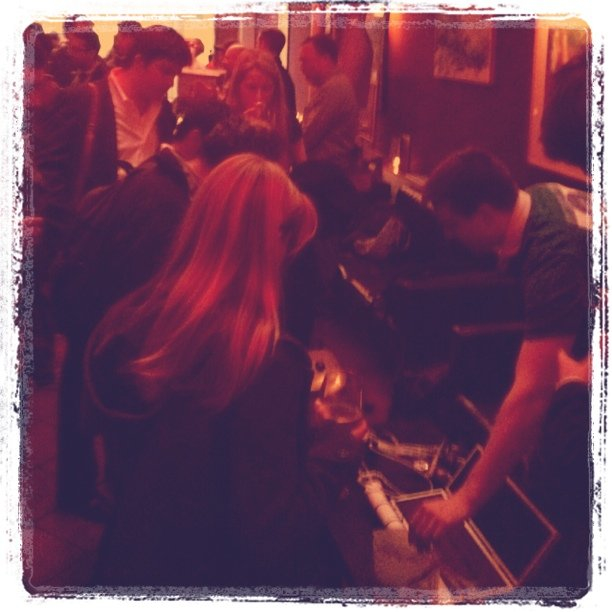
Over the past year, the Awesome Foundation has been growing globally, providing micro-grants for creative genius in multiple continents. Last night, hundreds of people bought “Tickets to Awesome” and joined the DC chapter of the Awesome Foundation at a launch party in One Lounge in Dupont Circle.

Party goers mixed and mingled with the DC chapter’s microtrustees, including this correspondent, and checked out exhibits and demonstrations from the first four recipients of awesome grants. DC FabLab, Ward 8, Petworth and Counterpoint were in attendance for awards ceremony. Bonnie Shaw (@Bon_Zai), DC’s “Dean of Awesome,” gave a brief speech at the launch party ceremony:

Curious folks also checked out exhibits from My Dream of Jeanne, ExAparatus and ScrapAction, donating to the projects they liked the most using the awesome tokens that came with their tickets. Counterpoint even performed upstairs in front of a packed lounge.

You can follow the Awesome Foundation DC on Twitter for updates on new grants, performances, installations and other awesome events at @AFdnDC.

2 Comments

Filed under art, article, education, friends, journalism, music, photography, social media, technology, video

Smarter social networking at SMCDC

Tonight, I’ll be moderating a discussion at Porter Novelli DC about what “smarter social networking” means.

Fortunately, posing questions to this particular set of panelists will be much more easier than trying to herd LOLcats.

Some time shortly after 7 PM EST, I’ll start asking Frank Gruber (@FrankGruber), CEO & co-founder of TechCocktail, Shana Glickfield (@dcconcierge), partner at Beekeeper Group, and Shonali Burke (@shonali), principal at Shonali Burke Consulting, what “smarter social networking” means in 2011. We’ll be talking about forming relationships and acting professionally in the context of the Internet. I might even ask about what good “netiquette” means.

I expect to see Federal News Radio Chris anchor Chris Dorobek (@cdorobek) to be there in person to heckle me online, along with the rest of one of the more connected group of people in the District of Columbia. The DC Social Media Club, after all, comes heavily loaded with BlackBerrys, iPhones, iPads and Android devices. Some will even have two of those devices – one official, one not, and will be wired into Facebook, Twitter, email and txt messaging.

This is clearly a group of people that has thought a lot about how to practice “smarter social networking.” As prepared for the discussion last night, I was reminded that the actions that humans take online increasingly are aligned what they do offline.

That’s because the idea of a separate “cyberspace” is on life support. That’s was one conclusion that Clay Shirky brought to a discussion of the recent report by the Pew Internet and Life Project on the social side of the Internet at the State of the Net Conference.

In wired communities, people are increasingly integrating their online lives with their offline actions. As that trend grows with more of humanity coming online, the role of the Internet as a platform for collective action increases. The world has seen some of that power at work in Tunisia and Egypt this winter.

Those connections are not always strongly made, due to the anonymity sections of the Web of 2011 provide. You only have to look at the quality of civil discourse between commentary on YouTube or newspaper comment threads without moderation to see how anonymity can enable the id of humanity to wash over a page. Teachers, freedom fighters, activists, law enforcement, aid workers, insurgents, journalists or criminals can and will use the Internet for different ends. When any tool is put to ugly or evil use, naturally it provokes outrage, concern, regulation or outright bans.

As Stowe Boyd wrote this weekend in his essay on cognition and the Web, however, “throwing away the web because you don’t like what you see is like breaking a mirror because you don’t like your own reflection. It is us we are staring at in that mirror, on the web: and it is us looking out, too.”It is us we are staring at in that mirror, on the web: and it is us looking out, too.”

In this age of radical transparency, it’s becoming harder and harder to hide to hide demonstrated bad character over time. That’s even more true of people who choose to live their lives more publicly on Facebook, Twitter, Foursquare and where ever else there digital nomadism leads them next.

This isn’t an entirely happy development, as the number of citations of social networking in divorce filings suggest. By the end of the next decade, more people may well be paying money to assure their privacy than to gain more publicity.

In that context, “smarter social networking” in an age of digital transparency may well rely more on good character, better business ethics and placing value in building trusted relationships than faster wireless broadband, the newest smartphone or millions of followers or fans.

3 Comments

Filed under article, blogging, friends, personal, social media, technology, Twitter, Uncategorized

Your Twitter journalism is so phat that _____

Today, spurred by a (rather absurd) debate about whether Twitter is journalism, Brian Solis asked whether tweets are recognized as acts of journalism, and as such, regarded as bona fide journalism. That’s a much better question. As of yet, unfortunately, no media law expert has sprung to answer it in the comments for his post.

Del Harvey Somebody else did answer the question on Twitter, albeit substituting snark for substance: @delbius, also known as Del Harvey, the head of Twitter’s Trust & @Safety team.

Her reply, below, set off one of the funniest exchanges I’ve ever had in more than 3 years of tweeting.

Del: Not gonna lie, read that Tweet and what sprang to mind was “Your mom’s an act of journalism.”

Alex: Your journalism is an act of Mom! Or to put it another way, your journalism is so fat, it had to create a @yearly account.

Del: My journalism is phat, thank you.

Alex: Ok, I’ll play. Your journalism is so phat, it can only be published in 140 characters or more.

Del: Your journalism is so phat that it uses the full title of weblog.

Alex: Your micro journalism is so phat that you have to make the Twitter display widgets auto-width.

Del: Your journalism is so phat your lede takes up a paragraph.

Alex: Your journalism is so phat that the IEEE had to create a new standard data format for your letters.

Del: Your journalism is so phat that your angle is obtuse.

Alex: Your journalism is so phat that you have to use deck.ly to share what your officemate ate for lunch.

Del: Your journalism is so phat your informant was Mrs. Fields.

Alex: Your zombie journalism is so phat that your editor has to use liposuction to find where you buried the lede.

Del: Your journalism is so phat you’re below the *second* fold.

Alex: Your journalism is so phat that your readers are directed by their physicians to go on Lipitor after reading it.

Del: Your journalism is so phat your b-roll had butter on it. (wince @ self)

Alex: Your journalism is so phat that newly elected Congressmen are considering a vote to defund it.

Del: Your journalism is so phat your jump cut is a jiggle cut.

Alex: Your journalism is so phat that you had to get 5000 TB SATA drives to be the scratch disks for your video editing.

Del: Your journalism is so phat your POV pieces are for two people at once.

Alex: Your journalism is so phat that your hyperlinks are coated in myelin.

Alex: Your journalism is so phat that @cjoh had to start running marathons to stay on his information diet.

If you have more reasons your journalism is phat, please add them in the comments.

11 Comments

Filed under blogging, journalism, social media, technology, Twitter