CDT, EFF, CEA, PK, Others Criticize ACTA Copyright Treaty Draft Language

On March 22, a collection of tech advocates, non-profits and associations opposed to the proposed Anti-Counterfeiting Trade Agreement (ACTA) wrote a letter (embedded below) to Ron Kirk, head of the Office of the U.S. Trade Representative, criticizing the reported draft language of the ACTA.

The lack of transparency around ACTA copyright treaty negotiations has received increased scrutiny from both the media and anti-censorship advocates as provisions have leaked online. Earlier this month, the European Parliament passed a resolution by a 663-13 vote calling for the European Commission, the European Union’s regulatory arm, to release a public draft of the ACTA agreement. President Obama signaled his support for the ACTA copyright treaty at a conference in DC on March 12th. New Zealand is now pushing for greater ACTA transparency as well.

This letter states that “details of the text of the proposed ACTA, and comments and proposals of national participants have apparently but unofficially been made public”. See, for example, this EU document,  a working document from the EU Secretariat, document[PDF], and document.

This letter states that “this negotiation is not primarily about counterfeiting or piracy; nor is at all about trade law. The public rationale that the treaty would not impinge on domestic law has been placed in doubt — particularly when one considers whose domestic law would be endangered.”

On this count, the letter states that the “text reveals detailed substantive attention to … The extent to which principles of inducement, newly introduced by the U.S. Supreme Court in the Grokster case, are to be accepted as supporting a separate basis for copyright liability or are a gloss on existing principles of contributory and vicarious infringement. This is not yet clear even in the United States.”

Some of this ground was covered by Supreme Court’s in June 26, 2005, MGM v. Grokster.a More detail on that case may be found in  “Supreme Court Rules in MGM v. Grokster” in TechLawJournal.  a

The letter regarding ACTA transparency also states that the “text reveals detailed substantive attention to … How technological measure anti-circumvention provisions are to be interpreted and applied, whether they will apply to access to works, whether they are to be limited to circumventions for infringing purposes, and whether account will be taken of the variations in national law, practice, and context, such as U.S. adherence to fair use and the imposition of levies under other national law.”

The signers of this letter include:

Canadian law professor Michael Geist’s ACTA coverage has been instrumental to providing details to the global community of the treaty. As he wrote yesterday:

The leak of the full consolidated ACTA text will provide anyone interested in the treaty with plenty to work with for the next few weeks.  While several chapters have already been leaked and discussed (see posts on the Internet and Civil Enforcement chapters, the definitional chapter, the institutional arrangements chapter, and international coooperation chapter), the consolidated chapter provides a clear indication of how the negotiations have altered earlier proposals (see this post for links to the early leaks) as well as the first look at several other ACTA elements.

Nate Anderson over at Ars Technica also wrote an update on the current status of the ACTA copyright treaty earlier this week. As Mike Masnick blogged at TechDirt, “EU Negotiators Insist That ACTA Will Move Forward And There’s Nothing To Worry About.” Further, as Masnick points out, ACTA is set to cover intellectual property, not just copyrights or trademarks, referring to a post at KEI which features leaked draft document of ACTA.


Leave a comment

Filed under technology

Tech Term of the Week: Location-based service (LBS) bacn

Over the past year, I’ve grown increasingly frustrated by the prevalence of notifications about mayorships and badges on Foursquare or finds on Gowalla.

During the SXSW festival, it grew monumentally worse.

As location-based services (LBS) like Foursquare and Gowalla have picked up users over the past year, many of them have chosen to share their activity on Twitter.

I have a term for that sort of notification, pushed towards followers: “LBS bacn.

I define LBS bacn as default notifications from location-based services that are autoposted to social networks.

In my view,  LBS bacn adds bits and bytes of “datafat” to otherwise useful lifestreams. For those who aren’t familiar with this porktacular digital slang, Wikipedia defines bacn as:

email which has been subscribed to and is therefore not unsolicited, but is often unread by the recipient for a long period of time, if at all. Bacn has been described as ’email you want but not right now.'”

According to WhatIs.com’s definition for bacn,

“The term was coined in August 2007 at Podcamp Pittsburgh, a social media “unconference” attended by bloggers and podcasters. The term “bacn” was chosen because of its similarity to spam. Both are popular pork products and both can fill up your inbox pretty quickly. The term “ham,” by way of contrast, is sometimes used to refer to email that a user wants to both receive and read right away.”

Some of Foursquare, Gowalla, BrightKite or other location-based service post can be useful or entertaining. After all, a location is a relevant response to Twitter’s original question: “What are you doing?” After all, it’s not so far off as an answer to the new question, “What’s happening?” either.

Annotated locations are even interesting, in most cases. One of the best check-ins of that sort pushed to Twitter came from Amy Senger, who tweeted:

“Skilling v the U.S. (@ Supreme Court of the United States) http://4sq.com/6HSdgV

But LBS bacn, at least to me on Twitter, is not. As ever, with Twitter everyone’s approach will be different. And if LBS bacn gets too much from a given source, it’s much easier to stop reading it then to give up bacon in the real world: you can just unfollow the bacnator. I don’t hate the idea of a location-based services, or the people that use them,  although location-based services do raise online privacy concerns. Everyone will can — and will — use Twitter differently, so don’t please take this as me telling anyone what to do.

I’m just as tired of reading LBS bacn as I am of notifications from Facebook or updates that I have new friends on Friendster. No, Seriously.

/rant

Leave a comment

Filed under application, social media, technology, Twitter

Google shuts down Google.cn, adds censorship dashboard | #GoogleCn

Last night, Google shut down its China search engine, Google.cn. Visitors to Google.cn are now redirected to Google’s Chinese-language service based in Hong Kong, Google.com.hk.

Google has now set up a censorship dashboard for Google services in China that shows which services are blocked.

As Ron Deibert of CitizenLab tweeted, “It’s no ONI report, nor Herdict, but interesting anyway.”

In a statement posted to Google’s official blog, David Drummond explained the new approach to China. Google had previously announced on January 12 that it would no longer stand by a 2006 deal with the Chinese government after it was the target of hacker attacks that it attributed to China.

“CDT applauds Google for following through on its commitment to protect human rights and for its continued effort to enable China’s people with unfiltered access to robust sources of information from all over the world,” said Leslie Harris, President and CEO of the Center for Democracy & Technolog.

“Whether the Chinese people will be able to take advantage of Google search now rests squarely with the Chinese government. If China allows access to unfiltered search, it will be a substantial win for global Internet freedom and for the Chinese people. If China blocks access, it will finally make clear to the Chinese people who is pulling the levers of censorship in the country.”

“It is certainly a historic moment,” said Xiao Qiang, director of the China Internet project at the University of California, Berkeley, quoted in “Google Shuts China Site in Dispute Over Censorship,” in the New York Times. “The Internet was seen as a catalyst for China being more integrated into the world. The fact that Google cannot exist in China, clearly indicates that China’s path as a rising power is going in a direction different from what the world expected and what many Chinese were hoping for.”

As the Ryan Singel reports in his post on Epicenter blog at Wired, “Google Uncensors Chinese Search Engine,” “now a search on June 4, the day of the 1989 Tiananmen massacre, returns 226 million results. Formerly that search, and thousands of other terms like it, had limited results and a notification to users that search results had been hidden due to the rules of China’s Communist government.”

Now, Chinese Internet users are braced to lose Google, as Kathryn Hille reports in the Financial Times.  Bobbie Johnson is liveblogging further developments and statements regarding the shutdown of Google’s search engine in China at the Guardian.

Rebecca McKinnon is also tweeting news and reactions from China. MacKinnon’s interview with Google’s David Drummond on Google and China is a must-read.

UPDATE: Danny Sullivan has also weighed in: “Google Stops Censoring In China, Hopes Using New Domain Meets Legal Requirements.”

Leave a comment

Filed under blogging, technology

The past and future of .com: Bill Clinton on the first Internet Presidency [#25years]

How much has the online world changed in the past quarter of a century? In the years since Synbolics.com was registered, hundreds of millions of websites have followed that first domain name. According to the VeriSign Domain Name Industry Report, at the end of 2009 there were 192 million domain name registrations across all of the Top Level Domain Names (TLDs).

Of those, .com continues to have the highest base. “The world we live in today is the most interdependent in history,” said former President Bill Clinton, speaking within the Reagan building in Washington D.C. last week at the Policy Impact Forum. “The real question is what can we do through the present state of the Internet to improve the path we’re on.”

Clinton was introduced by VeriSign president Mark McLaughlin as the “first Internet President,” a reasonable contention given the explosive growth of the online world during his terms in office. As McLaughlin pointed out, under Mr. Clinton Internet governance passed to ICANN and the first White House website. (For those interested, you can still hear Socks meow.) McLaughlin and others blogged about 25 years of .com on Facebook.

Clinton made his comments on the day that the FCC’s National Broadband Plan was released, putting the question of how connectivity, innovation and speech should be stimulated (or regulated) into clear relief. Clinton suggested that access framework proposed by the FCC might be needed.

“In America, we opted for a degulation approach in the Internet and cellphone business,” he said, “but a lot of our competitorsnow have better cell phone coverage than we do because they had some regulation to guarantee a framework of universal access.”

In the present, “I’m worried about unequal access,” Clinton said. “We devoted 870 million a year to education technology. We developed the E-Rate so that information could be more publicly shared.”

“In general, our entrepreneurial approach is the best one,” said Clinton, but “there are limits to it and sometimes we need a framework to make sure the markets can continue to grow by having more universal access. So I’m hoping the FCC proposals will do that.”

Clinton talked about how the Internet has been indispensable to the work of his foundation. He also focused on the importance of information technology to his administration.

In 1996, then-President Clinton issued Executive Order 13011 on federal information technology, which ordered the heads of all federal agencies to “refocus information technology management to support directly their strategic missions,” create agency CIOs and “cooperate in the use of information technology to improve the productivity of Federal programs.”

When the decision  came to support as a medium, said Clinton, “the Internet was either going to be to the private reserve of a few or to the positive good of all. All the decisions that came were a result of seeing in its infancy the staggering potential we see today.” Clinton also gave credit to Al Gore, who “took unmerciful abuse about a claim he never made.”

Clinton chose to highlight a proposal from President Obama and the Secretary of State for a global health initiative that will leverage information technology. “There has to be a limit to ability to wealthy countries helping poor countries by treating discrete health problems,” he said. “Sooner or later, they have to have [functioning] health systems.  In the end, you have to give people the ability to support themselves.”

When considering potential answers to that immense challenge, does the Internet have anything to do with solutions? One area where the Internet has proven its utility is enabling distributed fundraising. Clinton himself said that over half of donations made to victims of the Indonesian tsunami were made online.

In 2010, Clinton said that MassiveGood.com, could a micropayment fundraising model where every time a consumer buys a plane ticket, reserves a hotel room or rents a car, they can choose to donate a small amount to AIDS, tuberculosis, malaria or childrens’ healthcare. “None of this would be conceivable without the Internet,” said Clinton.

“We’re going to have instantaneous posting of all donations and expenditures,” he said. “That’s what we did after the tsunami, with stunning effects in reducing corruption and increasing transparency.”

Clinton took some time to talk about both healthcare, the issue of the day, and climate change, perhaps the issue of the decade. “There are four countries which signed the Kyoto protocoal,” said Clinton: Denmark, Sweden, Germany and the UK. Clinton asserted that was because of the way that they consume and produce energy. ” A wealthy country has to have a new source of jobs every 5-8 years, he said. “The only way can be distributed is through the adequate use of IT. In the years ahead, we ought to do whatever we can increase access, compress time, improve connectivity.” ABC News’ Julie Percha reported more on Clinton’s talk at the Tech Forum, focusing on his remarks on healthcare.

Clinton also issued a challenge to those in the audience that work in technology: “What is the role of IT in dealing with the capacity problems of the poor and the rigidity problems of the wealthy?

What is necessary to ensure open global access? “First of all, you can’t if nations disagree,” he said. “If they decide to control access, they have some ability to do it. Look at the role tech played at bringing to light what happened in the Iranian election.” Clinton suggested too that the audience consider the impact of cell phones in poor countries. “For every 10% increase of cellphone usage in poor countries, they gain .6% to GDP,” said Clinton, citing a recent mobile research report.

In looking back at the importance of the Internet, Clinton said that “the potential for impact has gone far beyond what I expected. On balance, it’s an instrument of freedom, not repression.”

The former President offered some insight into his use of technology during a question and answer with McLaughlin after his keynote. When asked what his three favorite websites were, Clinton chose political ones: Politico, the Huffington Post and FireDogLake. Clinton affirmed the substantive contributions that websites can make, although “don’t have to do what newspapers have to do every day,” as “some only have to have three serious articles a week.” Clinton said that he’s “worried about the ability to maintain any newspaper” in the years ahead.

Clinton also fessed up to his favorite device: an iPhone, “because I can get everything on it.” He said he tried to stay away from the BlackBerry “because I’m still obsessive,” sharing in the process that former President George H. W. Bush was “constantly doing email.”

Kara Swisher from All Things Digital was also on hand at the 25 Years of .Com Tech Impact Forum, where she moderated a panel on the future of Web technology. She recorded a video of the Q&A after the keynote that can be viewed at Boomtown, in “Bill Clinton talks about his Internet legacy.”

Leave a comment

Filed under article, blogging, technology, video

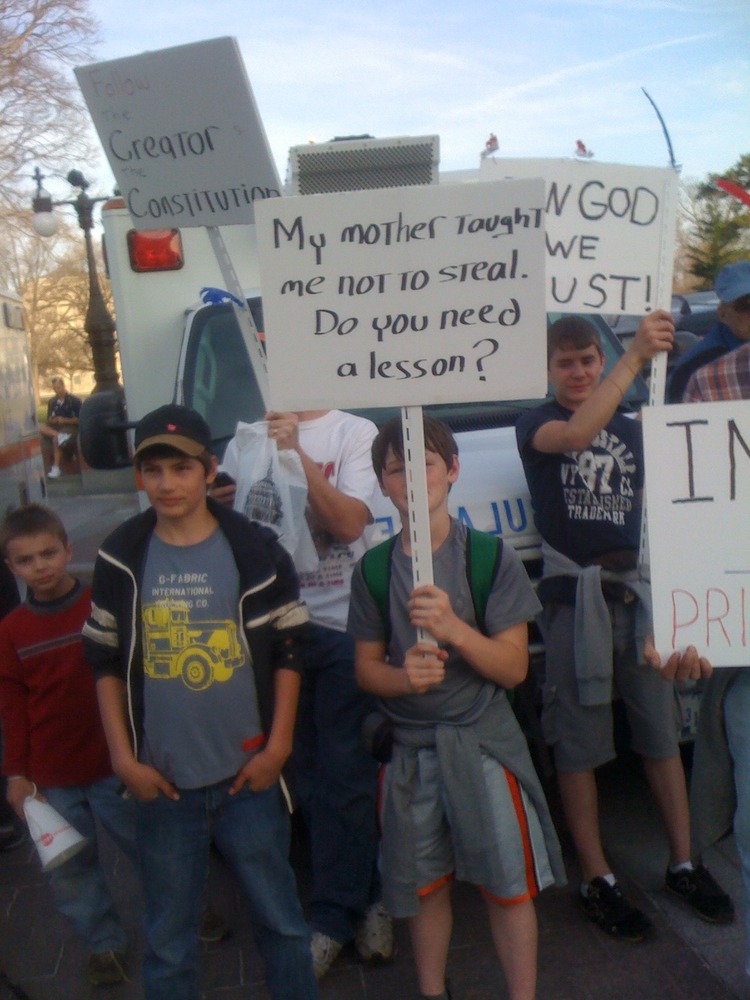
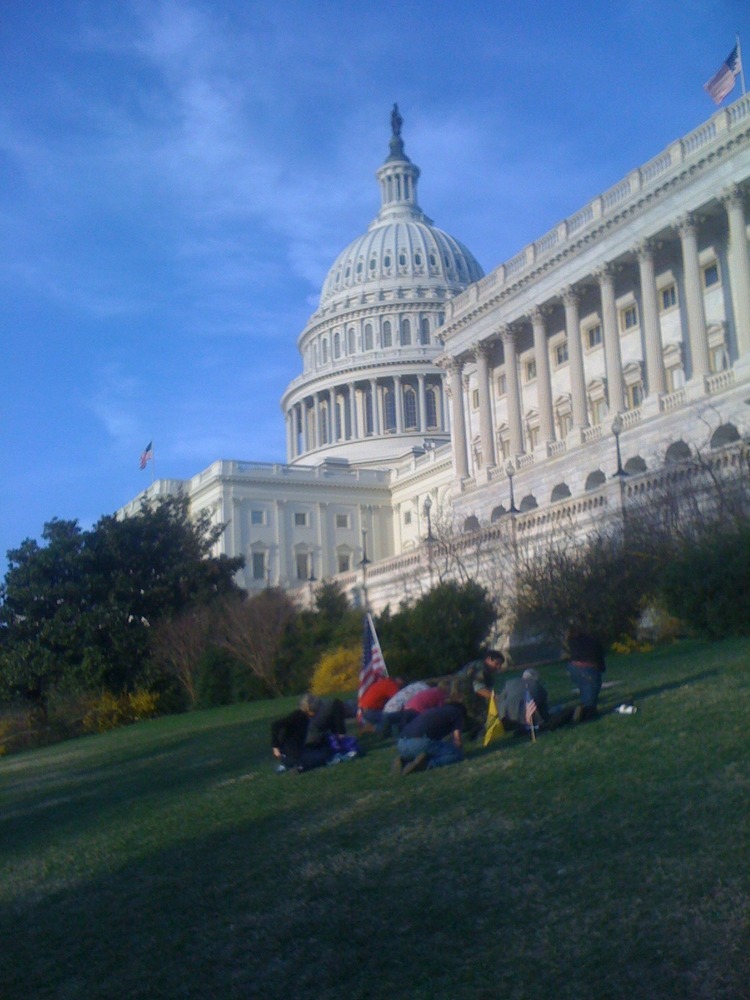
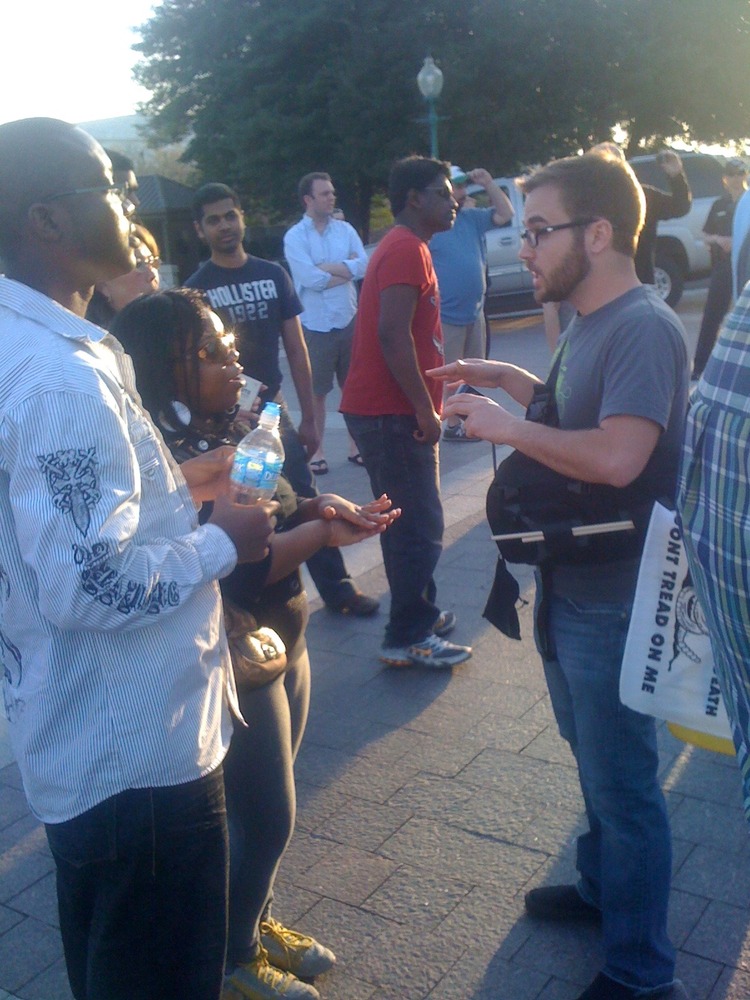
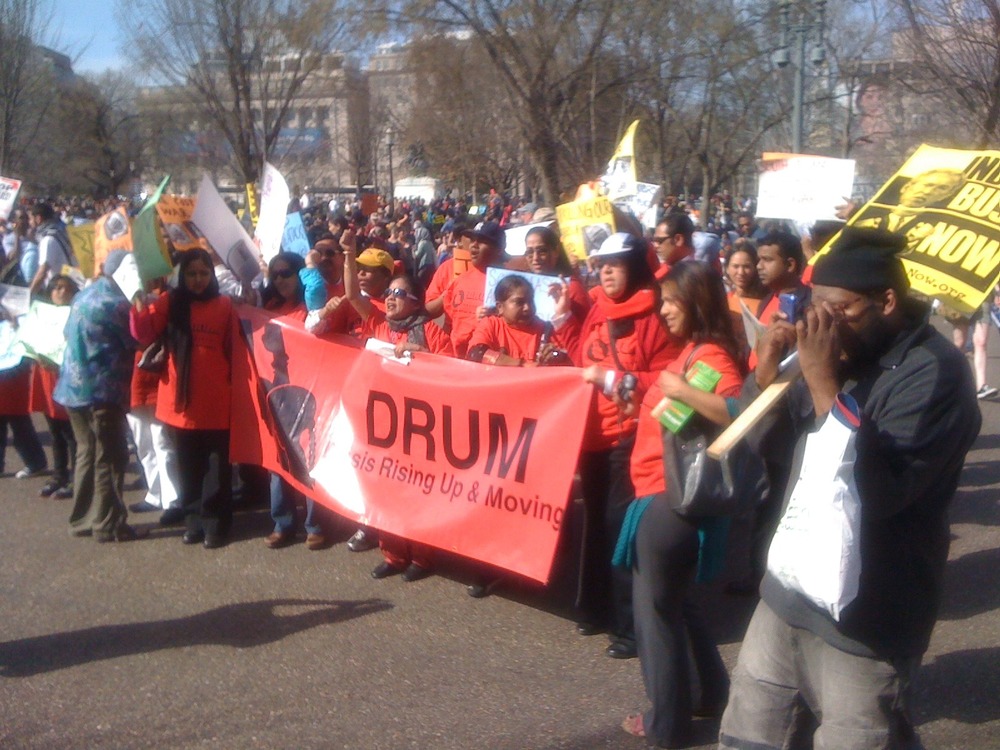
First day of spring: sun, protests and free speech in action in DC

Img_0105Img_0123Img_0124Img_0125Img_0126Img_0127Img_0128Img_0129Img_0131Img_0132Img_0133Img_0134Img_0135Img_0136Img_0137Img_0122Img_0121Img_0120Img_0106Img_0107Img_0108Img_0109Img_0110Img_0111Img_0112Img_0113Img_0114Img_0115Img_0116Img_0117Img_0118Img_0119Img_0138

1 Comment

Filed under Uncategorized

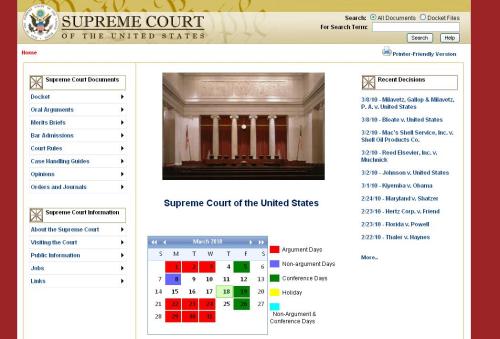
SupremeCourt.gov relaunched: Fresh design, old PDFs, broken links, still no video. [#Gov20]

There’s a new .gov on the block: after years of a decidedly dated website, the Supreme Court has a new look — and address — at SupremeCourt.gov. The Supreme Court announced the new site without a great deal of fanfare, sending a release which SCOTUSblog.com posted as a PDF.

As Orin Kerr observes at the Volokh Conspiracy,  the new site replaces the old supremecourtus.gov and drops “us” from the URL. Users still have to enter “www” in, however, which is less than ideal. C’est la vie.

My Supreme Court preview for 2009-2010 has been a constant source of traffic to this blog, demonstrating a continued interest from the online audience in the cases before the highest court in the land.

Despite the “updated and more user-friendly design,” that the release promised, some users may be frustrated.

There’s a separate concern for the rest of the Web, however: as clicking on the links that post show, SupremeCourt.gov webmasters have not forwarded many old URLs to new ones. Many links simply default to the home page. I suspect a few law librarians around the world may have a headache tomorrow.

It’s going to be a grimace-inducing issue for a few newspapers, too, if redirects aren’t rolled into place. The most-debated ruling of recent months, “Citizens United vs. Federal Election Commission,” in which the Justices rejected campaign spending limits?

That’s now a default link to the SupremeCourt.gov home page from the New York Times SCOTUS story on it. (Google also hosts a PDF of the decision, if a searcher is clever enough to find the cached version.) “Citizens United vs. Federal Election Commissionis up at SupremeCourt.gov. It’s just a new URL. SCOTUSblog.com has the same issue with links to opinions. These broken links are going to be a huge headache for organizations of all stripes if the redirects don’t get implemented.

Better calendar, decisions listed, external resources absent

On the positive side, an interactive “argument calendar” is now up on the front page. Clicking on a day brings up the cases to be argued. Another click brings the visitor to a page with a list of the actions that have been taken, along with a link to “Questions presented.”

For those who visit SupremeCourt.gov in search of recent decisions, one click will bring the searcher to a list of Supreme Court decisions from the current term, rendered in chronological order. If you want to go back further, search away – but good luck going very far back in time. A search for another famous case, “Bush v. Gore,” for instance, turns up very little on the new site. The case is just a click away elsewhere, at Supreme.Justia.com, for instance, or at Oyez.org, where audio of Bush v. Gore may be heard. Given the rich resources that exist elsewhere on the Web, it is unfortunate for information-seekers that internal search doesn’t point elsewhere. Even though legal concerns about endorsements of third-party commercial media concerns may pertain, stated website policies would appear to insulate the court against some of those concerns.

Searching for an individual case is improved over the previous function. The search field is clearly viewable on the top right. For those interested in visiting the court, that information is clearly presented and organized. And a FAQ provides a wealth of information for those “frequently asked questions.”

PDFs aplenty, no XML “in site”

It’s also worth observing that most documents on SupremeCourt.gov remain in .PDF format. On the one hand, that may allow it to be spidered by Google. On the other, PDF is definitely not a machine-readable format. Clay Johnson has made a strong case for why that PDFs are problematic for government. I’m not inclined to disagree, although I’d much rather see cases, briefs and other documents posted as PDFs than not at all. Given the continued reliance on PDFs, however, don’t expect enterprising “lawhackers” to create mashups like the ones surrounding data.gov.

Given the improvements to other federal websites, in particular WhiteHouse.gov and the launch of the FCC’s Reboot.gov, I can’t help feel disappointment. The fact that there is no video or audio of cases remains a standing frustration, given the careful questioning and deliberation the justices display and the long hours of preparation counsel undergo to argue cases before the Supreme Court.

The release regarding the new launch further reports the following

Tthe Supreme Court has now assumed management of its own website, retrieving it from the Government Printing Office.” The Court received funding in its FY20 10 appropriation to make the transition from GPO to in-house management. That transition will enable the Court to integrate the Web site with the Court’s other operations, improve the quality of the site, and expand services for the public’s benefit. The Court received funding in its FY20 10 appropriation to make the transition from GPO to in-house management. That transitionwill enable the Court to integrate the Web site with the Court’s other operations, improve thequality of the site, and expand services for the public’s benefit.

SupremeCourt.gov does provide access to opinionsordersdocketCourt calendarstranscriptsschedulesrulesvisitors’ guidescase-handling guidespress releases and other general information.

If the public is to benefit further by leveraging the Internet to gain insight into the Supreme Court’s operations, the webmasters of SupremeCourt.gov might do well to focus their efforts in the rest of the 2010 towards implementing further improved functions as well as that fresh design. If they can fix those broken links and supplement existing case pages with external resources, like the Supreme Court Database, perhaps that livestream of oral arguments can wait for a few more months.

UPDATE: For more coverage on the new SupremeCourt.gov, see:

14 Comments

Filed under article, technology

Executive Summary of FCC National Broadband Plan released [#BBplan]

This morning, the Federal Communications Commission provided an executive summary (PDF) of its National Broadband Plan. I’ve embedded it below.

The FCC mobile broadband testing apps is likely to factor into gathering data for those speed assurances.

The New York Times published a story on the FCC’s National Broadband Plan this weekend that provides some context for why the release “is likely to generate debate in Washington and a lobbying battle among the telecommunication giants.”

Stacy Higginbotham’s article on the role of competition in the FCC broadband plan at GigaOm is also definitely worth a read, including an excellent analysis of the summary above. As she observes:

Taken together, better information about broadband speeds and pricing, special access reform, making it easier to build out municipal fiber, and open set-top boxes will likely have the greatest impact on consumers, while the ability to get better data on services could have the most far-reaching effect if the FCC decides to use that information to promote competition.

Leave a comment

Filed under article, technology

On @OKGo, viral video and going independent: What is Band 2.0?

Mental Health Break: the wonderfully creative video for “This Too Shall Pass,” from the OK Go album, “Of the Blue Colour of the Sky.”

According to the shownotes on YouTube, the video was directed by James Frost, OK Go and Syyn Labs and produced by Shirley Moyers.

The video was filmed in a two story warehouse, in the Echo Park neighborhood of Los Angeles, CA. The “machine” was designed and built by the band, along with members of Syyn Labs ( http://syynlabs.com/ ) over the course of several months. OK Go thanks State Farm for making this video possible.
I was the 7,869,145th person to discover it. [HT Mark Drapeau] I’m ok with that. The success of this video built further on “Here It Goes Again,” one of the most popular viral videos ever:

This past week, OK Go took one step further along their transition to “Band 2.0” — they left EMI Records to form Paracadute Recordings. (Paracadute is parachute in Italian, for those wondering, along with being really fun to say.) Fittingly, the move was a;so announced on YouTube:

As Kulash indicated in a New York Times op-ed, “WhoseTube” earlier this year, however, there’s more of a backstory here. As Kulash observed, EMI prevented users from embedding the label’s videos on other websites, a move which likely targeted at increasing the label’s streaming royalties from YouTube. Kulash argued that the policy hamstrung the “viralability” of the video:

When EMI disabled the embedding feature, views of our treadmill video dropped 90 percent, from about 10,000 per day to just over 1,000. Our last royalty statement from the label, which covered six months of streams, shows a whopping $27.77 credit to our account.

Clearly the embedding restriction is bad news for our band, but is it worth it for EMI? The terms of YouTube’s deals with record companies aren’t public, but news reports say that the labels receive $.004 to $.008 per stream, so the most EMI could have grossed for the streams in question is a little over $5,400.

With that move, the “most-downloaded band ever” followed Radiohead and NIN into independent distribution and promotion. Given a press release that credits OK Go with 180 million video streams and counting, perhaps Damian Kulash, Tim Nordwind, Dan Konopka and Andy Ross figure they can make it without a label’s backing.

Given the challenges of selling music online, this hybrid model of sponsored viral media, touring and merchandise sales might allow OK Go to make enough to support families. Not every artist is going to be able to pull this off. As Jonathan Coulton showed in 2007, however, for some savvy musicians, the Web offers a new media model. Code Monkey went viral – and fans got involved:

Both Coulton and OK Go have embraced video, blogging, Twitter, Facebook and other online networks to distribute their work, promote their appearances and — crucially — engage their fans. Making money from that investment of time is the secret sauce, of course, but for some, “band 2.0” will pay off. Not every band will be able to make more than $2 million dollars from digital downloads, as Radiohead managed to do through inrainbows.com, but OK Go’s success does show how creativity can be rewarded.

In the meantime, enjoy that Rube Goldbergian video.

UPDATE: NPR’s On the Media ran a terrific show on the the music business this weekend. Highly recommended listening. Direct MP3 download: Facing the (Free) Music

Leave a comment

Filed under blogging, music, social media, technology, video

Anil Dash on Expert Labs, useful online communities and “.com as the new .gov”

“Politicians know they can use social media to talk to people. What they don’t know yet is how to listen.”

That was Anil Dash’s summary of a basicchallenges that lie ahead for many world’s representatives as they explore Twitter, Facebook, YouTube, blogs and other online platforms that allow reciprocal communication. Last year, he wrote that “the most Interesting new tech startup of 2009” was government.

Dash knows a thing or two about tech startups as the first employee of Six Apart LLC, one of the world’s leading blogging companies. He understands online engagement too, after blogging at Dashes.com since 1999. Now, however, he’s set his sights on an even bigger goal: transforming the ways citizens relate to their government through social media using a startup mindset.

2010-03-11-anildashdebbieweil.jpg

Speaking to a group of “digerati” at Baked and Wired, a chic purveyor of cupcakes and Internet in Washington’s tony Georgetown neighborhood, Dash laid out his vision for Expert Labs, “a new independent initiative to help policy makers in our government take advantage of the expertise of their fellow citizens.”

The first project at Expert Labs will be a “ThinkTank App,” an open source web application that aggregates and organizes replies to status updates on Twitter. ThinkTank App was developed by Lifehacker founder Gina Trapani, who has signed on with Expert Labs to develop the platform.

The event was the fourth “Sweets and Tweets” event produced by corporate social media consultant Debbie Weil.

The first client for Expert Labs is one that would make most startup founders swoon, too: the White House will be using the ThinkTank app to get better answers from citizens.

As Dash wrote in describing “Expert Labs, Gina Trapani, ThinkTank App and our Grand Challenges,” he’ll be collaborating with the White House in support of the Grand Challenges initiative.

“We want to create a different space for participation that rewards good answers, said Dash. He cited several online websites with communities that allow meaningful exchange of information without the ugliness that pervades many comment boards, including stackoverflow.com, ask.metafilter.com and the site his wife manages, SeriousEats.com.

“We need to establish our priorities as a nation, with citizens as the think tank,” said Dash.” If we can go from six people in closed door room to sixty thousand addressing a problem, that will be a small win.” Dash asserted that the disruptive influence of online collaborative tools will cause “entire federal agencies will be transformed, just as newspapers have been.”

Given the immense economic, social and technological challenges that lie ahead for the United States and the world in this young 21st Century, that’s a vision worth keeping an eye on.

Dash’s talk was livestreamed on uStream and may be viewed there. Debbie Weil has also blogged about Anil Dash and Expert Labs, along with DC cultural maven @KStreetKate‘s write-up on NBCWashington.com@ClearedJobsNet has also posted photos from the event.

As Weil shared on her blog, there’s no shortage of other places to learn more about Dash’s progress or last night’s event:

Leave a comment

Filed under application, article, blogging, social media, technology, Twitter

FCC goes mobile, launches iPhone, Android apps for crowdsourced broadband speed testing

Test your broadband speed? Yep, there’s an app for that.

The Federal Communications Commission (FCC) built upon its growing new media prowess with the launch of iPhone and Android applications today.

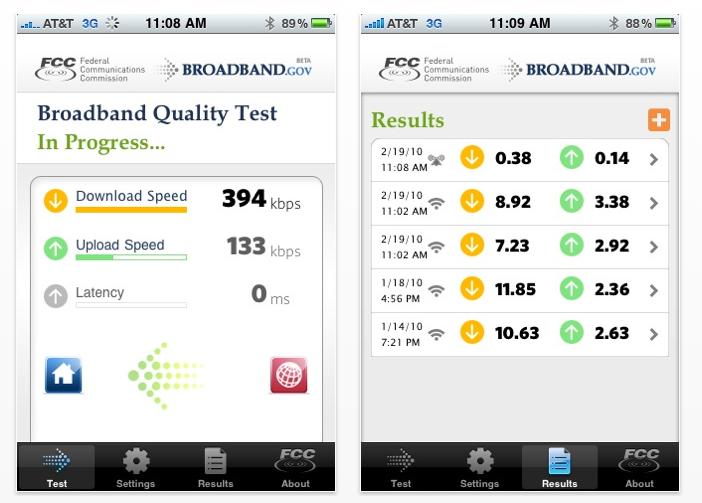
The FCC’s new apps will allow users to test the speed of mobile broadband service and report deadzones where mobile broadband is not available. The FCC iPhone app is a free download from iTunes or the Android marketplace.

“Transparency empowers consumers, promotes innovation and investment, and encourages competition,” said Chairman Julius Genachowski in a press release. “The FCC’s new digital tools will arm users with real-time information about their broadband connection and the agency with useful data about service across the country. By informing consumers about their broadband service quality, these tools help eliminate confusion and make the market work more effectively.”

The Consumer Broadband Test and the Broadband Dead Zone Report are also available as fixed applications at Broadband.gov. According to the FCC, the Ookla, Inc. Speed Test and the Network Diagnostic Tool (NDT) running on the Measurement Lab (M-Lab) platform are used to power the app.

In the future, the FCC says it will making additional broadband testing applications available for consumer use. Consumers can also submit availability information by e-mail to fccinfo@fcc.gov. And, perhaps taking a page from Google’s playbook, this application is in beta. According to the Consumer Broadband Test information page, “this beta version is the FCC’s first attempt at providing Americans with real-time information about their broadband connection quality.”

I ran a quick test on my home cable Internet connection.

My downlink isn’t quite fiber optic speed, but I found it close to existing tools. The test depends upon Java, though many users are likely to have that installed at this point.

I tried out the mobile app as well, which used the GPS in my iPhone to discover my location. According to the FCC mobile broadband testing app, I’m getting 1.42 Mbps download speed from AT&T 3G here in Capitol Hill and .11 Mbps upload.

Beats GPRS, if not a Clearwire 4G connection — or my wifi.

Privacy concerns?

The FCC states that it’s “committed to protecting the personal privacy of consumers utilizing these tools, and will not publicly release any individual personal information gathered.” It’s posted a privacy statement to that effect.

Crowdsourcing citizen reporting

The larger context of the release of the FCC mobile broadband testing app is worth noting. The FCC will release its National Broadband Plan next week.

Part of that plan will certainly incorporate assessing where broadband service is exists, how robust it is and, perhaps, how closely service matches advertised rates.

This kind of data could serve in much the same vein as the FTC’s consumer complaint assistant works at FTComplaintassistant.gov. The FCC has given citizens a tool to report service quality and availability around the country. Equipped with that data, commissioners may be able to make more informed policy decisions as they roll out the broadband plan.

Now it remains to be seen whether citizens use it or not.

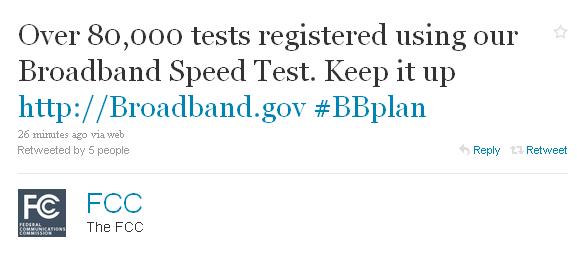
UPDATE: On Saturday night, March 13th, the FCC tweeted that over 80,000 tests had been registered using the Broadband Speed Test. It was unclear how many tests were through Broadband.gov or the apps.

7 Comments

Filed under application, blogging, technology