Thank you, Steve Jobs

The world has lost one of the rarest of men: someone who not only thought differently but helped create objects that opened all of our eyes too. Tonight, the Associated Press reported that Apple co-founder Steve Jobs had passed away. A letter from Apple’s board went online. And then apple.com changed to an iconic, arresting new image. Steve Jobs

Wired.com went black. Google.com linked to apple.com.

Social networks worldwide lit up with tweets and updates about the death of Steve Jobs.

And, at least for a night, the Web itself felt united in its grief.

Jobs told us “how to live before you die” in a 2005 commencement speech at Stanford University.

“Your time is limited, so don’t waste it living someone else’s life. Don’t be trapped by dogma — which is living with the results of other people’s thinking. Don’t let the noise of others’ opinions drown out your own inner voice. And most important, have the courage to follow your heart and intuition. They somehow already know what you truly want to become. Everything else is secondary.”

While I listened to the speech, I ventured onto a Web absolutely ablaze with sadness, memories, elegies, celebrations and eulogies to Jobs. Following are a few of the voices and perspectives I found.

“Michelle and I are saddened to learn of the passing of Steve Jobs. Steve was among the greatest of American innovators – brave enough to think differently, bold enough to believe he could change the world, and talented enough to do it.

By building one of the planet’s most successful companies from his garage, he exemplified the spirit of American ingenuity. By making computers personal and putting the internet in our pockets, he made the information revolution not only accessible, but intuitive and fun. And by turning his talents to storytelling, he has brought joy to millions of children and grownups alike. Steve was fond of saying that he lived every day like it was his last. Because he did, he transformed our lives, redefined entire industries, and achieved one of the rarest feats in human history: he changed the way each of us sees the world.

The world has lost a visionary. And there may be no greater tribute to Steve’s success than the fact that much of the world learned of his passing on a device he invented. Michelle and I send our thoughts and prayers to Steve’s wife Laurene, his family, and all those who loved him.”-President Obama.

“Jobs proved the appeal of well-designed intuitive products over the sheer power of tech itself”-Wall Street Journal

Apple transformed “not only product categories … but also entire industries”-John Markoff

“Bill Gates put a computer on every desk. Steve Jobs put one in every pocket, purse, dorm room and bedroom.”-New York Times

“He completely changed how we interact with technology”-Wired

“The world rarely sees someone who has had the profound impact Steve has had, the effects of which will be felt for many generations to come. For those of us lucky enough to get to work with him, it’s been an insanely great honor. I will miss Steve immensely.”-Bill Gates

“Steve Jobs saw the future and brought it to life long before most people could even see the horizon”-Mike Bloomberg

Steve Jobs “realized what we wanted before we understood it ourselves”-Ted Anthony

Jobs’ career merged the ’60s and Silicon Valley “in a way that re-imagined business itself”-Steven Jay Levy. “Steve Jobs’ reality field actually came into being. And we all live in it.”

Think back: “There’s about to be a new delivery vehicle in higher education in America”-Steve Jobs, 1987, C-SPAN.

“May the uncompromising vision of Steve Jobs live on, inspiring others, making them reach further, do better.”-Tim O’Reilly

“The people who are crazy enough to think they can change the world are the ones who do”-Gizmodo

“His ambitions took him, and us, to extraordinary places”-Harry McCracken

Steve Jobs “brought together art, humanities and tech: he was one of a kind”-Laura Sydell

Walt Mossberg wrote about “The Steve Jobs I Knew.”

“Yesterday, I lived on a world with a Steve Jobs in it. Tonight, I don’t.”-Andy Ihnatko

“Every generation has its heroes.”-Om Malik

Jobs embodied “a glorious piece of what it is to be American with all our contradictions”-Alexis Madrigal

Steve Jobs said “don’t let the noise of others’ opinions drown out your own inner voice.” I won’t.

He gave us inspiration to write our own melodies, to insist on hearing the songs in our heads voiced to the world, whether that vision was wrought in gleaming glass and aluminum, drawn in fanciful pixels or published, echoing Gutenberg’s first revolution.

Thinking back, my first computer was an Apple II+. In 1985, I wrote a story on it. In 1995, I made my first Web site on a Mac. In 2011, I share my world on an iPhone. 27 years later, I’m making my living on a Macbook Pro and tapping on an iPad.

Thank you, Steve Jobs.
2 Comments

Filed under art, personal, technology, video

William Gibson on writing, science fiction and digital panopticons in the 21st century [VIDEO]

Almost exactly this time last year, I went to see a book reading by William Gibson, one of the greatest science fiction writers of our time.

After he did a reading from his most recent novel, Zero History, he answered questions from the audience at Politics and Prose, a wonderful independent bookstore in Cleveland Park in Washington, D.C.

Appropriately, given that I filmed the questions and answers and subsequently uploaded the videos to YouTube, one of the questions posed to Gibson was about living in a digital panopticon. BoingBoing recently published an excellent interview with Gibson, if you’d like his most recent thoughts on our historical moment.

On Digital Panopticons in the 21st Century

On Writing

On Academia

On Characterizations and Numbers

On Entrepreneurs and Business Models

On Narrative Structure and Genre

3 Comments

Filed under art, scifi, technology, video

The Web is what we make of it

I saw a Google Chrome commercial twice tonight that struck a chord with me. The extended version, embedded below, has been online since May.

On the one hand, it’s a slick ad for a search engine giant’s Web browser that features a glowing treatment of a megacelebrity and her happy fans.
On the other, it’s a view into a changed world that still feels very much of the moment, months after its debut. It reminded me that the Internet has fundamentally changed how we can directly connect with the people who inspire us and on another.
There’s something both deeply joyful and poignant seeing Lady Gaga’s fans dance and sing along with her to that particular song.

On a night where I also saw so much pain, anger, fear, cruelty and misunderstanding flow over the same global electronic network of networks, it felt good to be reminded of how much more connected we can be. If we choose, we can reach out and connect to hundreds of other millions of humans, who are both different and fundamentally the same, looking at a growing mobile Web of billions of screens, small, medium and large.

We can see, share and celebrate the best of human nature in real-time or mourn, censor and condemn that which is worst in us. We go online and find ourselves, for good or ill, and leave a Web that is what we make of it.

Every time we log on, we have an opportunity to change how we think or connect with someone else around this pale blue dot.

Thank you for sharing that journey and teaching me something new, every day.

4 Comments

Filed under art, friends, music, personal, social media, technology, video

Can we still quit Facebook?

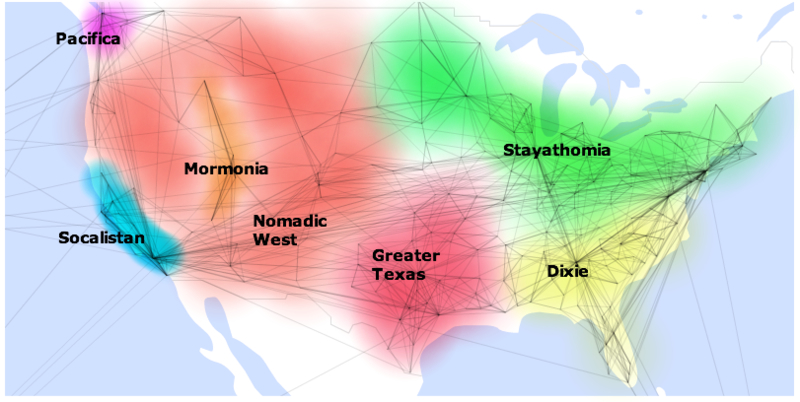
"How to split up the US" by Pete Warden

I’ve been thinking a lot about an essay I wrote last year on the failure of Quit Facebook Day. It was one of the most popular articles I’ve ever published on my personal blog. I think the piece holds up well, given the passage of time, and given recent changes at Facebook, it may become relevant again.

Over at Mashable, Christina Warren writes that “You won’t quit Facebook” in a new op-ed. (Side note: Mashable is a media partner for Facebook’s social news reader. I was surprised that neither Warren nor her editor disclosed that in her op-ed and will leave it to Micah Sifry to ask whether Facebook’s media partners can cover it objectively.)

I’m not so sure of Warren’s larger point. Comments there suggest a few Mashable readers have left, which is minimum an interesting data point, given the rather social audience we know visits the site. BrianBoyer left tonight and livetweeted his exit, linking to a post on “why logging out isn’t enough for partial explanation.

As a news application developer – a so-called “hacker journalist” – Boyer has a different relationship with technology than many members of the media and public. He makes the platforms and works at a newspaper company that sells ads against them. He’s commented on journalists using Facebook before and now has acted on his convictions.

Whether many others follow, I think, will depend upon whether there are substantive harms to users that result from the changes that are subsequently publicized by print and broadcast media, changing the perceived risk around usage. When whether anyone in the social journalism group would quit Facebook (closed group), the overwhelming answer was: no. That’s not surprising from that particular cadre of the media, of course. There’s a vibrant discussion around this post over at my first draft on Google Plus where others feel differently. (The convergence of Google and online privacy deserves its own post, which I have written elsewhere.)

I’m not predicting that will happen but I can foresee several different scenarios where unexpected sharing of reading or socializing behavior could have consequences to work, employment, education or relationships. @Mat Buchanon of Gizmodo explored the new Facebook integration more eloquently than I and at some length here:

There are significant benefits to be gained from social sharing, as my publisher Tim O’Reilly has outlined at Radar and in his talks. I have enjoyed many of them, given my frequent user of social media, and expect to continue to do so, with care.

That said, I do not want to have all of my actions online shared, nor would I wish those of marginalized segments of society to be made public if it endangered their safety.

I’ve talked with senior executives at Facebook several times, including its CTO and chief security officer and chief privacy officer. My sense remains that they all want to do the right thing by the people on their network, providing them with better tools to share information, keep them safe and give them better privacy controls… although the persistent cookies that remain upon logout pose an issue on the latter counts.

All that said, I can’t help but wonder if these changes will tilt the balance for more users. We’ll learn more over the coming months.

Caveat Lector

If you use Facebook, you need to read this New York Times article on new changes and think carefully about how much of your activity online you want to share here publicly.

From reading to listening to watching to buying, anything connected to Facebook will be tracked, logged and added to the growing body of information about your life online.

As with so many other aspects of our lives, we all owe it to ourselves to be educated about our digital choices.

Digital privacy is about much more than Facebook

To be clear: while Facebook is the biggest social network on the planet, with some 800 million users that spend more time on it than any other site, the issue of digital privacy is much larger, as anyone who has read the Wall Street Journal’s “What do They Know?” series or followed the issues knows well.

I covered all of last year’s FTC privacy hearings and was reminded of just how broad and deep the issue of digital privacy runs. New online privacy frameworks are lagging far behind industries that are crunching unprecedented amounts of data to try to target and personalize everything we buy, read, eat or watch. Location-based services have new bearing on online privacy. Last year, online privacy debates heated up in Washington. Expect more of the same.

2 Comments

Filed under blogging, journalism, social media, technology

New digital journalism tools and platforms to connect, present and inspire

“It doesn’t have to be like this,” said Alexis Madrigal. “You don’t have to write bad stuff to get people to come to a website”
Tonight at the August meeting of the Online News Association in D.C., +Madrigal shared several of the tools that he’s been experimenting with to connect with his audience and rethink the way he shares information in his work as senior editor at the Atlantic Monthly.

You can find his digital journalism at www.theatlantic.com/alexis-madrigal and on Twitter at @alexismadrigal.

I’ve been reading his book on green energy, “Powering the Dream,” over the past few months. It’s excellent. Alexis also co-founded longshot magazine and wrote for Wired for years.

Given that context, when he talks about the digital tools that he’s using for work and the new applications or platforms that he’s experimenting with online these days, I paid attention. Here’s the breakdown of some of the tools he shared tonight.

First, Google Forms. Alexis described them as “frictionless, easy to set up, and then pull into spreadsheet. He referenced Amanda Michel‘s work using them in her crowdsourcing work at ProPublica.

Second, SoundCloud. That was a new one to me. Time to experiment.

Third, Twitter. This one was not new to me. Alexis said Twitter worked very well for Longshot. He did, however, say “the retweet is dying.” There’s an issue of splitting the incentive model, between “native” vs “manual” RTs, and tracking. Alexis said that he’s noticed all around that retweeting is way down, which has made Twitter less effective.

So, off to explore new places.

One such platform is Tumblr. The problem, said Madrigal, is that Tumblr has its own ecosystem. (I agree with this.) There’s no natural move over from another social media platform, he said, and that sad fact is that you have to put in the same damn work, and then see what moves. On that count, they’ve brought in curator to the Atlantic video channel who’s deeply immersed in the culture but it’s still challenging.

Another new destination is Google Plus. Alexis likes Plus conceptually, given how it allows back and forth, but doesn’t know exactly what he’s going to do with it yet. Alexis said he has largely left Facebook and streamlined his social media use. His Google Plus use went way up during the first couple of days and then leveled out. Now he needs to decide what to do with it. (I know the feeling). Alexis is experimenting with “The Atlantic Tech Plus,” which he described as a behind the scenes look at what his team is working on. He’s not sure what’s next. The digest has driven little traffic to date, but Alexis feels like he “has to be here and know how it works.”

Alexis moved from tools for publishing or sharing to presentation tools. He’s interested in timed slideshows and made the analogy that they’re like “full bleed” in a magazine. He used to think they’re just a way to get pageviews but now he thinking that they’re “a way to get content horizontally. ”

Two points here: beautiful tools are awesome and people are limiting themselves in the way they think about them. In that context, Alexis wants to exploit the behavior readers exhibit in compulsive clicking through a slideshow for good. This sort of thing is “gamification,” though Alexis notes that they just ran a story “called gamification is BS.”

Given this list of of tools, I asked him about Facebook for journalism. Alexis said that he chose to keep who he is as a person vs his work separate there. He hasn’t started a Page but knows people like science writer Steve Silberman who have had “wonderful generative conversations there.”

Finally, Alexis shared two sites that are doing work that can push us to think differently about what an editorial product can be online.

DomusIT (http://domusweb.it) is an Italian art magazine website worth looking at because of its vibrant, colorful and dynamic design:

Zeega (http://zeega.org) is a next generation content management system. Zeega pushes website design to a “crazy extreme,” with HTML5 in fully full bleed experience, including video, animations. Alexis suggested that Zeega can enable a different kind of publication online, something “more magazine-y” and interesting. Less cookie cutter. He expects that this or something like it will open up a new way of telling stories.

We’ll see! I know I have some new places and platforms to explore, along with Twitter, Google, Plus and Tumblr. The lesson that Alexis drew from turntable.fm is that “feeling like the Internet is alive is awesome.” I’ll drop by tomorrow.

2 Comments

Filed under journalism, social media, technology, Twitter

Giant Pacific Octopus Hatch Offers Poignant Reminder of Nature’s Wonders [VIDEO]

It’s unlikely that I will ever see the hatch of a giant Pacific octopus’ eggs in person. Thanks to YouTube, Twitter, a underwater high definition camera and the work of the SeaingGreen dive team, I was able to watch this extraordinary natural event.

From the shownotes on YouTube:

A giant pacific octopus mother who lived just across from downtown Seattle had her hatch right under the noses of local divers. Her den was sequestered in Cove Two in West Seattle, in a location that spared her from predators and over-visitation by humans. On September 4 (aka early, early on September 5), 2010, the eggs began hatching. It’s a time of mixed emotion; joy at the hatch, and sadness at the knowledge that this event means the mother’s life will end. The hatch lasted a full week, after which the mother died. Spoiler alert: Best footage comes starting at 3:24.

Wonderful.

[Hat tip: Andrew McAfee]

Leave a comment

Filed under art, nature, video

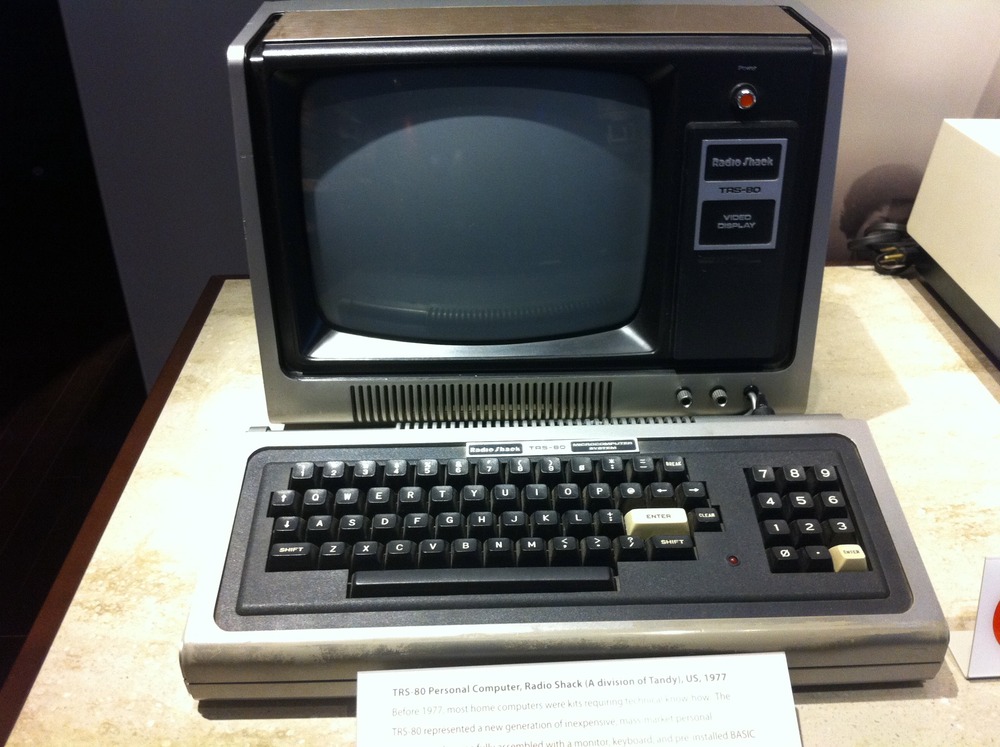
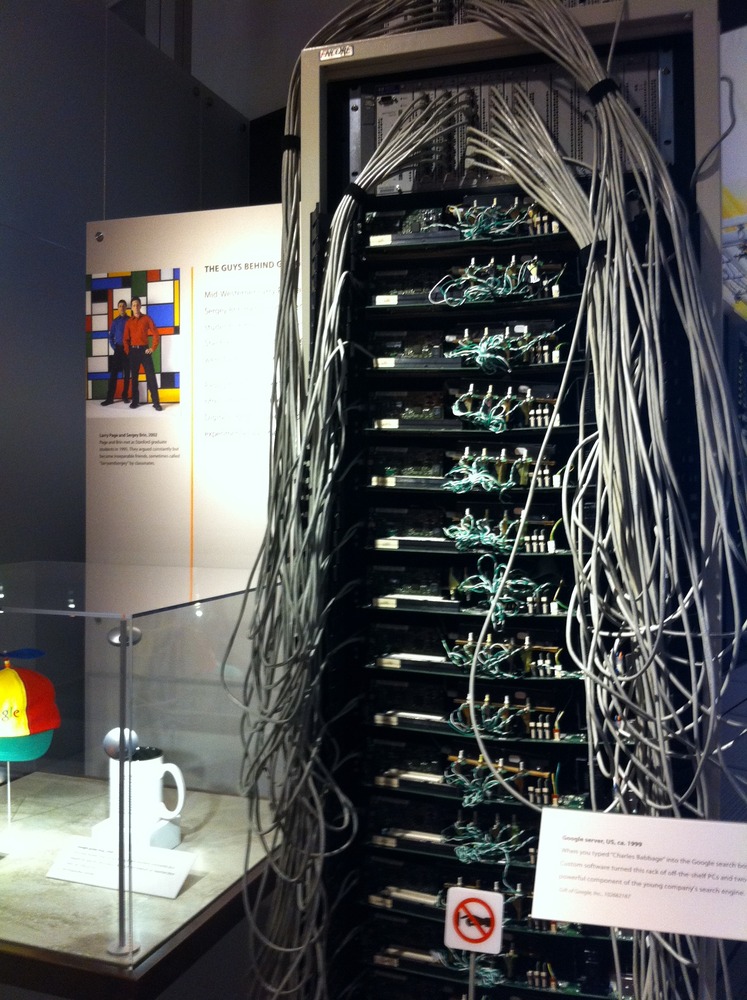
Computer History Museum

Img_0388Img_0368Img_0367Img_0366Img_0365Img_0364Img_0363Img_0362Img_0361Img_0359Img_0358Img_0357Img_0356Img_0355Img_0354Img_0353Img_0352Img_0351Img_0369Img_0370Img_0387Img_0386Img_0385Img_0384Img_0383Img_0382Img_0381Img_0380Img_0379Img_0378Img_0377Img_0376Img_0375Img_0374Img_0373Img_0372Img_0371Img_0350Img_0349Img_0329Img_0328Img_0327Img_0326Img_0325Img_0324Img_0323Img_0322Img_0321Img_0320Img_0319Img_0318Img_0317Img_0316Img_0315Img_0314Img_0313Img_0330Img_0331Img_0348Img_0347Img_0346Img_0345Img_0344Img_0343Img_0342Img_0341Img_0340Img_0339Img_0338Img_0337Img_0336Img_0335Img_0334Img_0333Img_0332Img_0312

1 Comment

Filed under Uncategorized

Will YouTube Live be the tipping point for livestreaming?

The digital video transition has been a long time coming. It’s still early, early days. Many of dreams of the .com boom that shattered upon technical, social or financial reality a decade ago, however, are finally coming to pass.

When the world can watch live rock events and cricket matches on YouTube.com, livestreams from revolutions in the Middle East and watch the President of the United States announce the resolution to a Congressional budget impass on a smartphone, it does feel like a bit has flipped.

As usual, a famous observation by William Gibson (@GreatDismal) feels apt: “The future is already here — it’s just not very evenly distributed.”

Yesterday, Google announced that YouTube is going live and pushed the initial version of “YouTube Live” live.

Live will allow selected users, like Pop17, to livestream channels directly to YouTube platforms. According to YouTube, the world should expect “thousands” of livestreams to go online in the months ahead.

With the move, YouTube Live will further collapse the line between what used to be “television” and the Internet, with billions of small screens and networked flatscreens complementing the broadcast networks and CRTs that dominated the end of the last century.

YouTube enters a market where uStream, Qik and Livestream.com that have been exploring for years in the private sector. In the public sector, Granicus has been supporting open government video initiatives for going on a decade.

If YouTube Live is as integrated as tightly into the Android mobile platform as Google Maps has become, this entrance could be disruptive on a worldwide level. The Android operating system is now on a plurality of smartphones in the United States, with rapidly growing global marketshare that puts it at #2 behind Symbian.

Given the explosive growth in livestream-capable iPhones and Android devices, mobile broadband providers will likely see increasing demand on upstream bandwidth. That in turn that many more people will be left wondering what “reasonable network management” by telecommunication companies will mean in this context.

Leave a comment

Filed under article, video

Japanese ‘Tsunami dog’ reunited with owner after 3 weeks at sea

As a dog owner, I teared up a bit upon watching this.

In these dark days, good stories can be hard to come by. The devastation and loss of life in Japan after last month’s earthquake and tsunami continues to be deeply affecting. This moment offered a welcome positive note.

Leave a comment

Filed under personal, video

Yahoo Research: 50% of tweets consumed are generated by 20,000 elite users

New research from research on Twitter found that 50% of tweets consumed are generated by 20K elite users. Based upon the more than 37,000 tweets I’ve posted over four years of tweeting, it’s a virtual lock that I’m one of them. Of particular interest was the “significant homophily” that the researchers found within categories. I’ve tried hard to escape that effect after reading Ethan Zuckerman’s post on homophily, serendipity and xenophilia nearly three years ago.

FULL PAPER: Twitter flow

Abstract:

We study several longstanding questions in media communications research, in the context of the microblogging service Twitter, regarding the production, flow, and consumption of information. To do so, we exploit a recently introduced feature of Twitter—known as Twitter lists—to distinguish between elite users, by which we mean specifically celebrities, bloggers, and representatives of media outlets and other formal organizations, and ordinary users. Based on this classification, we find a striking concentration of attention on Twitter—roughly 50% of tweets consumed are generated by just 20K elite users—where the media produces the most information, but celebrities are the most followed. We also find significant homophily within categories: celebrities listen to celebrities, while bloggers listen to bloggers etc; however, bloggers in general rebroadcast more information than the other categories. Next we re-examine the classical “two-step flow” theory of communications, finding considerable support for it on Twitter, but also some interesting differences. Third, we find that URLs broadcast by different categories of users or containing different types of content exhibit systematically different lifespans. And finally, we examine the attention paid by the different user categories to different news topics.

Leave a comment

Filed under blogging, research, social bookmarking, social media, technology