So long, and thanks for all the fish

Thursday was my last day at O’Reilly Media. The past three years have been extraordinary. No other professional experience I’ve had even comes close to matching it.

Tim gave me the opportunity to have an impact on the world in the spring of 2010 and I took it and ran with it for all that I was worth.  I started my career at O’Reilly by interviewing Tim Berners-Lee, live on the Internet, and I finished by sharing the stage with Al Gore and Madeline Albright at Stanford, albeit in a non-speaking role. (Recognize that young looking fellow below?)

As I’ve navigated the corridors of power in DC,  statehouses, boardrooms and legislatures around the world, O’Reilly’s name and reputation opened doors everywhere. I lost count of the number of times that I pinched myself during my travels.

I also lost count of the number of the hundreds of articles I wrote over the years, bracketed by videos, annotated pictures, and tens of thousands of tweets and status updates on Facebook, Google+, Tumblr and other services. My wonderful editor, Mac Slocum, encouraged me to use the Web and social media as a platform for narrative expression, increasing the surface area for ideas and amplifying the work of people innovated at the edges of society and social change.

I was blessed with brilliant, supportive colleagues who approached collaboration and work with purpose, good humor and wit. I’m deeply grateful for all of the advice, mentorship, teamwork and wisdom that they  offered over the years.

I enjoyed the support of an amazing executive team when I spoke truth to power and pushed for change on important issue.  Few companies would have provided the degree of editorial freedom and institutional support that I had from my very first day. I saw the work we did together had a positive effect upon the world, from Israel to Africa to Australia to Australia to San Francisco — and I heard about it from people in those places and many more. I’m deeply honored to have spent this time with O’Reilly.

Briefing the president and cabinet of Moldova about the Internet and the next generation of open government remains a highlight, as was my interview of the prime minister of Georgia and delivering remarks in front of the Brazilian Congress. There are also  thousands of other moments and memories that I treasure that will never be as public but will be remain important to me in the years to come. Thank you all for your confidence and trust.

My email address at oreilly.com may no longer be a secure direct connection to me but I welcome your news, tips and ideas through more than a dozen social media channels.

I’ll have more to share with the world about “what’s next” for me in the days and weeks to come. For now, I’m looking forward to becoming a father for the first time in about 40 days.

Thank you to each and every one of you who have read, commented, replied, retweeted, reshared, picked up the phone and offered your time for interviews and reflections.

I look forward to seeing you online and around the world.

12 Comments

Filed under Uncategorized

On unwiring


For the last decade, I’ve thought about going offline like Paul Miller. Turn off, drop off, tune in to life offline.

I’ve never done it. Thinking back, I don’t think I’ve been fully offline more than a month since 1999. I do periodically unwire. A night out here, a long bike ride there, a long weekend in the woods.

The last time it truly happened for more than 24 hours was in January in Anguilla, where I took long hikes, paddles, swims or went sailing without a connection. (I didn’t attempt a tweet during my kite boarding lesson.) Or last August, up in Cape Cod. Vacation is now virtually defined for me as being offline, without commitments. Before that trip, the last truly offline time was my honeymoon, in Greece, where, again, there was (often) no connection to be had.

I may still choose to share my experience and stay connected while I’m on vacation, or “paid time off,” as my former employer calls it, but doing so was always on my own time, at my own choosing. Each time I disconnect, I’ve learned something valuable about myself, both in terms of the person I’ve always been and the man I’ve become.

I’m glad Paul Miller did this and shared his experience. I think such reflection is important and the insight derived from it has always helped to shape and guide my subsequent choices about using technology.

In particular, his shift to finding other distractions, from games to television, was a reminder that we have agency in our own lives. We can choose whether and how to maintain our relationships, our minds, our bodies and our professional, intellectual or recreational pursuits, whether we’re connected or not.

It’s tempting to blame “the Internet” for poor choices or bad habits — and there are reasons to be cautious about how games or social networks tap into certain innate aspects of human behavior — but my personal experience with the network of networks has been enormously empowering and uplifting.

Your mileage, of course, may vary.

2 Comments

Filed under art, blogging, microsharing, nature, personal, photography, social bookmarking, social media, technology

The White House is tumbling further into social media

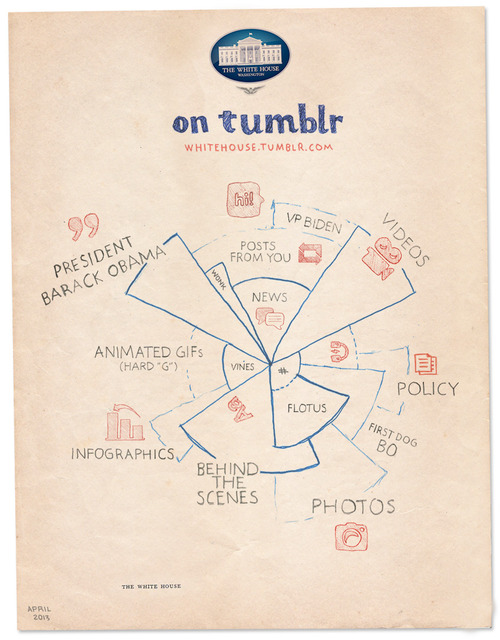
Earlier today, the White House officially joined Tumblr. A short initial post and a hand-drawn infographic explained what the 100 million or so active members of the social blogging platform what to expect when they visit whitehouse.tumblr.com:

We’ll post things like the best quotes from President Obama, or video of young scientists visiting the White House for the science fair, or photos of adorable moments with Bo. We’ve got some wonky charts, too. Because to us, those are actually kind of exciting. But this is also about you. President Obama is committed to making this the most open and accessible administration in history, and our Tumblr is no exception. We want to see what you have to share: Questions you have for the White House, stories of what a policy like immigration reform means to you, or ways we can improve our Tumbling. We’re new here, and we’re all ears.

tumblr_inline_mlvflrwBYf1qz4rgp

The move onto Tumblr is only the latest in the progression of the White House establishing beachheads on the most popular social networks on the planet.

Over the past several years, the White House digital team has used unprecedented scale of its connections on these networks to try to influence national debates on proposed laws, policies and rules, applying public engagement to politics with mixed results. Now the team will be  as well as tweeting, blogging, liking , pinning and plussing.

The White House had already joined other popular social networks over the years, including:

While the conventions of Tumblr will mean the way that the staffers at 1600 Pennsylvania Avenue communicates will be different than 140 character tweets, White House Hangouts or holiday pinning, the overall strategy is the same: use new media tools to go directly to the public. For a fun twist on that strategy, look no further than the White House joining Vine on the day of the White House Science Fair.

Tumblr’s culture lends itself to infographics and pictures, particularly animated versions of images in the Graphics Interchange Format. (Animated GIFs were a big deal in Election 2012, if you missed it.)

The White House clearly understands that context, given the nod at the end of today’s initial post: “…yes, there will be GIFs.” So, apparently, does the staffer running the Twitter account of First Lady Michelle Obama:


I can only imagine what might have been if these tools had been around two decades ago.

One detail in the first tumblr post shouldn’t go unnoticed: the White House is asking users to send them posts using Tumblr’s submission tool.

If they’re anywhere near as daring with resharing submissions as they’ve been with retweets at @WhiteHouse on Twitter, many political reporters will soon be adding “reblog does not equal endorsement” to their Tumblr profiles in the days to come.


Postscript on Pronunciation: At Buzzfeed, Ellie Hall noticed another detail embedded in the graphic accompanying today’s inaugural Tumblr post: the White House weighed in on the pronunciation of GIF, coming down on the side of the hard “G,” like “gift.”

As she correctly reports, however, the creators of the GIF format have long held that the correct pronunciation of GIF with a soft “G,” like “gem.” That’s how Compuserve employees pronounced it as well, back in the late 1980s.

Who’s right? The GIF Pronunciation page comes down hard (er, soft?) on the side of “jif.” As noted in Wikipedia, however, where such contentious debates never fully expire, the Oxford English Dictionary[5] and the American Heritage Dictionary.[6] accept both pronunciations as correct. Good luck successfully navigating this debate, Mr. President.

Post-Postscript: The White House made good on its promise quickly, publishing an animated GIF of President Obama brushing his shoulder off prior to his appearance at the White House Correspondent’s Dinner to Tumblr last Saturday.

Other posts include three pictures, in keeping with Tumblr’s visual style, including links to the White House blog and video of the President’s comedic set from the dinner.

Post-Post-Postscript: After a mechanical engineer named Claudio Ibarra commented on a Google+ thread linked to this post that he thought that staff making animated GIF was a “waste,” I explained why the White House be spending time making animated GIFs.

5 Comments

Filed under social media

Some context and perspective on open data journalism

This afternoon, I gave a talk on open data journalism at the Developing the Caribbean Conference at the University of the West Indies, Mona in Jamaica. The diGJamaica liveblog captured the discussion. Video may be available later. For now, my presentation is embedded below, with many links inside of it.

Leave a comment

Filed under government 2.0, journalism

Tweaser: noun — a movie teaser cut into a 6 second Vine video and tweet

I never expected to associate a “tweaser” with The Wolverine. (I assumed Wolverine’s healing powers would always extrude any splinter.)

That changed yesterday, when James Mangold, the director of the most recent cinematic treatment of the comic book hero’s adventures, tweeted the first “tweaser” of the new century. He used Twitter’s new Vine app to share the short clip, a tightly edited 6 seconds of  footage from the upcoming film. You can watch Vine’s big moment in tweet embedded below.

Twitter certainly has come a long way from txt messages. As Lily Rothman quipped at Time, the emergence of a 6 second tweaser that can be retweeted, tumbled and embedded gives “new meaning to the intersection of Hollywood and Vine.”

Jen Yamato has the backstory behind 20th Century Fox’s debut of a 21st century tweaser over at Deadline, including credit to Fox executive Tony Sella for the coinage:

Last week FilmDistrict was the first studio to use Twitter’s new looping app as a marketing tool. Here’s an even buzzier use of Vine: A 6-second “tweaser” (that’s Twitter teaser, or “TWZZR”) previewing Fox’s July 26 superhero pic Wolverine.

I suspect that at least a few of the tweasers that go flickering by on Twitter, Vine and blog posts will lead people to do what I did: become aware of the upcoming and film and look for a longer version of the teaser trailer elsewhere online. If a tweaser comes with a custom short URL, so much the easier.

To that point, If you want to watch a higher quality “full-length” version of the teaser, there’s now a teaser trailer available on the iTunes Store and a YouTube version:
… which, it’s worth pointing out, can also be embedded in tweets.

Hopefully, history remember will remember “The Wolverine for more than being the subject of the world’s first “tweaser.” Then again, our attention spans may not be up to it, particularly if the length of the interactive media we consume continues to shorten at this rate.

1 Comment

Filed under article, blogging, microsharing, movies, photography, social media, technology, Twitter, video

Can journalists change their social media avatars to political symbols?

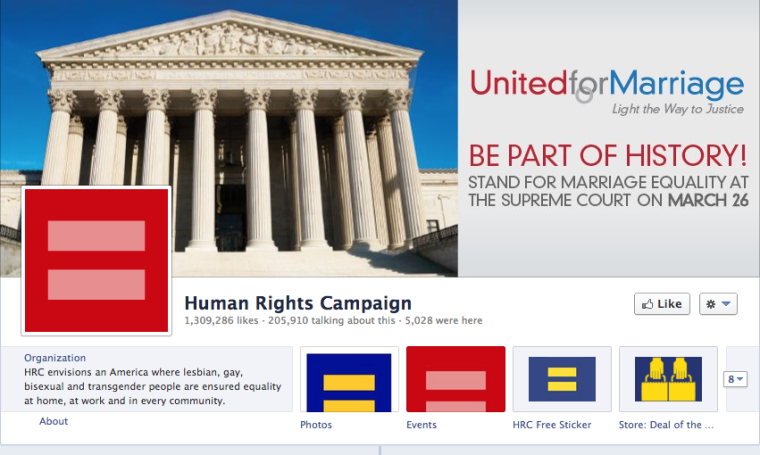
Nisha Chittal asked a number of journalists (including me) about where they stand for on using same-sex marriage symbols on their social media profiles.

Here’s what she found: “The answer is a multi-layered one: it depends on the journalist, the outlet they work for, the social media platform, and whether the journalist is covering this week’s Supreme Court hearings.”

hrc-fb-page

I was honored to see that Nisha gave me the “kicker quote” at the end. If you’d like to weigh in on your stance on this ethical issue, comment away.

Here’s the statement I submitted to her inquiry:

In general, the consensus answer amongst the journalists I respect is that changing your avatar to a symbol like this is not OK, based upon the ethics policies of places like the AP, WSJ, NYT, PBS or NPR.

I think the capacity to demonstrate support for one side of a contentious social issue like this varies, depending upon the masthead a journalist is working under, the ethics policy of that masthead, the role of the journalist and the coverage area of the journalist. Staking out positions on a reporter’s beat is generally frowned upon.

Opinion journalists who regularly take positions on the issues of the day as columnists have often already made it clear where they stand on a policy or law. Advocacy journalism has an established place in the marketplace for ideas. Readers know where a writer stands and are left to judge the strength of an argument and the evidence presented to back it.

If a reporter takes on overt, implicit position on an issue that she is reporting on, however, will it be possible to interview sources who oppose it?

On the other hand, there are a number of social issues that may have had “sides” in past public discourse but have now become viewpoints that few journalists would find tenable to support today.

How many journalists were able to remain neutral or objective in their coverage of slavery in the 1860s? Womens’ suffrage in the early 20th century? Civil rights in the 1960s? Child slavery, sex trafficking, so-called “honor rape” or the impression of child soldiers in the present?

Interracial marriage was illegal in some states in the Union, not so many years ago. That is not the case any longer. It seems to me that gay marriage is on the same trajectory. The arc of the moral universe is long indeed, but I tend to agree with Dr. Martin Luther King Jr. on its trajectory: it bends towards justice.

2 Comments

Filed under journalism, social media, technology, Twitter

White House supports unlocking cellphones but Congress must update DMCA to fix rule

“…neither criminal law nor technological locks should prevent consumers from switching carriers when they are no longer bound by a service agreement or other obligation,” wrote R. David Edelman, senior advisor for Internet, innovation, & privacy, in an official response to a popular e-petition.

In other words, the Obama administration has come down on the side of consumers unlocking their phones. That’s a good thing for every user, from what I can see.

The meat of the reply, in terms of what they’ll actually DO about the e-petition, recognizes the authority of the Librarian of Congress and the validity of the rulemaking process, And as far as I can tell, the statement from the Library of Congress does not indicate that they’ll be changing, which leaves it to Congress to act.

“The question of locked cell phones was raised by participants in the Section 1201 rulemaking conducted between September 2011 and October 2012 by the Register of Copyrights, who in turn advises the Librarian of Congress. The rulemaking is a process spelled out by the Digital Millennium Copyright Act in which members of the public can request exemptions from the law to enable circumvention of technological protection measures. In the case of cell phones, the request was to allow circumvention of technological protection measures controlling access to copyrighted software on cell phones.

The rulemaking is a technical, legal proceeding and involves a lengthy public process. It requires the Librarian of Congress and the Register of Copyrights to consider exemptions to the prohibitions on circumvention, based on a factual record developed by the proponents and other interested parties. The officials must consider whether the evidence establishes a need for the exemption based on several statutory factors. It does not permit the U.S. Copyright Office to create permanent exemptions to the law.

As designed by Congress, the rulemaking serves a very important function, but it was not intended to be a substitute for deliberations of broader public policy. However, as the U.S. Copyright Office has recognized many times, the 1201 rulemaking can often serve as a barometer for broader policy concerns and broader policy action. The most recent rulemaking has served this purpose.”

To put it another way, the Librarian of Congress heard these concerns during the rulemaking process and decided an exemption from the DMCA was not warranted. This White House response does not change that decision. If you read that letter differently, let me know in the comments.

For this rule to change, the Digital Millennium Copyright Act itself, which led to the contentious rule, will need to be amended.

“In today’s phone unlocking response, the White House took a strong stance in favor of consumers, competition, and innovation,” said Sherwin Siy, VP of Legal Affairs at Public Knowledge, in an emailed statement.

“We’re very glad that the administration recognizes the significant problems created when copyright laws tread upon the rights of consumers to use the products they have bought and owned. These problems will continue, however, so long as the law is written in such a way that laws intended to protect artists can be abused to stifle competition–not just in cell phones, but also in a wide variety of other products and services. Public Knowledge has long sought changes to the DMCA that would prevent not just this problem, but many other abuses. We look forward to working with Congress and the administration to put these changes in place.”

A statement from the author of the petition

“I received a call from David Edelman at the White House, and he gave me the news,” related Sina Khanifar (@sinak), who introduced the e-petition, in an emailed statement.

“I’m really glad to see the White House taking action on an issue that’s clearly very important to people. As the White House said in the response, keeping unlocking legal is really “common sense,” and I’m excited to see them recognizing this. David was enthusiastic about getting this fixed as quickly as possible.

This is a big victory for consumers, and I’m glad to have played a part in it. A lot of people reacted skeptically when I originally started the petition, with lots of comments to the effect of ‘petitions don’t do anything.’  The optimist in me is really glad to have proved them wrong. The White House just showed that they really do listen, and that they’re willing to take action.

While I think this is wonderful, I think the real culprit here is Section 1201 of the DMCA, the controversial “anti-circumvention provision.” I discussed with the White House the potential of pushing to have that provision amended or removed, and they want to continue that conversation. I’ll have exciting news on the campaign to make this happen tomorrow.”

Bottom line?

My read of this response is that the White House essentially has said that it would support “narrow legislative fixes” (over to you, Congress!), encourages mobile carriers to “enable customers to fully reap the benefits and features they expect and notes that the FCC has a role to play.

“From a communications policy perspective, this raises serious competition and innovation concerns, and for wireless consumers, it doesn’t pass the common sense test,” said FCC chairman Julius Genachowski, in a prepared statement. “The FCC is examining this issue, looking into whether the agency, wireless providers, or others should take action to preserve consumers’ ability to  unlock their mobile phones. I also encourage Congress to take a close look and consider a legislative solution.”

To put it another way, thank you for the e-petition, we agree with the principle, but the rule stands unless Congress acts.

There are other aspects of the response, however, worthy of note.

Tech journalist Rob Pegoraro also highlighted an important element of this response: “The White House didn’t just endorse legalizing phone unlocking, it also backed Carterfone for wireless.”

The White House’s response to a petition urging the administration to undo the recent re-criminalization of unlocking cell phones goes farther than I would have thought possible. In it, tech advisor R. David Edelman endorsed legalizing unlocking not just phones but tablets–a type of hardware unmentioned in the petition. Then he wrote this: “if you have paid for your mobile device, and aren’t bound by a service agreement or other obligation, you should be able to use it on another network.”

That would be a huge step forward for the wireless business–and would bring it in line with wired telecom, where the FCC’s “Carterfone” decision ended the Bell System’s control of the hardware we could plug into its lines. It’s a big deal for the administration to endorse.

This response is also a modest victory for online activism and open government, as expressed on the We the People platform.

“This is terrific news,” said Derek Khanna, a vocal advocate for this change, in an emailed statement:

“It shows the power of the people to affirmatively act to fix policy rather than just stop bad policy.  We the people have this power when we come together to fight for positive, common-sense solutions. This is a major affirmative victory for the digital generation that stood up against censorship of the internet through SOPA a year ago. The work of this movement is not done, now Congress must follow through – and it will require continued activism and engagement from average people who made this possible.

A free society should not require its citizens to petition their government every three years to allow access to technologies that are ordinary and commonplace. Innovation cannot depend upon a permission-based rulemakings requiring approval every three years from an unelected bureaucrat.  A free society should not ban technologies unless there is a truly overwhelming and compelling governmental interest.”

[Image Credit: Josh Bancroft]

1 Comment

Filed under Uncategorized

Hacks at Twitter, New York Times, WSJ and Washington Post highlight need for better security hygiene

email_header_710Earlier tonight, I received an email I would just as soon not have gotten from Twitter, along with 250,000 Twitter users who had their password reset. Twitter security director Bob Lord explained why I’d received the email on the company blog:

“This week, we detected unusual access patterns that led to us identifying unauthorized access attempts to Twitter user data. We discovered one live attack and were able to shut it down in process moments later. However, our investigation has thus far indicated that the attackers may have had access to limited user information – usernames, email addresses, session tokens and encrypted/salted versions of passwords – for approximately 250,000 users.”

Mike Isaac has been following the story the hack at Twitter at AllThingsD, if you want the latest news tonight.

After the password reset, I went through revoked Twitter authorization access to a number of unused apps, something I’ve been doing periodically for years now. That habit is among Twitter’s security recommendations.

I’m thinking about other social media accounts now, too. Shortly after Nicole Perloth began covering IT security for the New York Times, she shifted her practices:

“Within weeks, I set up unique, complex passwords for every Web site, enabled two-step authentication for my e-mail accounts, and even covered up my computer’s Web camera with a piece of masking tape — a precaution that invited ridicule from friends and co-workers who suggested it was time to get my head checked.”

She talked to two top-notch security experts and wrote up a useful list of good digital security practices. Unfortunately, it may be that it takes getting hacked and embarrassed (as I was on Twitter, on Christmas Eve a couple years ago) to change what how people approach securing their digital lives.

I don’t recommend that sort of experience to anyone. I was lucky, was tipped nearly right away and was able to quickly get help from the remarkable Del Harvey, head of the Twitter Safety team.

It could have been much, much worse. I’m thinking of Mat Honan, a Wired journalist who experienced an epic hacking that came about through a chain of  compromised accounts at Amazon, iTunes, Gmail and Twitter. After a lot of work, Honan managed to recover his data, including some precious pictures of his child. In the wake of the hack, he turned on 2-factor authentication on Google and Facebook, turned off “Find my” Apple device, and set up dedicated, secret accounts for password management. Honan isn’t alone in the tech journalist ranks: he just happens to have a bigger platform than most and was willing to make his own painful experience the subject of an extensive story.

A jarring reality is that even people who are practicing reasonably good security hygiene can and do get p0wned. Unfortunately, the weakest point in many networks are the humans — that’s reportedly how Google ran into trouble, when key employees were “spear phished” during “Operation Aurora,” targeted with social engineering attacks that enabled hackers to access the networks.

The last paragraph of Lord’s post suggests that a similar expertise was at work at Twitter, although he does not specify a source.

“This attack was not the work of amateurs, and we do not believe it was an isolated incident. The attackers were extremely sophisticated, and we believe other companies and organizations have also been recently similarly attacked. For that reason we felt that it was important to publicize this attack while we still gather information, and we are helping government and federal law enforcement in their effort to find and prosecute these attackers to make the Internet safer for all users.”

It’s been true for a decade but it’s even clearer in the second month of 2013: practicing basic information security hygiene is now a baseline for anyone else online, particularly those entrusted with handling confidential sources or sensitive information.

Chris Soghoian was clear about the importance of journalists and media companies getting smarter about keeping sources and information safe in 2011. Tonight, I am not sanguine about how much has changed since in the news industry and beyond.

Two days ago, the New York Times disclosed that hackers had infiltrated …the New York Times. The next day, The Wall Street Journal has disclosed similar intrusions. Earlier today, Brian Krebs reported that the Washington Post was broadly infiltrated by Chinese hackers in 2012. The Post confirmed the broad outlines of an attack on its computers.

If you’re a journalist & you’re not using a password manager+unique, long random passwords per website: stop, install and configure one now.

— Christopher Soghoian (@csoghoian) February 2, 2013

If you have a moment this weekend, think through how you’re securing your devices, networks and information. If you use Twitter, visit Twitter.com and update your password. If you haven’t turned on 2-factor authentication for Facebook and Gmail, do so. Update your Web browser and use HTTPS to connect to websites. disable Java in your Web browser. Think through what would happen if you were hacked, in terms of what numbers you would call and where and how your data is backed up. Come up with tough passwords that aren’t easily subject to automated cracking software.

And then hope that researchers figure out a better way to handle authentication for all of the places that require a string of characters we struggle to remember and protect.

3 Comments

Filed under journalism, security

Want good online comments? Create communities and moderate them.

I’ve been clear about why I value blog comments before. If you’ve spent any time online, however, you know how bad many comment sections are. Why is that the case? Read Bora Zivkovic on commenting threads, in easily one of the best posts on the topic that I’ve ever read. It’s a long post, but it’s well worth your time. Zivkovic links to a forthcoming paper [PDF] that anyone in charge of comments should read, regarding how the tone of comments affects readers.The short version is that unmoderated, acidic comment sections polarizes readers and can lead them to believe in science less.

I discovered the post through NYT Journalism professor Jay Rosen, when he tweeted it:

Zivkovic, who is the blogs editor at the Scientific American, did nail it. I guessed that the answer to Rosen’s tweet was a lack of active participation by a moderator/author, and that’s more or less what I took away from this post. (I suspect he may have been directing his tweet at journalists who don’t — or can’t — spend the time moderating blog posts and social media profiles, along with the editors and publishers who employ them.) Rosen explained more about why he thought the post was important on a public post on his Facebook profile:

Nothing gets people pumped to denounce the Internet for destroying reasoned discourse like the state of online commenting. And it is difficult to deny that many comment sections are sewers. Also, it’s not true that to be a smart, web-smart publisher you MUST have comments. It’s a choice. There will always be good reasons not do have comments, and good reasons to have comments. But as to *why* the comment sections are sewers, we actually know a lot about this. We also know a lot about how to make them better. But many online publishers and newspaper journalists don’t want to know because they are looking for a “set it and forget it” solution that does not exist. Bora Zivkovic covers all of this and more in one of the best posts you will read about online commenting. Well worth your time.

I think good comments require persistent identity (not “real” identity), moderation tools and active moderation. Without that mix, you get the toxic stew that is pervasive across far too many forums online.

Agree? Disagree? Hey, let me know in the comments!

1 Comment

Filed under blogging, journalism, social media, Twitter

I Heard It Through The App Vine

After surfing around a bit tonight, I’m not sure yet whether the new Vine App will be to video what Instagram is for pictures. (Vine went live last Friday, when I was on vacation in Anguilla.) The amount of buzz I’ve found upon returning from vacation suggests at least a few of the people I follow and read think it’s possible.

It sounds like the initial launch was a bit buggy for some users, though I had no issues when I downloaded and installed Vine tonight. I found it quite easy to join, find friends from Twitter and my address book (if not Facebook) and then to create and share a 6 second spot using the app, which I promptly deleted.

Vine is Twitter’s first standalone app, like Facebook’s Poke or Messenger. As is the case with tweets, vines have their own permalink and play in embedded tweets, like Twitter CEO Dick Costolo’s tweet that shows how to make steak tartare:

A mobile social network that’s built around mobile sharing of videos from iOS devices and integrated into other media, particularly tweets and blog posts, could have legs online — along with many other body parts. Tonight, posts on multiple outlets suggested that Vine has a “porn problem.”

I’m not sure if this revelation will not shock many long-time observers of people’s behavior online, when faced with webcams. Exhibit A: Chatroulette. I instantly thought of Avenue Q’s classic assessment of what the Internet is for.

(With a little help from Twitter, I was able to source the quote to Ethan Zuckerman’s 2008 talk at ETech on the cute cat theory.)

I tend to agree with Joshua Topolsky’s assessment at The Verge: it’s Apple that has the porn problem, not Twitter or Vine. We’ll see how Apple responds. Steve Jobs was clear in 2010 when he wrote that Apple has a “moral responsibility to keep porn off the iPhone.” Apple does not, however, censor the websites or, critically, user-generated content (UGC) on them when users access them through the Safari mobile Web browser. Treating UGC platforms like Flickr, YouTube, Facebook, Instagram, Twitter, Google+ like Web browsers might make more sense to users. (I don’t know how that approach would sit in Cupertino or the Federal Trade Commission.)

Regardless of the larger issues surrounding Apple’s policies as a powerful gatekeeper for app makers, parents take note: letting young children search raw Twitter feeds or Vine apps for #porn is going to turn up media that’s NSFW, much less NSFK(ids).

While there’s certainly porn to be found, I didn’t see any when I watched the automagically randomized selection of vines at Vinepeek, which I found thanks to a tweet from Mitch Kapor. Despite inevitable flashes of crudity and banality, I found many of these glimpses of shared humanity endearing, just as YouTube can be at its best.

There are many other ways Vine can be used for business or other less salacious purposes, however, as Chris Brogan pointed out on Friday. Given my interest in cooking, I think creative spots that show how to make different recipes, like the one Costolo filmed, could be particularly interesting. While there are plenty of possibilities for media creation, for I’m not sure whether journalists will wholeheartedly move to quickly adopt Vine professionally, although there were certainly plenty of early adopters on Instagram.

I remember the idea of a social network of video shorts when it first floated to the top of my social stream: it was called Seesmic, and Loic Le Meur shuttered it in 2009. That said, the context for Vine is different, given the tens of millions of iPhones and iPads in people’s hands today.

I think Vine will be worth watching, so to speak. If Vine does catch on, expect “vining” and “vines” to become part of the tech vernacular.

7 Comments

Filed under blogging, journalism, microsharing, movies, photography, social media, technology, Twitter, video