Iron Man 2, Tron Legacy and a Blade Runner Pistol [#Scifi Mental Health Break]

Iron Man 2 arrives on May 7. I’m looking forward to it, which is no surprise to fellow scifi geeks who know me. The most recent trailer is embedded above.

Later this year, Tron Legacy will hit theaters, revisiting one of the all-time great scifi virtual worlds. Tron set a new standard for movie special effects. I’m not sure if Tron Legacy will similarly raise the bar, given the cinematic heights that Avatar scaled, but it’s safe to say there will be some fine eye candy on display.

After a long day, I’m happy to say I thoroughly enjoyed watching both of these trailers.

Oh, and that perfect Blade Runner pistol that Adam Savage created? Feast your eyes on this, courtesy of Gizmodo:

Maker brilliance. Thanks for sharing his awesomeness, Gizmodo!

Leave a comment

Filed under scifi, technology, video

FCC Digital Inclusion Summit

Img_0099Img_0100Img_0101Img_0102Img_0103

Leave a comment

Filed under Uncategorized

National Broadband Plan takes shape with Digital Literacy Corps, USF update

“Despite widespread deployment, nearly a third of Americans have not embraced broadband,” said FCC Commissioner Baker this morning at the Newseum in Washington, D.C.  Baker spoke at the Digital Inclusion Summit, an event co-hosted by the Federal Communications Commission (FCC) and the Knight Foundation to offer perspective the state of the nation’s connectivity and a preview up the upcoming National Broadband Plan, due to be delivered to Congress on March 17.

FCC Chairman Genachowski said that there has been the unprecedented “open process” for the Plan, including livestreams of 40 public workshops, 70 posts at blog.broadband.gov that generated thousands of comments. That process has brought “vital points into focus,” said Genachowski. Rural, minorities, disabled, senior, tribal communities are all lagging in broadband adoption and access. “The cost of digital exclusion is high and growing every day,” he said. In fact, a recent study from the Digital Impact Group estimated the aggregate economic cost of digital exclusion at $55 billion per year.

Key news from the Digital Inclusion Summit:

  • The FCC and the KnightFoundation announced $100,000 in prizes for a “civic computer programming contest,” “Apps for  Inclusion.”
  • While eight days remain until the release of the National Broadband Plan (See Broadband.gov),  the FCC has indicated that it will include a “National Digital Literacy Corps,” an update to Lifeline and work on building out public, private and nonprofit partnerships.
  • The Plan may also include spectrum for free wireless broadband. As reported in Reuters, the FCC may also “dedicate spectrum to free wireless Internet service for some Americans to increase affordable broadband service nationwide. One way of making broadband more affordable is to ‘consider use of spectrum for a free or a very low cost wireless broadband service,” the FCC said in a statement.”

An “Apps for Inclusion” Challenge

Ibargüen speaks at the Newseum (Courtesy FCC)

Knight Foundation President and CEO Alberto Ibargüen presented a summary of the Commission on the Information Needs of Communities in a Democracy, comparing information to basic commodities to good streets and clean water.

“If information is a core need, and if it is to be delivered digitally, then logically to be a fully participating citizen one must have access,” he said.

Ted Olson, Knight Co-Chair, would echo that sentiment later. “Information is as vital as air and water to democratic communities,” said Olson. “Citizens must have it to thrive.”

In voicing his support for broadband and new media literacy, Ibargüen noted a recent study from Pew Internet that the Internet has surpassed newspapers as a primary means of getting news for Americans, including many “non-traditional” means like personal feeds, social media and mobile applications.  Ibargüen compared broadband to the national infrastructure projects of past generation. “I can’t wait to build the equivalent of Eisenhower’s highways — or for that matter the railroads under Lincoln,” he said.

The Knight Foundation and FCC Apps for Inclusion Challenge will award cash prices to developers who can create easier online access to services and information. “This contest reflects on three beliefs that are key to our work at Knight Foundation,” said Ibargüen in a prepared release. “First, our ideal of informed, engaged communities; second, our conviction that universal broadband is key to achieving this ideal; and third, our deep interest in using new approaches to connect with innovators.”

The Inclusion Challenge follows the Knight News Challenge, which distributed $5 million dollars for digital innovation. “Citizens should be able to see voting records or campaign contributions,” said Ibargüen after his speech.

“This is an open-ended contest. Like the News Challenge, we don’t know what will come of it,” he said. “I do know that [the Challenge] has been phenomenally successful in generating ideas that we could not have imagined.”

A video montage of the Digital Inclusion Summit from the Knight Blog is embedded below:

Support from Congress, officials on broadband initiatives

Other federal officials and members of Congress were also on hand to share their perspectives on the importance of the broadband plan.

HUD Secretary Donovan spoke of creating “a geography of opportunity” through broadband, working through private, public and nonprofit partnerships. “Too often today we can predict the outcome of a kid’s life by their zip code,” he said.

“With broadband, we can use access to drive other outcomes,” said Secretary Donovan. “The ability to learn is not limited by school or resources available. Seniors and the disabled can get control of their healthcare or get better housing. It is not just about the hardware, the wiring, the computers themselves, it’s about the barriers to actualizing using the technology.”

Secretary Donovan suggested three ways to apply technological innovation where it’s needed:

  1. local outreach on the specific ways technology can improve lives
  2. digital literacy training
  3. workforce development and financial literacy training.

Secretary Donovan said they’ll need to work with nonprofit and private sectors to “bring down the cost of computers and monthly service.” He observed that “our most creative housing developers and civic institutions are nonprofit CDCs. If we’re going to be successful, we need to engage private sector and fundamentally engage that third sector.”

Representative Lee Terry (R-NE), following Commissioner Baker, said that “90% of Nebraskans have access to broadband but “puts an asterisk next to that. It’s 200 kbps. That doesn’t work in 21st Century.” Rep. Lee stated his support for reform of the Universal Service Fund to provide rural broadband.

Using a phrase that might raise some libertarian hackles, FCC Commissioner Copps called Internet access a civil right. “Access denied is opportunity denied,” he said. Full text of Copps’ remarks is available as .doc or PDF at FCC.gov.

Rep. Ed Markey, courtesy of the FCC.

Rep. Ed Markey (D-MA) spoke at length about the importance of broadband to civic life and equal access. As the Washington Post’s Cecilia Kang observed, Markey put national broadband charge for FCC in stimulus plan. And, as Kim Hart reported in the Hill, broadband funding from the stimulus has been a contentious topic.

Rep. Markey cited the precedent of E-Rate in improving digital literacy. According to Rep. Markey, 95% of US schools and libraries are now connected to the Internet, up from 14%.

In an alliterative moment, Rep. Markey observed that the “plan is not merely for megabits and megahertz but consumers and community.”

Joey Durel, City-Parish President, spoke about “muni fiber” at Lafayette, Louisiana, where a “citizen-owned utility” company delivers up to 50 Mbps at costs lower to comparable commercial services.

As Durel has said elsewhere, commenting at DSL Reports, Lafayette muni fiber also supports 100Mbps symmetrical P2P.

Rep. Doris Matsui (D-CA) said 75% of U.S. employers require prospective employees to apply online. “Affordability is a necessity, not a luxury,” she said. Rep. Matsui referred to the Broadband Affordability Act, which would amend the Communications Act of 1934 to establish a Lifeline Assistance Program for universal broadband adoption to include low-income citizens. Before she spoke, FCC Chairman Genachowski gave Matsui and other members of credit due credit for the inclusion of the USF in the Broadband Plan.  “I want you to hear it from me before the tabloids,” he joked.

Rep. Xavier Becerra (D0CA) described the importance of connecting to a wider world, removing language barriers. He observed that people are ten times more likely to use the Internet if they’ve gone to college. “What we’re doing in connecting all Americans to broadband is helping those families who are too distant from the rest of us,” he said.

Examples of success for technology education, pleas for connectivity

A diverse set of citizens also spoke at the Summit to share how access to broadband or technology changed their lives. Rhonda Locklear, a housing specialist for the Lumbee Tribe in Pembroke, NC, shared her pain in not being able to provide her child with broadband connectivity he needs for homework. “If our children don’t get what they need, they’re going to be left behind,” she said.

Korean War vet and writer Garrison Phillips talked about how the OATS program engaged and trained seniors in the use of technology. Phillips said he began blogging in his 70s, thanks to digital programs aimed at seniors, and that’s he’s grateful for Net access to information, given the challenges posed by living in a 6th floor walkup.

For AmeriCorps volunteer Alex Kurt, the success of a tech skills program in Minnesota “only highlighted how big the problem really is. For each person I help, two to three more come saying ‘I lost my job. I can’t use a computer,'” he said. More information regarding the program Kurt is involved in is available at wip.technologypower.org.

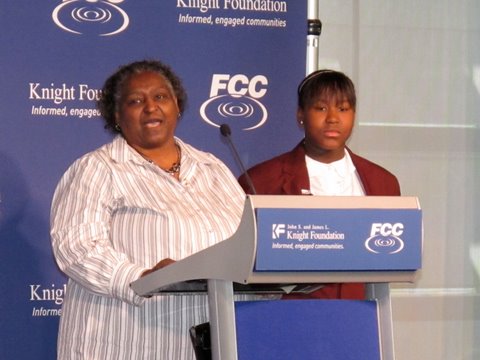
Florence Pearson and her daughter speak at the Newseum. Picture courtesy of FCC.

“I was handicapped. I had to have someone else type my work for me,” said Florence Pearson, Education Director at Head Start in NYC, as quoted on the KnightBlog and pictured on the left with her daughter. “[After training,] all I can see are possibilities for myself and my family. I went in with fear and came out with the motivation to tackle the computer and make my children proud.”

And what does the FCC and broadband mean to Irvin Aviles, a computer technician from Baltimore? “Broad opportunities for a common community,” he said, explaining how training and certification led to employment for the father of four at Time Warner Cable in Baltimore.

Launching a National Digital Literacy Corps

“If today’s disparities are not addressed, our digital divide will soon become a digital canyon,” said FCC Commissioner Clyburn, who said a “National Digital Literacy Corps” will be part of the National Broadband Plan.

“Broadband is one of our generation’s most important challenges, primarily because it presents one of our most monumental opportunities,” said Clyburn. Universal broadband and the skills to use it can lower barriers of means and distance to help achieve a more equal opportunity for all Americans.”

According to Clyburn, next week’s Plan will recommend a three-part National Digital Literacy Program that will consist of

  • a National Digital Literacy Corps
  • a one-time investment to bolster the capacity of libraries and community centers
  • an Online Skills portal for free, basic digital skills training.

Why? “As political dialogue moves to online forums; as the Internet becomes the comprehensive source of real-time news and information; and as the easiest access to our government becomes email or a Web site, then those who are offline become increasingly disenfranchised,” said Clyburn. “Until recently, not having broadband was simply an inconvenience. Now it’s becoming essential to opportunity and even citizenship. As I have said before, if the adoption gap is not addressed soon, today’s digital divide will soon transform into a digital canyon.”

“Altogether, 93 million Americans do not have broadband at home. And adoption rates are much lower among certain populations, including rural Americans [50%], the elderly [65%], persons with disabilities [42%], low-income Americans [40%], African Americans [59%], and Hispanics [49%]. Among the 13 million children between the ages of 5 and 17 who do not have broadband at home, 6 million are either Hispanic or African American. These disparities won’t just disappear over time if we sit back and do nothing.”

Full text of Commissioner Clyburn’s announcement of the Digital Literacy Corps is available as a PDF.

Principles of the National Broadband Plan

“Targeted solutions should aim to direct resources at populations less likely to be online with broadband,” said Clyburn. Collaborative solutions acknowledge the need for government leadership and coordination in this area; but also rely on the private, non-profit and philanthropic sectors. And local solutions understand that, while the decision to adopt is an individual one, the path to adoption is social.”

“The staff has come up with a number of recommendations with these goals in mind,” said Clyburn.  “To help with cost, the Plan recommends expanding low income Universal Service support to broadband, and exploring using spectrum for a free or very low cost wireless service.  Partnerships between the public, private, non-profit and philanthropic sectors, can help address the relevance barrier by encouraging comprehensive solutions that combine hardware, service, training and content, and by conducting outreach and awareness campaigns that target underserved communities.”

Applying “Gov2.0” in practice

The use of social media and other collaboration technology online has been notable in many branches of government. The FCC launched Reboot.gov earlier this year, following OpenInternet.gov and Broadband.gov.

Even if FCC.gov remains dated, the FCC itself has moved quickly to use crowdsourcing tools for questions,  @FCC took questions about the digital inclusion at summit using the event’s #BBplan hashtag or using email sent to newmedia@fcc.gov. (Authors of “questions from Twitter,” however, were not unattributed.) Several of the tweeted questions were answered and webcast at FCC.gov/live. That virtuous feedback loop using a combination of online collaborative tools and a livestream is one of the better examples of so-called “government 2.0” technology I’ve seen in action.

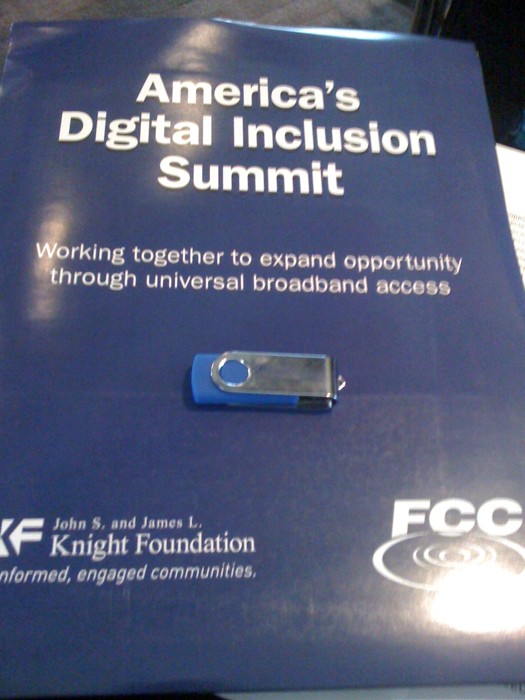
The FCC and Knight Foundation also distributed USB flash drives with PDFs of remarks, reports and relevant links, along with paper versions of the same. That move was both digitally savvy and helpful to members of the media or general audience.

Following the broadband debate ahead

As Amy Gahran pointed out in her post on the National Broadband Plan at the Knight Digital Media Center, this moment presents opportunities for community news and civic engagement.

Given the stakeholders involved in this project, the months ahead will likely be contentious as well. Gahran is spot on in this observation:

“Large, established businesses such as cable companies, broadcasters, and telcos have much at stake and are throwing substantial lobbying muscle toward protecting their interests. Expect that the there will be changes to the plan between the time it goes to committee and the version that eventually makes it to the floor of Congress.

Gahran shared events and resources that will be of use to readers in the D.C. area and beyond in following both the debate around broadband policy and implementation.


Leave a comment

Filed under journalism, technology

Crisis Camp DC (February 27, 2010)

Img_0087Img_0096Img_0095Img_0094Img_0093Img_0092Img_0091Img_0090Img_0088Img_0097

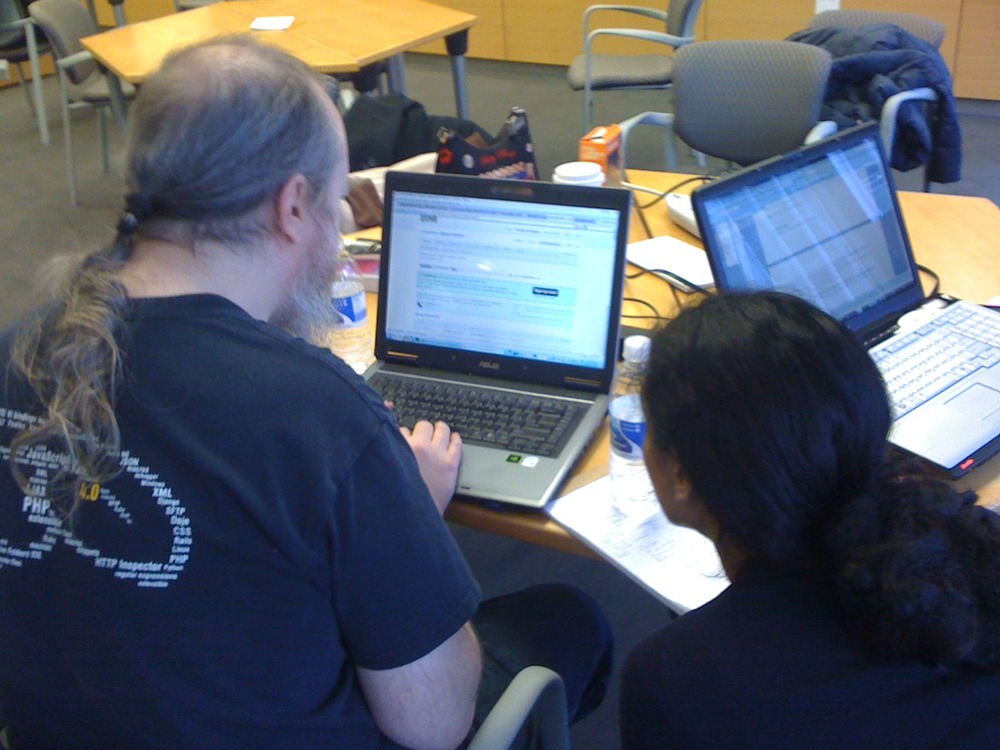
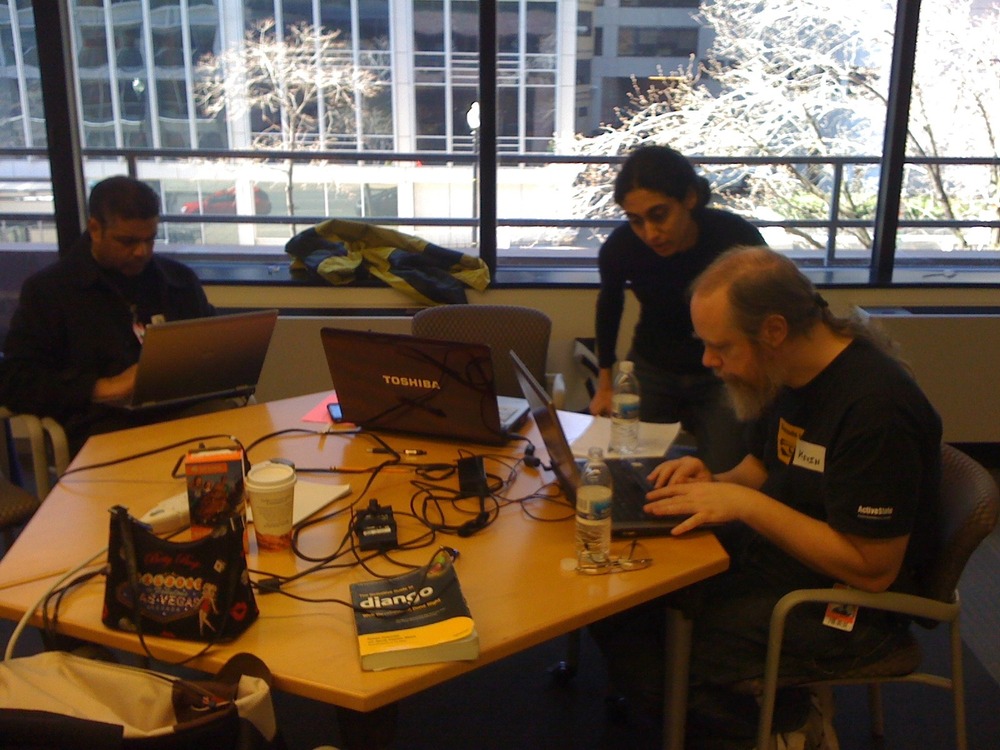
Volunteers came together at the World Bank in DC to create applications and services for use in disasters.

Leave a comment

Filed under Uncategorized

Tech delegation explores Siberia, looks for connection through digital diplomacy [#RusTechDel]

Delegations from the State Department to Russia haven’t generally been accompanied by  great fanfare. In an information age where a growing social layer for the Internet provides unprecedented means for people to share their experiences online, the progress of the “innovation delegation” through Moscow and Siberia has been marked by a steady progression of tweets, online video and photos.

This is, after all,  a group of “geek luminaries” that has considerable reach online and into popular culture. Unsurprisingly, the member of the tech delegation that’s attracted both the attention of mainstream media in the US and fans abroad is Hollywood actor Ashton Kutcher. Kutcher brought with him more than 4.5 million followers as Twitter’s most-followed user (@aplusk) and, perhaps even more crucially, an iPhone equipped with a video camera and a uStream account.

The delegation is led by Jared Cohen of the State Department’s Office of Policy Planning and Howard Solomon of the National Security Council. US Chief Technology Officer Aneesh Chopra joined them in Moscow. They  are also traveling with:

“We’re trying to look at how Russia can utilize its population as a health resource, as an education resource, as an anti-corruption resource, as an anti-trafficking resource,” said Cohen, as quoted at Wired’s Epicenter blog.

According to Wired:

“the group hopes to emerge with clear deliverables. Women in remote areas could receive information — either online or using the SMS feature on their cellphones — on how to have healthy pregnancies. And in order to prevent Russian cellphone companies from being pressured into divulging the names and locations of those who report human-trafficking violations by SMS, the complaints could be cleaned and anonymized outside of the country, according to Cohen.

“The State Department is not bringing these people over as CEOs,” Cohen added. “John Donahoe is the CEO of eBay, but he’s also an expert on e-commerce and building platforms that move large sums of money in ways that aren’t corrupt, so he’s an expert on ‘e-anti-corruption.’”

The success of the mission hit at least one roadblock: Moscow traffic.

Despite tweeting about people, the ballet, the Kremlin, food and one another, the tech delegation was quiet about missing a meeting with Russia’s communications minister — and six Russian tech companies.

Other visits, at least viewed from through Kutcher’s livestream and Cohen’s able narration, have been more productive. Twitter gained another high profile user, after Jack helped Donahoe sign up on Twitter.


[http://www.flickr.com/photos/edyson/ / CC BY-NC 2.0]

Sometimes the best record of an event is in pictures of the delegation’s progress. Three of the pictures in this post  are from Esther Dyson’s Flickr photostream. While the tweets of delegation tell a tale, as do reactions from Russian students and the rest of the online audience, her pictures and captions is the most eloquent storytelling I’ve encountered to date.

Search engines and science

What’s the fastest growing search engine in the world? Apparently  Yandex.ru, as the delegates learned when they visited Yandex.ru headquarters. The Russian search engine has the fastest rate of growth in the world, according to Comscore. After we met on Twitter, Nick Wilsdon also shared statistics on Russia’s top social networksVKontakte.ru & Odnoklassniki.ru.

Students and social media

As with students elsewhere,  Russian students are using phones and social networking to exchange information. Warrior shared a picture of the students gathered at Novosibirsk on Twitter, tweeting about an “energizing chat w/ univ students, topics ranged from talent, innov., corruptin, beer pong.”

Given the return of state control of domestic television networks in Russia, the Internet’s role as a vital means of communication and global news has perhaps never been as acute.


What else will come of the “innovation delegation?”

Veterans of the Cold War might wonder why the U.S. or its entrepreneurs are offering advice or a forum to a former opponent. Even if the “missile gap” is a remnant of the past, Russian and U.S. relations haven’t been exactly sunny over the decades.

It may be that this delegation is a physical expression of the hopes that Hillary Clinton expressed in her speech on Internet freedom. And, in fact,  Jared Cohen tweeted the State Department’s  innovation delegation is  “an example of 21st century statecraft driven by Hillary Clinton.”

But putting concerns about aiding Russian industry aside, creating the conditions that make Silicon Valley or NYC fertile grounds for tech entrepreneurship won’t be easy. “We’re developing joint projects w/Russia on education, anti-trafficking, health, e-gov, anti-corruption using tech,” Cohen tweeted earlier today.

“Novosibirsk is Russia’s 4th largest city,” tweeted Cohen, “less than 100yrs old, Russia’s hub of innovation, & just northeast of India in middle of Siberia. [The] challenge in Siberia is not lack of innovation, but rather avenues for entrepreneurs to attract start-up capital.”

Giving young Russian entrepreneurs confidence about both patents and ownership of intellectual property would help, as would mentors. “I’ve been interested in Russia, working in computer science, engineering, mathematics for a long time,” said Dorsey in Novosibirsk. “Russia has been a major part of the story. I’ve found that there’s a real desire to create projects and an entrepreneurial spirit but not enough face to face discussion.”

Dorsey pointed out that the U.S. tech community regularly has meetups in Silicon Valley and New York City where the largest companies constantly invite people to come in. “When you have that supportive culture, it’s very easy to take risks,” he said. In Russia, Dorsey observed, “There’s not this desire, or a structure, or momentum, to get together and talk about what we want to create together. If you bring people who can fund this from the beginning, you start building angel networks, which are the basis for all innovation in the US these days.”

Desire, control of intellectual property and a tech community would be an incremental change on a larger continuum. As Fraser Cameron wrote in a recent op-ed in the New York Times, Russian President Dmitri Medvedev has called for a number of reforms, including a return to elections and freedom.

Cameron points out that Putin “failed to encourage investment in new industries, technologies or infrastructure.” In that context, will access to Western angel investors or social media matter?

Or, to reiterate the questions I asked to the delegation last night:

What uses of tech do Russians admire in the US? Where could new ICT help there now? How important is free, open speech to stimulating a culture of innovation? What about the use of open source tech? (Listen in for answers in Kutcher’s archived streams.)

Kutcher (above, in his own Twitpic) evidently has gained some perspective, at least on the impact of state involvement. “My perception of Russia and Russian technologists was always based on Russia’s ability and interest in scientific achievement,” he said. “The one thing I’ve found since we’ve been here, without Russian government controlling the room, is that it becomes a much more vibrant, expressive room. My perception of control levels and the reality were two different things.”

Donahoe, former head of Bain & Company, had different considerations. He said that while he saw potential to expand eBay into Russia, it would be on the condition: that law enforcement and the Russian government cooperate on anti-cybercrime.

Donahoe was impressed by a number of experiences, particularly in a new view of Siberia. “There’s a wealth of talent, real opportunity to build on a tech center,” he said. “I’m truck by the talent of Russian engineers. They should continue to play a leadership role in the World Wide Web, as they have continued to do with Google, Paypal and  Skype.”

On techno-utopianism and digital diplomacy


[Photo Credit: Jarod Liebman]

The ability of social media platforms to provide a platform for conversations was repeatedly shown in 2009, particularly in Iran’s elections. As Jack said to ABC News, “when you can see more of what’s happening you can really see more of the opposition is arguing about and take those arguments head on and have a conversation about them.”

The same communication tools can and have, however, been used in “digital dictatorships,” as Evgeny Morosov wrote in the Wall Street Journal on Saturday. Rita J. King’s considered rebuttal in the “The Evolution of Revolution,” pointing out where digital diplomacy has had effect.

Cohen’s own involvement in the Alliance of Youth Movements (AYM) conferences would seem to extend from a similar belief in the potential for 21st Century statecraft.

Some of the most important interactions, after all, are likely to always be in person. As Jack tweeted, “having lunch together is so much more important to creating something than a business meeting -@edyson.”

The role of ICT


[Yuri Marin of Samizdal.ru, a self-publishing/printing site in Novosibirsk. Credit: http://www.flickr.com/photos/edyson/ / CC BY-NC 2.0]

As I listened to the discussions with Russian technologists about what could be done to improve innovation, particularly for civic gain, I thought of a long post that MIT Professor Andrew McAfee posted earlier this month on information and communication technologies (ICT).

As he wrote in “The Oxygen of Bandwidth, or How I Spent My Winter Vacation,” “researchers report that people in the developing world are willing to skip meals in order to buy more bandwidth.”

McAfee’s advice for helping the people of the developing world is simple: “Help them acquire technology that lets them help themselves, and that lets others help them. To paraphrase Winston Churchill: give them the ICT tools, and they will finish the job.”

Mitigating the dangers of journalism in Russia isn’t likely any time soon., but given Russia’s technological base, many of its engineers, students and scientists are equipped with the ability to create such tools already.

Whether this trip will create avenues for better communication, investment in startups or anti-corruption is an open question. It’s one of many that the delegates themselves will no doubt continue to answer in the days ahead.

Leave a comment

Filed under article, photography, research, social bookmarking, social media, technology, Twitter

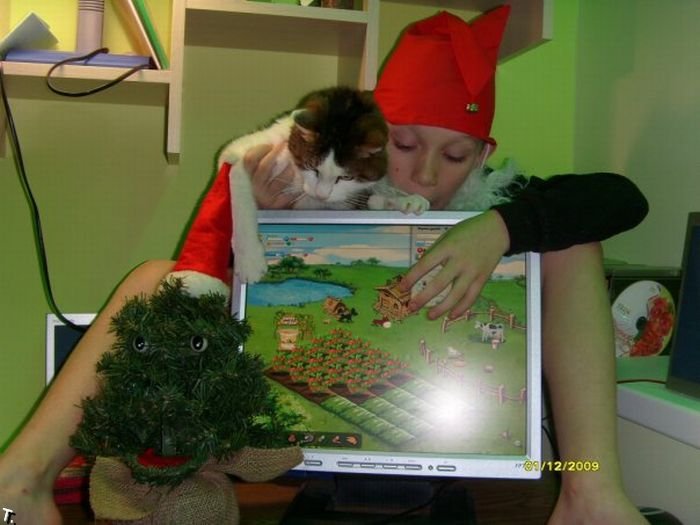
The world “diggs” virtual farming for social gaming online [#RusTechDel]

Russians and Americans both love virtual farming?

The popularity of  Zynga’s “Farmville” for among Facebook’s 400 million users is well known. Given 69 million active monthly players, Farmville is bigger than Twitter.

A less publicized statistic is that users of Russia’s top social network, VKontakte.ru, also have a farming application the top social game.

Earler today, I met Nick Wilsdon, a Russian online marketer, by following the #RusTechDel hashtag on Twitter.  (In doing so, I was reminded again that #hashtags on Twitter are like channels on cable TV.) I asked Wilsdon if he knew how many unique visitors vKontackte & others receive monthly.

Wilsdon answered with a quick report on vKontackte and Odnoklassniki.ru. According to the statistics he cites, “Happy Farmer” has more than 6 million users and revenues estimated at $200 million dollars per month.

Judging from the gallery of Happy Farmer fans at English Russia, the social game has inspired a passionate following.

And, as a post at The Next Web points out, a farming game is atop the list of most popular social games in China.

Whether or not gaming addiction is an issue, China’s burgeoning social gaming market shows how popular – and profitable – this phenomenon has become.

As VentureBeat’s reporting on online faming games suggests, there’s a “new agrarian revolution” in China. It’s tempting to summarize a global interest in social gaming on the farm as a common virtue, as millions tend virtual gardens for a few minutes every day across different cultures.  It would be lovely if it spoke to yuor shared interest in growing things.

Unfortunately, there’s a dark side to virtual farming parallel to perils of factory farming in the real world: the profit motive.

As Elliott Ng writes:

Some fear that this new social farming revolution may not contribute to the positive development of society. A central feature of social farm games in China is stealing vegetables. Official state media People’s Daily reports that 70 percent of users on Kaixin001 cite it as their favorite feature, and it has even spawned the popular phrase “How many vegetables have you stolen today?”

This key addictive feature has created news stories of business executives “obsessed” with stealing vegetables and broken relationships over vegetables stolen on the night shift. The game is so addictive — with players setting alarm clocks at all hours of the night to check crops — that it 
“destroys jobs and relationships.”

“Simplicity and stickiness are behind the global epidemic of farm games. Anyone can learn to grow crops within minutes and reap a reward for getting friends — or the entire office — addicted too,” said BloggerInsight Co-Founder Lucas Englehardt.

There’s a business in serving that intense interest, along with providing others a means to slay monsters in World of Warcraft. There’s no small amount of psychology at work behind the incentive structures of these games, as designer look for ways to induce users to spend money on virtual good or services. And, as Michael Arrington pointed out in “Scamville” in TechCrunch last year, the “social gaming ecosystem” can lead to bad behavior.

For good or ill, however, more of us are planting virtual seeds each day.

Leave a comment

Filed under blogging, research, social media, technology, Twitter

What can news organizations learn from the DC media market?

It’s no secret that the media industry has been massively disrupted by the Internet and mobile communications technology. Newspapers no longer have monopolies on the market for local advertising. And news breaks in real-time across social networks like Twitter, splashing on the the 24 hour news networks minutes later.

The media market in Washington, D.C. has been similarly affected by technological change, particularly as new, nimble online players have moved into the nation’s capitol. Last night, I visited FedNet’s officers in D.C. for the Online News Association‘s February meetup. The night featured a panel moderated by Keith Carney, President of FedNet and featured Mike Mills (@Mike_Mills), Editorial Director of the Congressional Quarterly/Roll Call Group; Howard Kamen (@hkamen) Partnership Editor for USA Today, and Karl Eisenhower, Editor, New Media Strategy for NationalJournal.com. Fednet will be posting video soon; in the meantime, the livestream I recorded is below:
Vodpod videos no longer available.

more about “#ONADC on USTREAM: The Online News As…“, posted with vodpod

The panel primarily focused on the business of online news as practiced by these different organizations. Congressional Quarterly (CQ) and Roll Call have a combination of a subscription model focused on high-value, scarce information gleaned from dedicated reporting on the minutiae of legislation, lobbying and political news. The combination of access, high value eyeballs and profit didn’t escape another provider of high value information: As Mills observed, the Economist Group owns both Roll Call and CQ now. The same media group also runs Congress.org, which Mills says is for “citizens to learn about Congress engage in grassroots activity.” He’s not worried about losing content to search engines, either, given a closed subscription model. “We’re not on the Internet, we’re on the intranet,” said Mills.

USA Today, by contrast, is a national newspaper with a generalist focus. According to Kamen, partnerships with other organization are providing USAToday.com with data for interactive graphics. Those interactive features in turn provide sustained traffic over time to support an advertising revenue model. When asked by Carney if a paywall might show up at USA Today to match the reported metered model at the New York Times, Kamen responded that “I don’t think that’s going to happen any time soon.” USA Today has moved into mobile news, recording over 2.5 million downloads of its free iPhone app. “We made it free to get eyeballs first,” said Kamen.

Even though the paper’s leadership has focused on retaining its position as the most widely circulated paper in the US, Kamen’s comments made it clear that USAToday.com is an important part of its future. “I truly think we do have an ‘online first’ model now,” said Kamen, although there coordinating print and online remains a “work in progress.”

The bridge between writers and coders has been bridged at National Journal, where Eisenhower said every newsroom has dedicated IT resources. The need to connect developers with reporters is felt across town, too: “The real merger that needs to happen is between editorial and IT,” said Mills.

National Journal is also shifting with the times, looking carefully at where and when readers are consuming their content. “Knowing our audience means knowing their work habits,” said -Eisenhower. “Mobile is very important.” Like other glossy weekly magazines, National Journal is experimenting with new advertising models as print circulation wanes.

Each publication also fits into a hypercompetitive emerging media landscape in DC. Whether it’s Politico, the DailyCaller.com, the Fiscal Times or Bloomberg’s coming “BGov” http://bit.ly/cTD1m8, there’s a host of new players that are competing for eyeballs and ad dollars with the Washington Post, Washington Times, the Hill, the Washington City Paper, the Metro Weekly. And that doesn’t even factor in local blogs like the DCist, KStreetKate and We Love DC, or the influence of NPR/WAMU and local TV stations.

What will 2010 bring? Innovation and disruption, without question. Certain takeaways from last night, however, should be of use to every media organization, even those without immense national circulations or access to information of interest to readers with attractive demographics for advertisers.

First, go where the readers are. Mills observed that failures in business models were often rooted in not following the audience to where they’re getting information.

Second, go mobile. Create applications, stripped down websites and email alerts that allow the audience to get news on the go.

Third, use data to create evergreen content. Organizations like Gallup or even governments themselves are providing data feeds or sets that can be used for interactive graphics.

Finally, get social. Facebook recently passed Yahoo as the second-most visited site in the world. Many news organizations are finding that social networks are a significant source of traffic, as the audience shares what it’s reading.

All in all, a great night. I enjoyed talking with the always-entertaining Tiffany Shackleford about celebrity culture online and Lee from NPR’s “Tell Me More” about digital distribution and syndication. Even as old models crumble, there’s no shortage of innovation in how we share the news in 2010.

Leave a comment

Filed under blogging, journalism, social media, technology, video

Voices from the #Gov20LA Unconference: On Innovation and #Gov20

Earlier this month, I stopped in Los Angeles to see what was happening at Goverment 2.0 LA, a hybrid of the unconference/camp and conference model organized by Alan W. Silberberg and Lovisa Williams. I’ve already shared some thoughts on what I learned about language of government 2.0, the history of disruptive innovation and the ways government adapts to technological change.

While I’m proud of those posts, one of the themes that emerged from the weekend was the importance of video for communication. I’m not at all on “video as the new text,” especially for countries with low Internet penetration or bandwidth, but there’s no denying that online video has extraordinary power in conveying messages. Just look at video of Iranian protesters on the streets of Tehran, reports from the earthquake in Haiti or the President of the United States on YouTube. Tune in to CitizenTube any minute of the day to witness that power in action.

Following are short videos from Gov2.0 LA organizers and attendees that share their takeways from the event.

Lovisa Williams

@lovisatalk talks about the goals of the Gov2.0 LA Camp.

Ben Berkowitz

@BenBerkowitz is the CEO of SeeClickFix.

Lewis Shepherd

@LewisShepherd discusses collaborative technology and government.

Wayne Burke

@wmburke talks about Govluv.org, on online platform for connecting to government representatives using Twitter.

Antonio Oftelie

@AntonioOftelie conducted a Government 2.0 Survey for Harvard’s Kennedy School.

Alan Webber

@AlanWebber talks about the international flavor of the Gov2.0 LA Camp.

Laurel Ruma

@LaurelRuma on her impressions from Day 1.

Lisa Borodkin

@LisaBorodkin on the language of Government 2.0.

Christina Gagnier

Christina @Gagnier on communicating about Government 2.0.

Justin Herman

@JustinHerman goes West Coast.

Adriel Hampton

@AdrielHampton on his impressions from Day 1.

Finally, here’s GovFresh.tv‘s video that features interviews with some of the people above and more:

2 Comments

Filed under application, blogging, friends, journalism, microsharing, research, social bookmarking, social media, technology, Twitter, video

Google reacts to negative Buzz, improves privacy settings. Will it be enough?

As the Wall Street Journal reported today, Google’s development team has been working “feverishly” to tweak Buzz privacy settings. Earlier tonight, Google responded to widespread privacy concerns about Buzz, its new social messaging platform.

Todd Jackson, Buzz product manager, annouced on the Gmail blog that Google will make three updates to Buzz users’ startup experience to address the negative feedback it has received concerning its new social network. The previously announced Buzz improvements based upon user feedback simply did not go far enough to address legitimate privacy flaws or the uglier critiques in the blogosphere.

What has Google done?

  1. Google will add a tab specifically for Buzz in Gmail. While Google has not chosen to separate Buzz entirely from Gmail, as many readers thought might be the case after reading a story in SearchEngineLand.  Instead, as Danny Sullivan reports there, Google may offer Buzz independently from gmail in the future. This move addresses user experience, creating a clear means to configure the social messaging platform or disable it.

  2. Buzz will no longer automatically connect Google Reader or Picassa. Both of these environments could be limited to closed networks of friends or contacts.  When someone wrote “F*** You, Google,” its development team was apparently listening. According to the New York Times story on Buzz privacy settings, Google reached out to the aggrieved user and made changes to address some of her concerns.
  3. Crucially, Google Buzz will move from auto-follow to auto-suggest. Instead of simply connecting a new user to existing gmail contacts, Buzz will now present the user with suggested users from within that social network.

In other words, Google took Harry McCracken (and others) up on a simple solution to Buzz privacy problems: start with users following nobody by default.

Will it be enough to address the concerns of aggrieved users and convince bystanders to try Buzz? As Neil Gaiman tweeted, “Google DID work late. And DID fix it. I don’t think I’ll ever turn it on now, but good on them.” Or as Jay Rosen put it, “I waited, read the news about Google Buzz, absorbed the accounts and experiences of people I trust, and disabled it before ever opening it.”

Whatever the impact of tonight’s changes, Google has moved quickly to improve the areas of Buzz that have caused such angst online. As Gina Trapani, a self-described “Google fangirl” tweeted,  “no doubt Buzz’s privacy issues are seriously problematic, but at least they’re iterating quickly and openly.”

The question that remains is why none of these privacy concerns were clear at the outset. “Google addressed most concerns – good job,” tweeted Evgeny Morozov. “But strange they hadn’t expected the backlash. What were they really thinking?”

Morozov, whose trenchant analysis of the “wrong kind of buzz around Google Buzz,”  has been an prominent voice in highlighting the risks of using public social networks for citizens in countries where voicing dissent can carry a death penalty. As he wrote, “I am extremely concerned about hundreds of activists in authoritarian countries who would never want to reveal a list of their interlocutors to the outside world.”

This change may address that concern, though an “evil genie” may already be out of the bottle if intelligence services have already mined activists’ social networks. It’s not just citizens within authoritarian governments that had much to lose, after all. As danah boyd observed, “automated connections (a la Google Buzz) are particularly dangerous for at-risk populations.” Lawyers have other concerns: exposing clients through email addresses could violate confidentiality agreements.

Another tweak will help a bit with some of the above. As Jason Kincaid wrote at TechCrunch, “private e-mail addresses that were exposed in Buzz @replies are now covered up by asterisks.

That said, Google has now followed Facebook in making a major change to user privacy without testing it first or, crucially, allowing its users to opt out. Instead of making joining Buzz an option, Gmail users were added by default. And the only means users had to disable Buzz completely was akin to a nuclear option: deleting a Google profile.

I haven’t found the algorithmic authority or relevancy in Buzz that I’d expected yet. As Zach Seward tweeted, there’s “something to be said for Google Buzz: When @robinsloan hosts a fascinating discussion, you can link to it.”  Buzz support for open data standards may prove to be both disruptive and beneficial for the open Web. Now that I’ve taken steps to hide my contact, I plan to continue using Google Reader to share news to my Google Profile and Buzz to participate in discussions.

That said, this brush with privacy may have tainted the launch of Buzz in much the same way that the death of a luger in Vancouver put a pall over the beginning of the Winter Olympics. Google may have more information about online users that any entity on the planet. By exposing those relationships without offering users the opportunity to opt-out of the new service on launch, the Internet giant has put trust in privacy at risk, an existential worry given that data that Google has about so many.

As Stan Lee put it, “with great power, there must also come great responsibility.” The past week’s backlash has reminded millions of the stakes for such trust.

3 Comments

Filed under blogging, social bookmarking, technology

Playing Dungeons & Dragons on Microsoft Surface? Geektastic.

I played Chess, browsed news and otherwise enjoyed using Microsoft’s table-sized touchscreen computer at the “NERD” offices in Cambridge last year. Fun, but not quite mind-blowing. Interactive Dungeons and Dragons? THAT I could get into:

You can watch another demonstration by the team from Carnegie Mellon University working on the Surfacescapes project, courtesy of CrunchGear’s hands-on review.

Pretty cool. Geektastic, in fact. Now if Microsoft could just do something about that $21,000 price tag for the hardware.

Hat Tip to @StevenWalling: “I’m trying to Force Orb a Dragon over here.”

Leave a comment

Filed under technology, video