Supreme Court rules on workplace sexting, upholds 1987 decision on electronic privacy

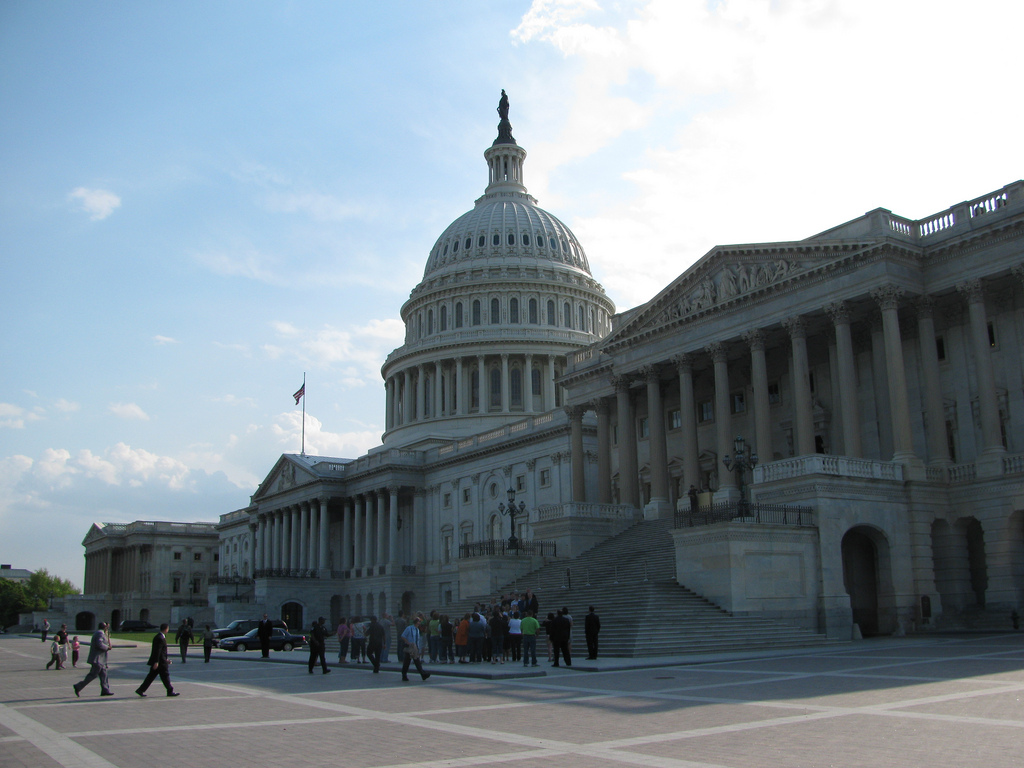
The Supreme Court of the United States

The Supreme Court of the United States

The Supreme Court released an important decision on electronic privacy in the workplace today, which I’ve embedded below.

In the case of City of Ontario, California v. Quon, the court unanimously upheld a 1987 decision that recognized the workplace privacy rights of government employees.

“The case involved the use of text pagers issued to officers by the city police department,” said Jim Dempsey, the Center for Democracy and Technology’s vice president for public policy.

“When one officer consistently went over the allotted limit on messages, his supervisors obtained stored text messages from the service provider and found that many were personal, not work-related.  The officer claimed that the search violated the Fourth Amendment.  The Supreme Court held that the police department’s actions were reasonable, and thus did not violate the constitutional rights of the police officer.

“What is significant about the Supreme Court’s opinion is what did not happen,” said Dempsey. “Faced with an opportunity to curtail workplace privacy (or electronic privacy generally), the Court noted, applying a 1987 precedent, that government employees generally retain their Fourth Amendment privacy rights, and it assumed that government employees may have a reasonable expectation of privacy even in communications they send during work hours on employer-issued devices.

The case could have had very far-reaching implications because of the way in which work-related and personal communications have become so interwoven, in both the government and the private sectors, as employers expect workers to be always available by cell phone, text and email.  The Court recognized this trend, but declined to set any new rules.”

The New York Times also has published analysis of the ruling,” Justices Allow Search of Workplace Pagers.”

“This ended up as a workplace privacy case for government employees,” said Dempsey. “The message to government employers is that the courts will continue to scrutinize employers’ actions for reasonableness, so supervisors have to be careful. Unless a ‘no privacy’ policy is clear and consistently applied, an employer should assume that employees have a reasonable expectation of privacy and should proceed carefully, with a good reason and a narrow search, before examining employee emails, texts or Internet usage.”

The Supreme Court opinion is online at http://www.supremecourt.gov/opinions/09pdf/08-1332.pdf.

CDT and other privacy advocates filed an amicus brief, cited by the Court in its opinion, urging the Court to tread carefully and avoid casting any doubt on the privacy of new communications technologies. PDF: http://www.cdt.org/files/pdfs/08-1332_bsac_Electronic%20Frontier_Foundation_et_al.pdf.
3 Comments

Filed under cyberlaw, technology

Why is Twitter hiring a government liaison? Thoughts from @SG and more. [#gov20]

Twitter goes to Washington

Twitter goes to Washington?

A job posting for a government liaison has ignited plenty of controversy in the blogosphere, Twittersphere, and, one might imagine, in the halls of Twitter HQ out in San Francisco.

The Department of Human Services’ new media guru, Andrew P. Wilson, offered up a thoughtful “Top 10 Requests for the New Government Liaison at Twitter.” Adriel Hampton, a former Congressional candidate and a leading voice in the government 2.0 community, wondered if Twitter could reimagine democracy.

And earlier today, Mark Drapeau, the director for innovative engagement at Microsoft, considered whether government 2.0 had passed Twitter by.

I don’t disagree with Mark that it would be useful for Twitter’s staff to be more of a part of the Gov 2.0 community, as Jack Dorsey has at times been, but I was surprised to read Drapeau write that “the help is really not needed.”

Given how lawmakers are tweeting, with many mistakes, lack of engagement or misunderstanding of conventions, some guidance would seem to be of use. More to the point, the fact that they’re not tweeting at all is no doubt of interest to Twitter HQ.

After all, for every Claire McCaskill or Darrell Issa, there are a dozen Congressmen and women who aren’t using the service well – or at all. Many others have staff do it for them. Focusing on the role of Facebook’s Adam Conner here on Capitol Hill is spot on; hiring someone who understands the lingo, conventions and effective communications strategy for this role would be useful for both government and Twitter itself.

I found Drapeau’s selection of Kawasaki as a model to be particularly surprising, given the polarizing effect his use of Twitter has had, particularly with respect to “ghost tweeting.” Using Twitter authentically and personally is precisely what has been effective for politicians like Cory Booker. The blowback that came from people learning @BarackObama wasn’t tweeting himself should be instructive.

My own comments aside, Twitter’s VP of communications, Sean Garrett (@SG), shared more insight on Drapeau’s post into the microblogging juggernaut’s thinking in posting the job opening. I reproduce his comment below:

I’m Twitter’s head of communications and I have spent very little time ivory towers in my career. You?

Before Twitter much of my career was devoted to building bridges between the technology community and the policy world. Did things like helping start TechNet in 1997 and worked with them for a couple years to creating the first technology-policy focused communications consultancy and serving as a partner there for 6 years. This is all to say that I have a pretty decent view how policymakers and political types view and use technologies, tech policy issues and where gaps remain.

We’ve done a lot of research and talked to a lot of people in Washington (including members of Congress and staffers, administration officials, think tank folks, etc) and elsewhere about what would be a good first step for us as we build a policy presence. That step is this position.

I also think it is important to recognize that when you say that this is a type of position that should have been filled one or two years ago that in January of 2009, we had 22 employees. As recently as last October, we had 70 employees. We just crossed the 200 barrier and now have the ability to do things proactively as opposed simply fight to keep the service up and do the basics everyday.

Do you think that Twitter should have made employee number 23 a DC-focused position or a network engineer?

Finally, and most constructively, thanks to the great work of the Gov 2.0 crowd that you mention, this hire won’t have to start work on day one with a blank slate. There’s a whole community that he or she could tap into to become more effective faster. They can attend the right events and get involved in the existing conversation that promises exciting transformation.

At the same time and in just one example, there are real live members of Congress who at this very moment are wrestling with whether to open a Twitter account and, if so, how to get the most out of it. Having someone being able to walk over to their office and sit down with their team is going to be more helpful than telling them to just follow Guy Kawasaki or absorb the collective wisdom of the “countless consultants working inside the Beltway” through osmosis.

As the relationship of lawmakers, citizens and technology companies evolves, one thing is clear: there will continue to be plenty of discussion about how social media disrupts the playing field here in Washington and beyond.

UPDATE: Steve Lunceford of GovTwit posted an interview with Sean Garrett this morning that provides more detail on Twitter’s search for a government liaison. It’s worth reading the entire post but two answers will be of particular interest to the government 2.0 community:

Q: Is this U.S Federal-focused only, given that you’re hiring in Washington, D.C.?

@SG: Twitter is not just interested in government from a U.S. federal standpoint, but [also] outside the Beltway in states and localities. We’re obviously global as well, and this new role will look not only to U.S., but also how other governments use or don’t use Twitter; how campaigns work/don’t work and how they translate from one level to another.

What need is Twitter trying to fill here?

@SG: We believe Twitter will be better off having a direct dialogue with public officials who use our service. And I would say that yes, the “Twitter 101″ conversations are still important. Many in D.C. are eager to engage on Twitter and we want to help them maximize this experience. And, there are some who don’t understand how to use it or where the value is. We’d like to change this where we can. Having a point person that can help verify government IDs, someone that can be down the street to meet with officials in their office, or serve as an overall point person for government outside the Beltway is the initial goal here.

14 Comments

Filed under social media, technology, Twitter

On the failure of Quit Facebook Day, Social Utility and Privacy

"How to split up the US" by Pete Warden

At 10:19 PM EST tonight, the organizers of Quit Facebook Day reported that all of 33,313 people had dropped out of the Facebook universe. That figure represents a tiny fraction of Facebook’s 400 million users.

That miniscule percentage does not represent all of the people that have quit or deactivated their accounts in the past month, but it certainly implies that there hasn’t been a widespread movement to leave the social networking giant.

I’ve been a Facebook user since 2006. I never had the “college experience” of having an electronic Facebook  but found it instantly useful as a means to stay in touch with family, friends, classmates and former colleagues.

It was, clearly, just what its creators said: a social utility. I didn’t care for Facemail much – and still don’t – but many features, like IM, the newsfeed, photos, people search and video are powerful methods for augmenting Facebook’s users to communicate with one another.

Facebook has become the Information Age’s White Pages, for good or ill, extending the service it provided Harvard students with contact details for one another back in 2004 to hundreds of millions around the world.

The changes to privacy and publicy from the past six months, however, fundamentally shifted the reality of using the platform for many users, particularly those who had trusted the site with sensitive information about their lives, friends or other affiliations. For those who never shared information that could be damaging, the shift to a public default meant little. For people with more to lose by virtue of the nature of the cultures they live within, gender or health status, such changes have much greater significance if revealed to a school, parent, employer or government.

By and large, research cited by digital ethnographers like danah boyd shows that many people remain ignorant of how public their updates are. And people care about their online reputation in 2010, given that every organizational gatekeeper or first date is rather likely to Google you.

Recent amendments to the privacy policy and user interface notwithstanding, concerns that those who have the most to lose are not being considered persist amongst privacy advocates. Reports of account deletions, page takedowns or harassment in other countries, with limited recourse for users, also reflect uncertainty over the future of the Internet’s #1 site. Recent shifts to Community pages have also resulted in consternation on the part of both brands and government, though Facebook’s spokesman promises that such features are in development and will be improved.

I have not quit Facebook. I continue to find it useful as a social utility, as before, applying Facebook as a “people browser” for those with whom I want or need to stay connected. I use LinkedIn as a business utility and Twitter as an information utility. I doubt those use cases will change for me personally this year, although I’m watching carefully to see how the most recent privacy controls are implemented.

Recent decisions of Facebook’s management around privacy and personalization may bring its operations under regulation by the FTC, as is already the case with privacy commissioners in Europe or Canada. If consumer harm due to management actions were proven by any of those entities, it would significant implications for the innovation in this sector, although it might also cause developers to build privacy into such platforms from the outset.

As government entities continue to create pages, they will likely be obligated or even required to archive conversations there using Facebook API or other tools. After all, there’s substantial utility to measuring and analyzing the interactions there for those that wish to understand public reaction to policy, candidates or initiatives. If the terms of service are not clearly described to those interaction with government employees, additional layers of complexity around privacy and the rights of consumers will also be in play. And problems in Facebookistan, as Rebecca Mackinnon writes, extend abroad to exposing at-risk members of society to abuse, deleting activist accounts and taking down Pages.

There’s much more to electronic privacy than social networking, not matter how large Facebook becomes. Putting online privacy in perspective is essential. And I tend to agree with danah boyd’s position that quitting Facebook is not enough, especially for those of us in the tech media that have some degree of influence in informing the public and holding the social networking giant’s management to the standards they and law set for ethics and business practices.

But, fundamentally, human relationships are about trust. If we cannot trust that the manner in which we connect, filter and share information with one another will not change with the business needs of a platform, our relationships will be damaged. We have only to look at the statistics on jobs lost, applications denied and romances sunk through virtual actions to understand how those consequences may play out in our offline lives.

17 Comments

Filed under social bookmarking, social media

2010 Rolling Thunder D.C. Motorcycle Rally

Img_0214Img_0215Img_0216Img_0217Img_0218Img_0219Img_0220Img_0221

Leave a comment

Filed under Uncategorized

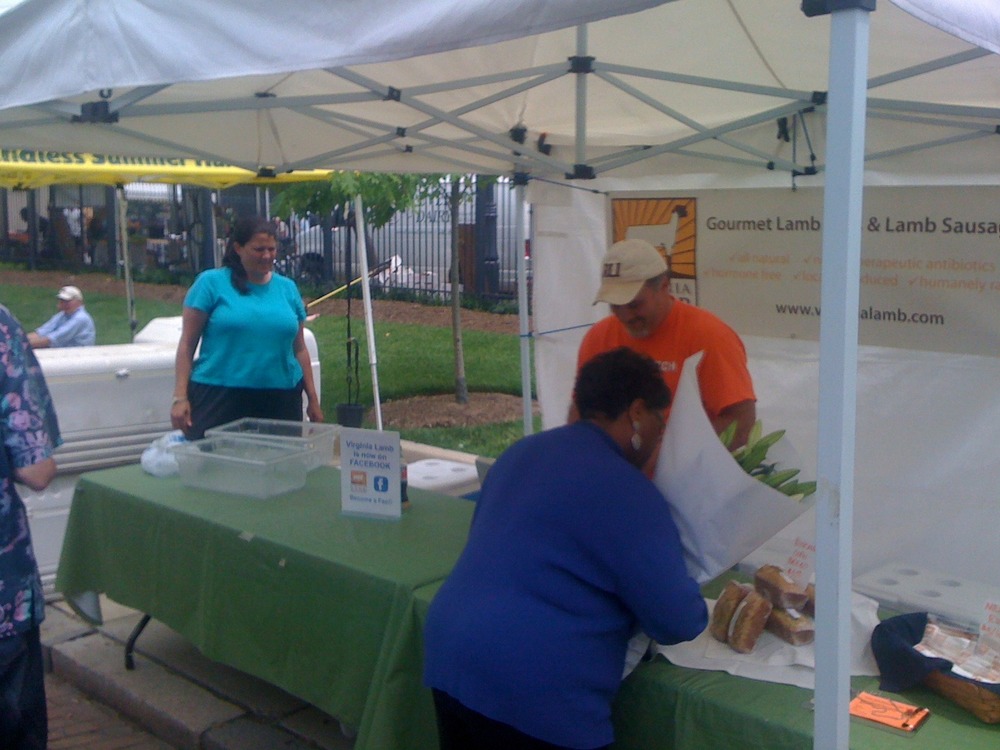
Dupont Circle Farmers Market [May 16, 2010]

Img_0202Img_0212Img_0211Img_0210Img_0208Img_0207Img_0206Img_0205Img_0204Img_0203Img_0213

2 Comments

Filed under Uncategorized

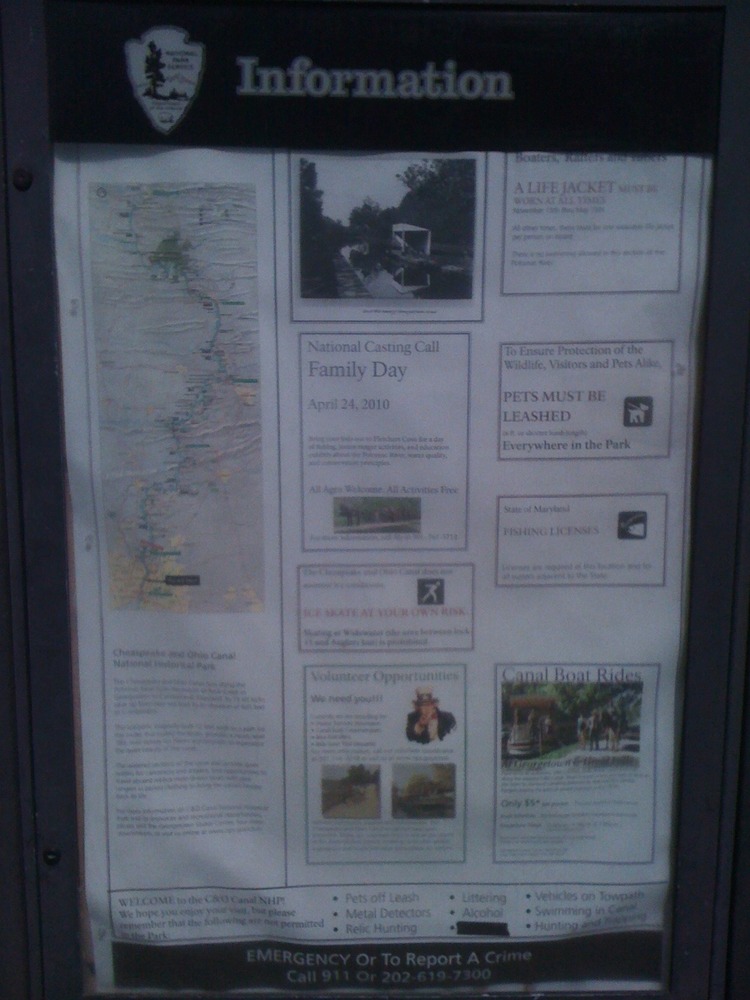
Cycling from the Mall to the towpath of the C&O Canal and back

Img_0182Img_0193Img_0194Img_0195Img_0196Img_0197Img_0198Img_0199Img_0200Img_0192Img_0191Img_0183Img_0184Img_0185Img_0186Img_0187Img_0188Img_0189Img_0190Img_0201

Leave a comment

Filed under Uncategorized

Sting and the Roots rock the Mall for Earth Day [Video]

The National Mall in Washington, D.C. has had pavilions, windmills and solar panels atop the new grass since the official celebration of Earth Day earlier this week.

One dome even contained an electric motorcyle from Siemens, the beautiful “smart chopper.”

Tonight, the Mall also featured some of the world’s best musicians bouncing rock, rhythm and soul off of the walls of the Smithsonian.

While I didn’t record the cover of “Crazy” that Joss Stone belted out, backed by the Roots and Booker T, or any of John Legend or Bob Weir’s performances, I did manage to capture video of Sting’s performance.

He and the Roots put on a tight four song set. Sorry for the shaky camera work; a man’s gotta dance.

Sting and the Roots: “Fragile”

Sting and the Roots: “Driven to Tears”

Sting and the Roots: “One World

Sting and the Roots: “Message in a Bottle”

For more sights from around today’s Earth Rally on the National Mall, check out my gallery on Posterous.

1 Comment

Filed under music, video

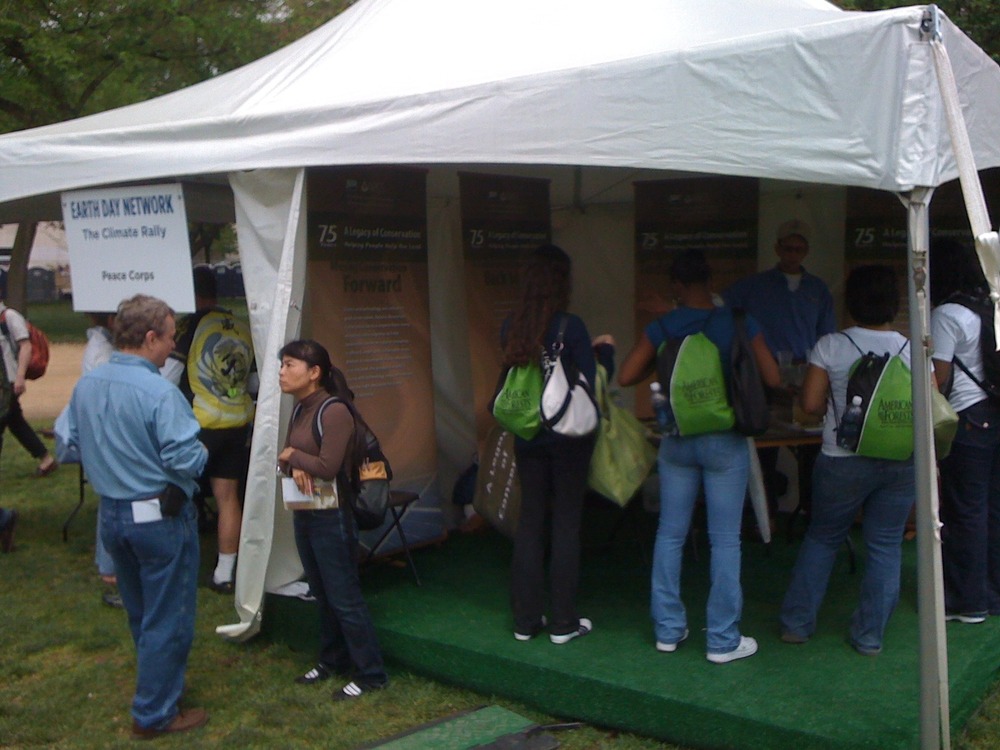
#EarthRally on the National Mall for Earth Day: Green tech, music & activism

Img_0156Img_0170Img_0171Img_0172Img_0173Img_0174Img_0175Img_0176Img_0177Img_0178Img_0179Img_0180Img_0169Img_0168Img_0157Img_0158Img_0159Img_0160Img_0161Img_0162Img_0163Img_0164Img_0165Img_0166Img_0167Img_0181

Leave a comment

Filed under Uncategorized

Serendipity at play: On the media roundtable at #140conf

Unlike last year, I haven’t had time to properly write up this year’s 140 Conference in New York City. My takeaways from 2010 were much the same, however: the real-time Web has disrupted the media. This year’s 140conf didn’t have a volcanic panel on #CNNFail or the full attention of the Internet’s digerati, given Facebook’s concurrent f8 developer’s conference, but those in attendance were treated to case studies in how educators, artists, musicians, developers, marketers, fashionistas and journalists were using Twitter.

Given my profession and involvement in the digital response to the earthquake in Haiti, I was particularly interested in the terrific panels on real-time news gathering (watch it) and the evolution of emergency communications in the era of the real-time Internet (watch the panel.) And given my new role for O’Reilly Media and status as a digital resident of Washington, D.C., I was glad to see Peter Corbett speak eloquently about open government and the upcoming Digital Capitol Week (Watch him).

I expected to learn about innovative uses of Twitter, gauge the maturation of the platform and meet many people I’d know virtually for year in the flesh. What I didn’t expect was that I’d be asked to ascend the stage participate in one of the panels! Due to the disruption to air travel caused by the volcano in Iceland, the editors from the Economist that were slated to be on in the couldn’t make it. Jeff Pulver asked me if I’d like to come up.

So I did.

I was honored to join Benjamen Walker (@benjamenwalker), Senior Culture Producer, WNYC, Fred Fishkin (@ffishkin), host of Bootcamp Report and Nick Bilton (@nickbilton), lead technology writer at the New York Times Bits blog, to talk about how Twitter is changing the ways that journalists report, write and share news.

You can watch the media roundtable on-demand. Given that I didn’t prepare at all, I’m happy with the outcome. Social media can allow journalists to pick up on trends, find sources, find audiences and, over time, develop more trust with readers.

I was also happy to learn that NPR’s “On The Media” also stopped by to ask attendees what’s the point of Twitter?. Good question, great answers, particularly from the New York Times David Carr (@carr2n.

I look forward to participating in the upcoming 140conf in DC.

Leave a comment

Filed under journalism, technology, Twitter, video

Using social media for better journalism: @Sreenet at #ONADC

“I used to say “justify every pixel,” said Sree Sreenivasan. “Now I say earn every reader.”

Sreenivasan, a dean of student affairs and professor at the Columbia Journalism School, went beyond “what Jeff Jarvis calls the blog boy dance,” offering up more than an hour of cogent advice, perspective and tips on social media to a packed classroom populated by members of the DC Online News Association at Georgetown’s campus in Virginia.

Where once he used to go around newsrooms to talk about email, then Google and blogs, now he’s moved to new tools of digital journalism grounded in a reciprocal relationship between the audience and the reporter. After all, Sreenivasan had to tailor his talk to the audience, a collection of writers, editors and producers already steeped in the tools of digital journalism, moving quickly beyond listing Twitter, Facebook and LinkedIn to the tools and services that that enable journalists to use those social media platforms improve their reporting, editing and careers.

“The best people find the things that work for them and skip the rest,” said Sreenivasan. Services need to be useful, relevant and extend the journalist’s work. Quoting a student, now at the Wall Street Journal, Sreenivasan observed that you “can have greatest content in world but will die on the vine if we don’t have a way for our readers to find it.” He classified the utility of social media for journalists into four broad categories:

  • tracking trends on a given beat
  • connecting with the audience, where ever it is online
  • putting that audience to work, aka crowdsourcing
  • building and curating the journalists personal brand

“Tools should fit into workflow and life flow,” he said. “All journalists should be early testers and late adopters.” In that context, he shared three other social media tools he’s tried but does not use: Google Wave, Google Buzz and Foursquare. Sreenivaan also offered Second Life as as an example, quipped that “I have twins; I have no time for first life!”

The new Listener-in-Chief

One group that undoubtedly needs to keep up with new tools and platforms is the burgeoning class of social media editors. Sreenivasan watches the newly-minted “listeners-in-chief” closely, maintaining a list of social media editors on Twitter and analyzing how they’re using the social Web to advance the editorial mission of their mastheads.

He showed the ONA audience a tool new to many in the room, TagHive.com, that showed which tags were trending for a group. What’s trending for social media editors? This morning, it was “news, love, work, today, great, people, awesome and thanks.” A good-natured group, at least as evidenced by language.

Sreenivasan also answered a question I posed that is of great personal interest: Is it ethical to friend sources on social networking platforms?

The simple answer is yes, in his opinion, but with many a caveat and tweaks to privacy settings. Sreenivasan described the experiences of people in NGOs, activists and other sources whose work has been impaired by associations on social media. To protect yourself and sources, he recommended that Facebook users untag themselves, practicing “security by obscurity,” and use lists. As an example of what can go wrong, he pointed to WhatTheFacebook.com.

Where should journalists turn next for information? Follow @sreenet on Twitter and browse through the resources in his social media guide, which he referenced in the four videos I’ve embedded in this post. He’s a constant source of relevant news, great writing and good tips.

1 Comment

Filed under blogging, education, journalism, social bookmarking, social media, technology, Twitter, video