


















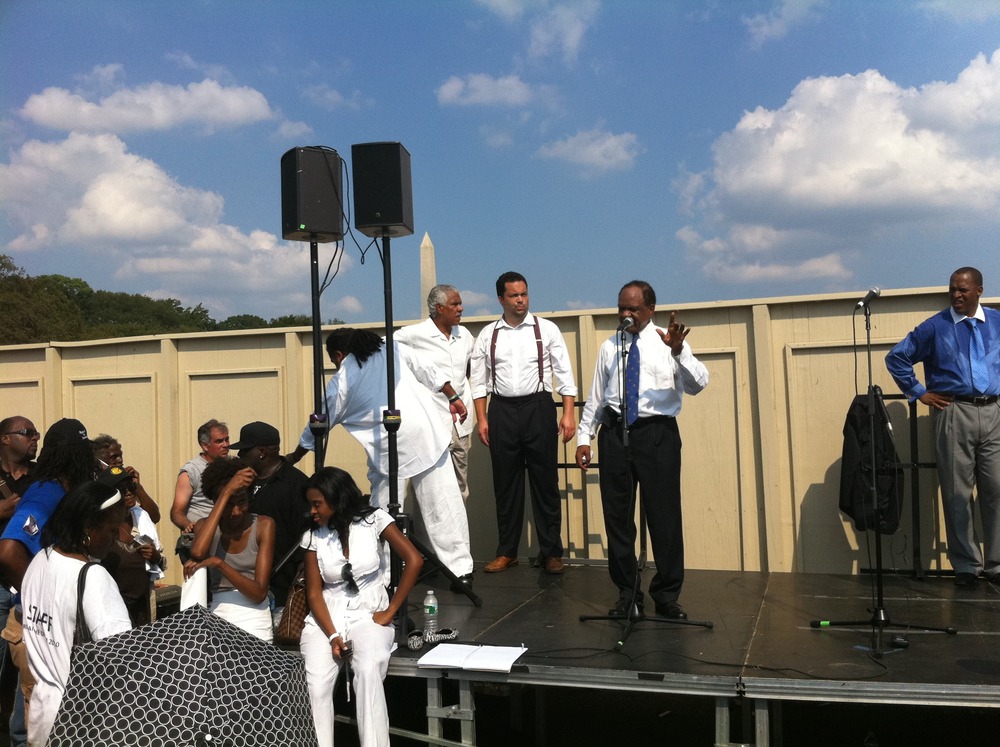
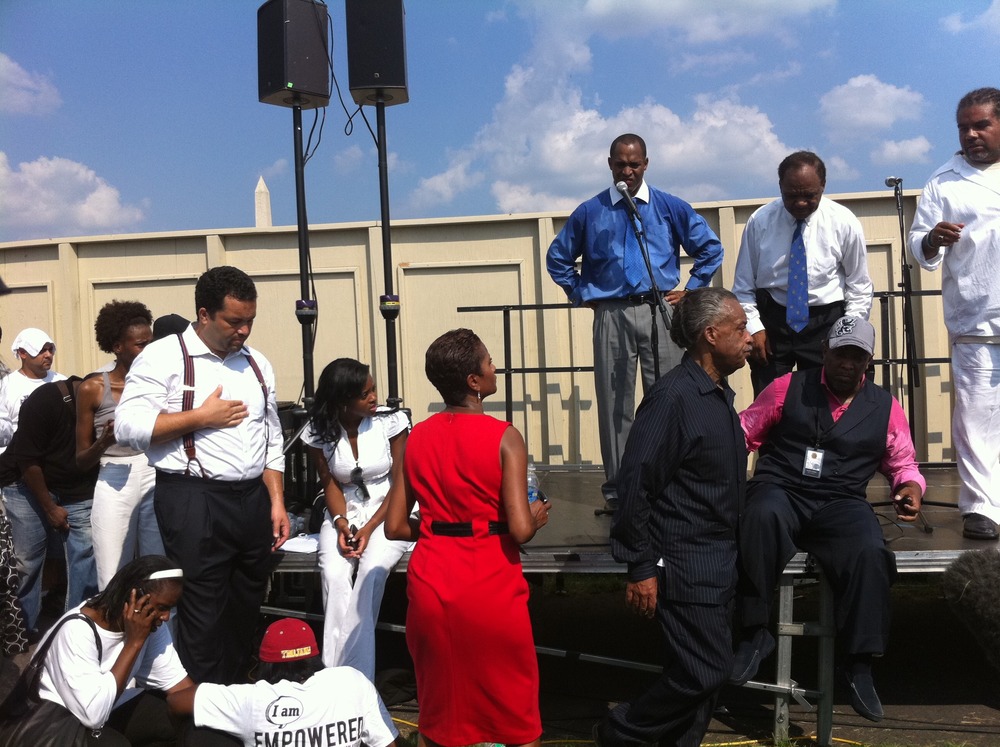
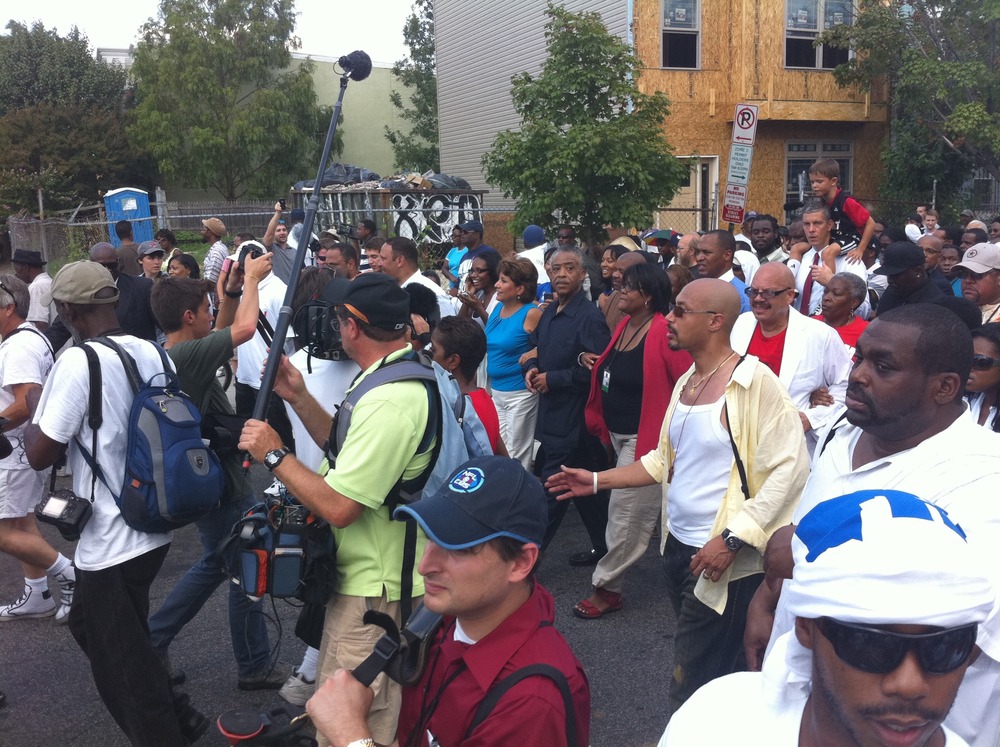
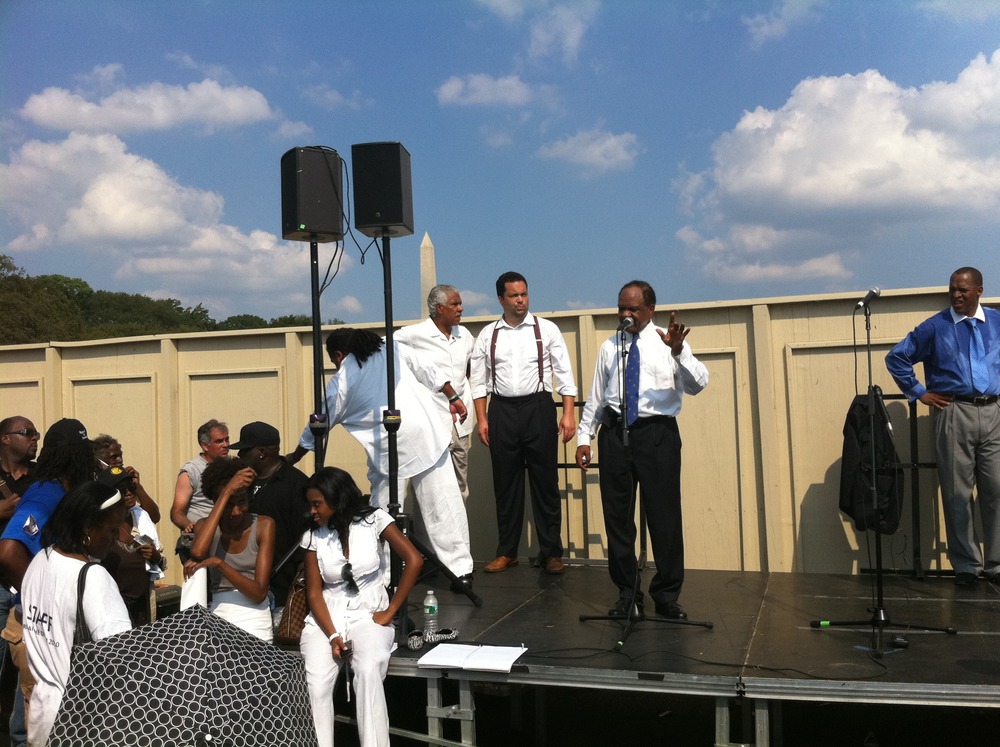
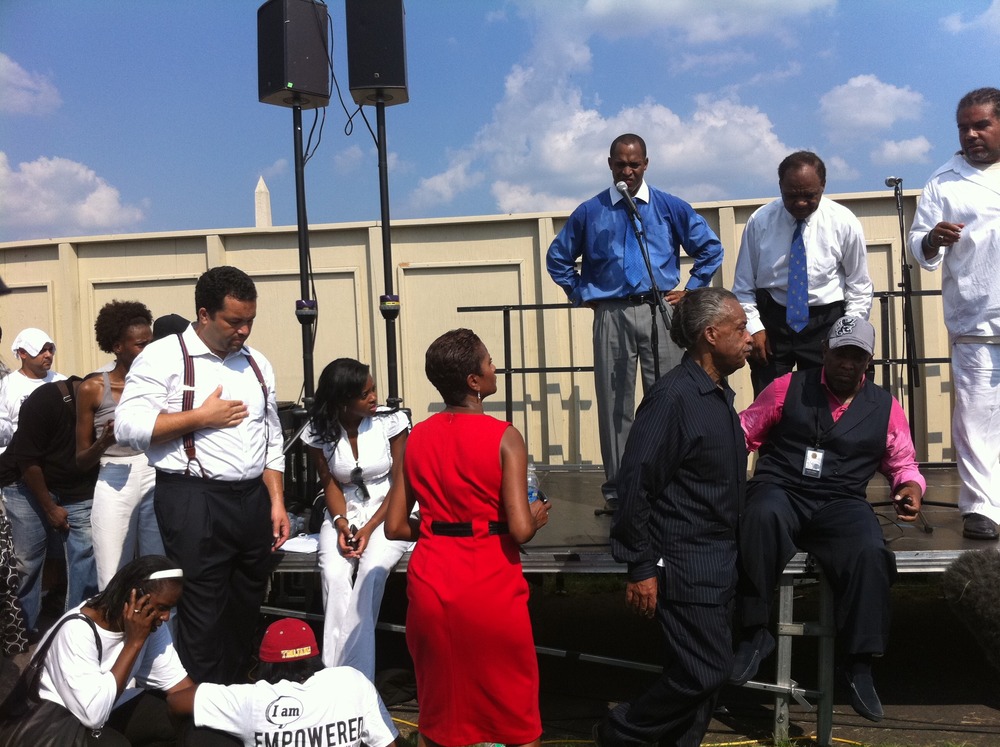
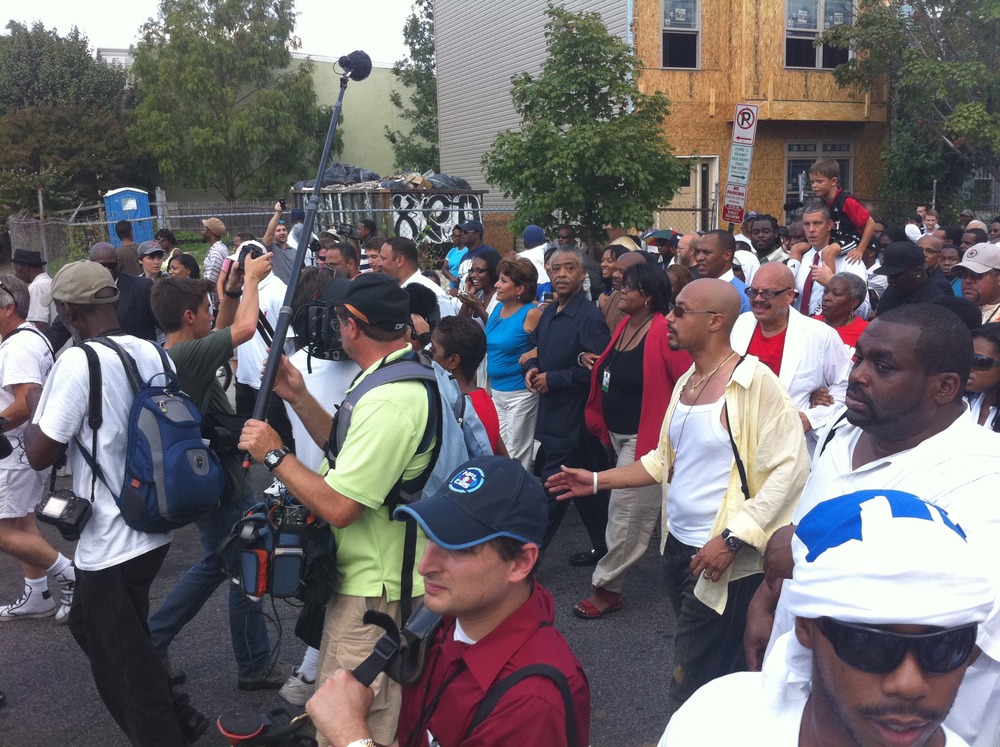
On the 47th anniversary of his father’s “I Have A Dream” speech, MLK III spoke at the site of the future memorial. The full version of Martin Luther King Jr’s speech from the steps of the Lincoln Memorial is embedded below:
The video begins with the sound of “We Shall Overcome,” the most prominent freedom song of the civil rights movement. Today, the site of the future memorial rang with over a thousand voices raised in song.
Filed under video
Some days, it seem like there are as many definitions for Gov 2.0 as there are people. Tim O’Reilly says Gov 2.0 is all about the platform. In many ways, Gov 2.0 could be usefully described as putting government in your hands. And in three weeks, people will come from all around the world to learn more about what’s happening in the crucible of people, technology and government at the Gov 2.0 Summit in Washington.
I’m looking forward to the event and have been enjoying writing about many of its constituencies in the Gov 2.0 section of O’Reilly Radar, The Huffington Post, ReadWriteWeb and Mashable.
As I’ve previously observed in writing about language, government 2.0, jargon and technology, I believe the term should be defined primarily by its utility to helping citizens or agencies solve problems, either for individuals or the commons. Defining it in gauzy paeans evangelizing world-shaking paradigm shifts from the embrace of social media by politicians isn’t helpful on that level. That’s particularly when they’re broadcasting, not having conversations that result in more agile government.
Earlier this morning, I was reminded again of the history of the movement in the United States when, through serendipity, I ended up watching the first few minutes of Tim O’Reilly’s webcast, “What is Gov 2.0?” I participated in the webcast when it premiered this spring but was struck again by a particular vignette:
“The first person who really put Gov 2.0 on my radar was Carl Malamud. Carl is really the father of this movement in so many ways. Back in 1993, that’s pretty darn early in the history of the World Wide Web, he put the SEC online.
He got a small planning grant from the National Science Foundation, which he used to actually license the data, which at that point the SEC was licensing to big companies.
He got some servers from Eric Schmidt, who was the chief technology at Sun. And he basically put all this data he’d gotten from the SEC online, and he operated that for something like two years, and then he donated it to the federal government.
Carl’s idea was that it really mattered for the public to have access to SEC data.”
He still does.
Just look at PublicResource.org, which is dedicated to making information more accessible. Consider his years of working towards Law.gov, which would provide access to the raw materials of our democracy.
For even more backstory, read more about his work as “Washington’s I.T. Guy” in the American Prospect.
Here’s what the SEC wrote about the effort in 1996.
The Commission would like to extend its appreciation to Carl Malamud and Brad Burdick of Internet Multicasting Service. We would also like to express our thanks to Ajit Kambil and Mark Ginsburg of New York University, Stern School (http://edgar.stern.nyu.edu). Operating under a grant from the National Science Foundation for the past two years, IMS/NYU have been providing the EDGAR database to the public via the Internet as a pilot program. It has been an unquestioned success and has provided a significant public service. After the grant came to an end on October 1, 1995, the SEC decided to continue making the vast EDGAR database available to the public from an SEC facility. In addition to the EDGAR data, the Commission has also made available numerous investor guides, Commission reports, and other securities-related information. Much more will evolve from this initial service in the coming months.
Today, I found it notable to be reminded that Malamud was supported by the future CEO of Google in getting the SEC online. That’s the sort of public-private partnership that has substance beyond a buzzword, like his FedFlix effort to digitize films and videos produced by the government,
If you’re interested in Gov 2.0 and open government, the entire webcast with Tim is about 51 minutes long but well worth the time.
If you have some time, I highly recommend it for perspective on the history of Gov 2.0 and insight into what could be possible in the future.
Filed under government 2.0, movies, social media, technology, video
Filtering facts from dross is doubly important during a time of war, which is a critical frame for discussing Wikileaks, open government and new media hurricanes. It’s also true during hurricane season, when accurate reporting of storm tracks, damage and conditions is crucial. A capacity to maneuver more effectively in the most elemental of environments will be useful in 2010 and beyond.
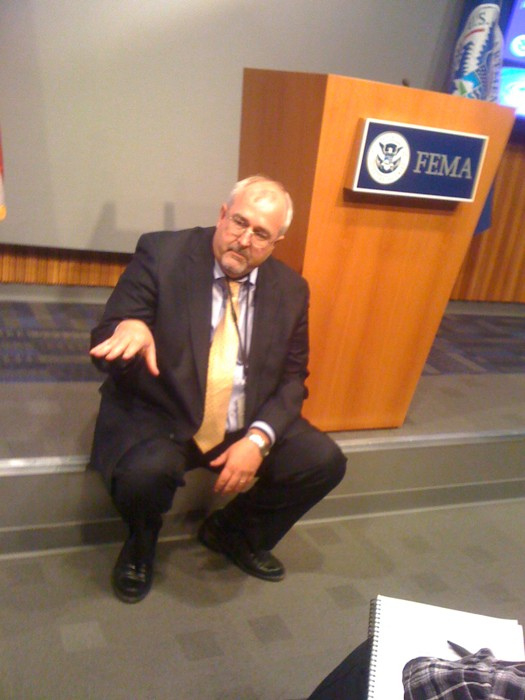 One place that’s happening is at the top of the
Federal Emergency Management Agency, where FEMA Administrator Craig
Fugate has been leveraging technology to more effectively deliver on
his mission.
One place that’s happening is at the top of the
Federal Emergency Management Agency, where FEMA Administrator Craig
Fugate has been leveraging technology to more effectively deliver on
his mission.
While FEMA has taken tough criticism over the years, its current administrator brings a common sense approach and deep experience from his work in emergency management in Florida.
Last month, Fugate talked frankly the first “Crisis Congress” about social media, disasters and the role Crisis Commons and civil society efforts could play in crises.
There are good reasons for that conversation. According to Fugate, ESRI built the ability to add Open Street Map as a layer after watching their work crisismapping Haiti.
He also highlighted the Crisis Commons Oil Reporter app as a prototype of the kind of robust app that could integrate FEMA open data.
“We work for the people, so why can’t they be part of the solution? “ said Fugate to the assembled Crisis Congress. “The public is a resource, not a liability.”
As a recent example, Fugate said that FEMA used reporters’ tweets during Hurricane Ike for situational awareness. “We’ve seen mashups providing better info than the government.”
Fugate has been out in front in leading an agency-wide effort to enable information and e-services to find citizens where they are, when they need to access it. For instance, a new mobile FEMA.gov allows citizens to apply for benefits from a cell phone.
More features are on their way to mobile platforms soon, too, according to Fugate. “I want an app on multiple platforms that knows where my phone is,” he said.
For more on what’s happening with FEMA in this space, read about last week’s Emergency Social Data Summit in Washington from the Red Cross or Voice of America or watch Craig Fugate talk about social media at InCaseOfEmergencyBlog.com.
Filed under government 2.0, social media, technology, Twitter
 The war logs from Afghanistan may well be the biggest intelligence leak ever. Wikileaks represents a watershed in the difficult challenge of of information control that the Internet represents for every government.
Aeschylus wrote nearly 2500 years ago that “in war, truth is the first casualty.” His words are no doubt known to a wise man, whose strategic “maneuvers within a changing information environment” would not be an utterly foreign concept to the Greeks in the Peloponnesian War. Aeschylus and Thucydides would no doubt wonder at the capacity of the Information Age to spread truth and disinformation alike.
In considering the shifting landscape above, Mark Drapeau has asserted that “government 2.0” is the “newest reality of new media.” I’m not convinced by his assertion that “no one is answering” the call to engage on that information battlefield. Given constant answers from various spokesmen over the past week, or this afternoon as the war logs leak breaks, that doesn’t appear accurate.
It’s similarly unclear to me that, were government agencies to develop a more agile media culture, it would sustain a more informed electorate. It’s not clear that it would lead to more effective data-driven policy, nor the transparency that a healthy representative democracy needs to thrive.
More nimble use of new media is important, particularly for the armed services, but given the existential challenges posed by energy, education, healthcare, environment, unemployment and the long war it’s hard to support the content that it should be the focus of open government efforts.
As for his consignment of “journalistic standards” to the company of “other quaint attitudes,” I’d posit that differentiating between propaganda, agitprop and factual journalism matters even more today.
I don’t see standards for separating fact from fiction as quaint at all; if anything, the new media environment makes that ability more essential than ever, particularly in the context of the “first stateless news organization” Jay Rosen has described.
There’s a new kind of alliance behind the War Logs, as David Carr wrote in the New York Times.
That reality reinforces that fact that information literacy is a paramount concern for citizens in the digital age. As danah boyd has eloquently pointed out, transparency is not enough.
What is the essence of open government?
Governments that invest in more capacity to maneuver in this new media environment (the theater of public affairs officers and mainstream media now occupied by the folks formerly known as the audience) might well fare better in information warfare.
Open government is a mindset, but not simply a matter of new media literacy. To suggest that the “essence of open government” is to adopt a workplace environment that both accepts the power of new media and adapts to it seems reductive. I’m unconvinced that it is the fundamental element of open government, as least as proposed by the architects of that policy in Washington now.
It would also seem to have little to do with what research suggests citizens expect of government, even those of a libertarian bent.
Citizens are turning to the Internet for data, policy and services.
There’s also the question of fully addressing the reality that in a time of war, some information can and will have to remain classified for years if those fighting are to have any realistic chances of winning. Asymmetries of information between combatants are, after all, essential to winning maneuvers on the battlefields of the 21st century.
There’s no doubt that government is playing catchup given the changed media environment, supercharged by the power of the Internet, broadband and smartphones. This week we’ve seen a tipping point in the relationship of government, media and techology. Comparing the Wikileaks War Logs to the Pentagon Papers is inevitable and not valid, as ProPublica reported
It’s not at all clear to me, however, how the military would win battles, much less wars, without control over situational awareness, operational information or effective counterintelligence. Given the importance of the ENIGMA machine or intercepts of Japanese intel in WWII, or damage caused by subsequent counterintelligence leaks from the FBI and elsewhere, I question the veracity of the contention that “controlling information better” to limit intelligence leaks that damage ongoing ops will not continue to be vitally important to the military for as long as we have one.
More transparency and accountability regarding our wars to the nation, Congress and president are both desirable and a bedrock principle in a representative democracy, not least because of the vast amounts of spending that has been outlaid since 9/11 in the shadow government that Dana Priest reported out in “Top Secret America” in the Washington Post.
Wikileaks and the Internet add the concept of asymmetric journalism to the lexicon of government 2.0 to the more traditional accountability journalism of Priest or database journalism of the new media crew online at Sunlight and elsewhere. Fortunately for their readers, many of those folks continue to “adhere to journalistic standards and other quaint attitudes and rule sets and guidelines.”
Filed under government 2.0, journalism, social media, technology
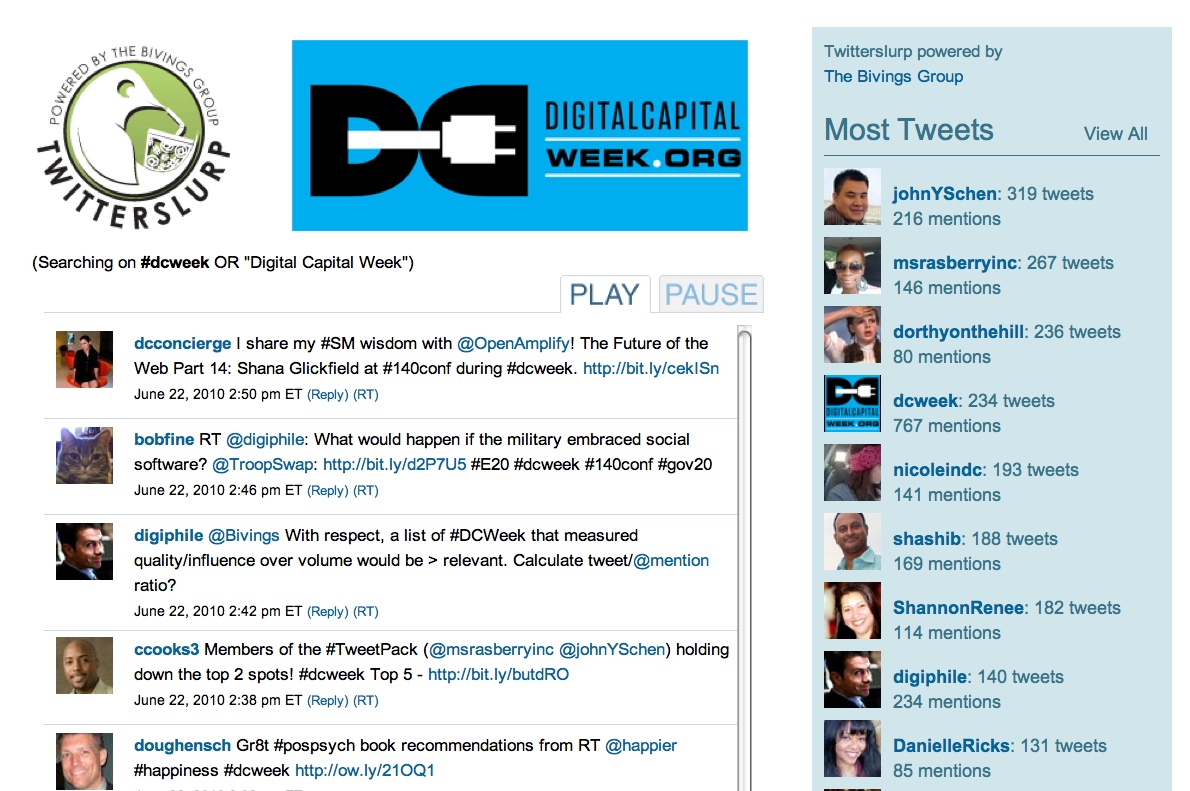 A list of the most tweets from Digital Capital Week is making the rounds today.
The list, generated by the Bivings Group and “powered by TwitterSlurp,” does seem to accurately record the volume of tweets authored by individuals, as well as the number of @mentions generated by those tweets.
Over the course of the 10 day tech festival in Washington, there were 12,916 tweets by 2,425 people about Digital Capital Week or on the #DCWeek hashtag.
Well and good.
Unfortunately, these kinds of lists are akin to the measuring the influence of people on Twitter by the number of followers they have.
As Anil Dash put it earlier this year, no one has a million followers on Twitter. The “million follower fallacy” has since been validated by research, confirming the common sense understanding of many long-term observers of Twitter.
Instead of measuring tweet volume, looking at influence as measured by retweets, @mentions and click throughs is useful, along with trickier offline analysis that might include catalyzing people to do things offline. Charlene Li’s tweet that she was heading over to a keynote on open leadership, for instance, motivated some people to come see her speak.
To get a sense of influence, it might be useful to parse the list of “top #DC Week” Twitter accounts through TweetReach.
A rough “back of the envelope calculation” might compare the ratio of tweets to mentions. Pulling from #DCWeek stats and using that ratio, it’s possible to generate a better list of the folks who had social capital during D.C. Week.
Andy Carvin (@acarvin), for instance, “only” tweeted 52 times but had 209 mentions.
Here are some other notable high ratios:
@frankgruber: 115 tweets, 259 mentions
@Jillfoster: 40 tweets, 104 mentions
@dcweek: 234 tweets, 767 mentions
@corbett3000: 96 tweets, 410 mentions
@digitalsista: 31 tweets, 82 mentions
@darthcheeta: 29 tweets, 82 mentions
@mikeschaffer: 33 tweets, 62 mentions
@noreaster: 46 tweets, 137 mentions
That ratio is confounded by the reach of an account, like @jeffpulver. 36 tweets, 462 mentions, but to more than 360,000 followers.
If you took that ratio and factored in reach of the user, it might come closer to reflecting a “top Twitterer” from a given event or #hashtag chat.
Have at it, math geeks.
The bottom line is that we don’t have terrific technological tools to assess the “best tweets” or top Twitterers after the fact, though tools like Twazzup.com can help in the moment.
For those who think it’s all silly, fine. But measuring audience sentiment and journalists’ coverage at events is likely to be something of interest to politicians, businesses and media alike. Here’s hoping that the analysis relies upon more than volume.
Filed under social media, technology, Twitter
 Much was made of President Obama’s choice on day one of his Presidency to doff his jacket in the Oval Office. When the White House unbuttoned its formal dress code, it was a symbolic move that reflected a larger shift to more casual business attire in culture. While some may feel the President’s showed a lack of respect for the office, for many Americans, doffing the jacket in office and rolling up shirt sleeves to get to work simply reflected their own experience.
For many people after all, it’s about whether you can get the job done, not what you’re wearing when you do it. That issue came into sharp relief yesterday, when some speakers at the 140 Conference held during Digital Capital Week in the District of Columbia came under criticism for not wearing pants.
I wish I could wear shorts more often around Washington. It’s now officially moved into “absurdly hot season” and wearing a suit is miserable. That said, there’s often no way around it. This week, for instance, I wore a suit to the Center for American Progress for the Law.gov workshop, since I knew I’d be meeting John Podesta and other lawyers who put stock in that kind of professionalism. I’ve pulled my suit on to go to the ballet at the Kennedy Center, to go to Congressional testimony or to attend a landmark event on community health data at the National Academy of Sciences.
That said, I wore linen shorts, sandals and a collared shirt to the Gov 2.0 day at Digital Capital Week, since it was damn hot, and that fit my vision of summer business casual in the District. And yesterday, at the 140 Conference, I wore jeans and an untucked dress shirt, since that fit the image of the tech journalist I am these days.
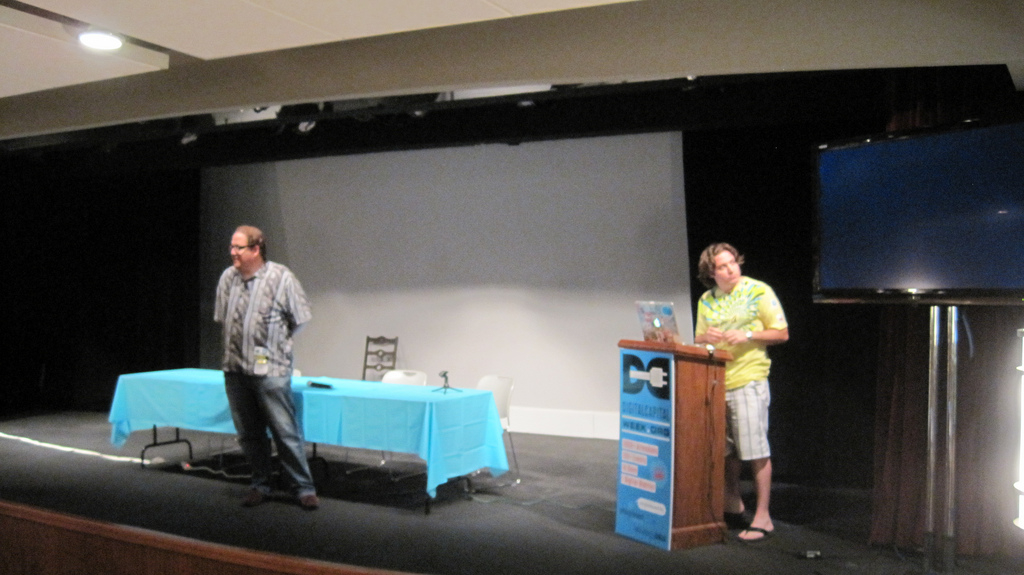 Mike Schaffer, a self-described social media strategist here in DC, focused on elevating the style of online communications professionals in public. Respectfully, I think he missed the point. In every situation above, what I wore mattered but, to my audience, was beside the point.
Peter Corbett may have worn shorts and a t-shirt, as seen on the left, but, in his role, it didn’t matter. Since I know him and have respect for the work he’d done for D.C. Week, at iStrategy Labs for Apps for the Army, and other initiatives, I know what he’s done.
I also believe that the informal nature of 140 Conference requires no more of us than that we represent ourselves as ourselves and share what matters, much like, perhaps, we might approach Twitter.
 Representative Mike Honda (D-CA) may have come dressed in a suit, as you might expect from a Congressman in D.C., but what he said reflected that sentiment:
“It’s about sharing who you are, rather than trying to sell what you’d like to have people believe about you.”
By focusing on what people wore instead of what they said or have done, I’m not sure Schaffer honored the hard work of the organizers, nor the quality of the experiences that, say, Justin Kownacki shared.
Kownacki, whose cargo shorts drew attention at the D.C. 140 Conference, tweeted afterwards that “I don’t believe in wardrobe labels. I judge words and actions, not packaging. I’m amused by the #140conf attendees who think my wardrobe ‘killed my credibility.’ Who knew packaging dictates truth? Wardrobes provide a shorthand by which we can exclude & ignore. Makes life easier for traditionalists & streamliners, I’m sure.”
I’ve been to dozens of tech conferences, many of which featured people dressed to the nines with little substantive tactical or strategic value.
I can frankly say, as someone who has overdressed on occasion, that sometimes wearing shorts and a hip t-shirt is absolutely the right choice.
Tools and Togs both matter
Schaffer wrote that “a carpenter is known for getting the job done, not which saw he uses.”
That’s both true and untrue. Master builders who can afford to work with Bosch or DeWalt tools do so because of the quality of the tools and the precision product they allow. It’s true that someone with lack of knowledge to use them will fare far worse that a worker without, just as a rube with an expensive composite fly rod might be outfished by a boy with a cheap piece of bamboo and string, if the young man knows where and how to apply his simple rig. What you do with the tools matters more than their quality, but don’t overlook the fact that those tools do matter.
If someone contracts with a professional videographer to create a broadcast-quality ad and she showed up with a disposable camera and a vintage iBook, what would the new client think?
Consider the building example again. Carpenters are known for building things out of wood. Getting the job done is dependent upon the general contractor who employs him or her, or the reputation of the master builder that is hired. I have some familiarity with carpentry, after working as an apprentice for 18 months in Massachusetts. In that role, I wore shorts when it was hot, Carhardt pants when it wasn’t and many layers of fleece and polypro when it was frigid. We dressed as needed to get the job done. If someone showed up on the job site improperly dressed, or without boots, a belt, gloves and a full set of tools, he couldn’t get the job done without a loan of same.
Working in digital media is no different, in the sense that what we wear what we need to to accomplish a goal, in the context of the social mores of the space we move in.
Virtually, that might mean creating a well-designed website that is standards compliant. Or developing a mobile app for a conference or service. In the social media world, it means adding an avatar, bio, link and other elements that fill out a profile before sally forth. Dressing to impress can mean many things, but in the end, it’s what you can do and have done that will matter most to your clients, customers and audience. Did I get the story right? Will the house stay sound for decades? Is this a sustainable business? Does the app work?
Given the monumental challenges that lie ahead for government officials in Washington and around the nation, I suspect many citizens would rather they focus on getting real results, narrowing budgets, passing effective legislation and developing effective regulations that address issues in the financial, technical and environmental space, rather than any wardrobe choice.
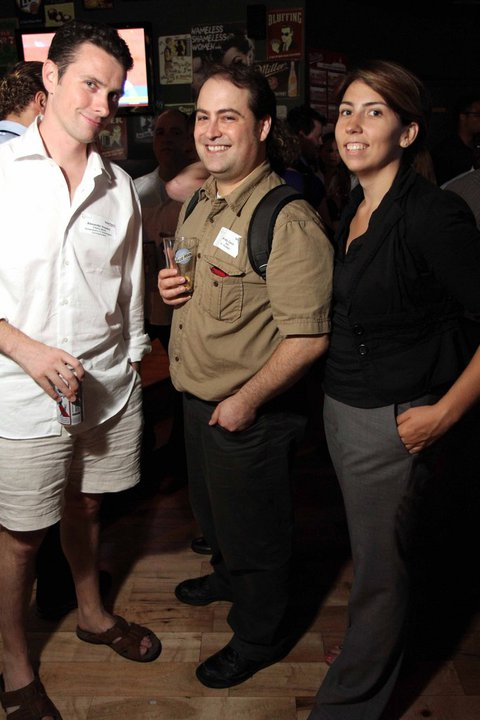 As for me, I hope I can wear shorts more often around Washington.
Filed under article, blogging, friends, journalism, social media, technology, Twitter
 E-PluribusUnum.org




































 digiphile