Awesome Foundation DC Launch Party warmly welcomed in District

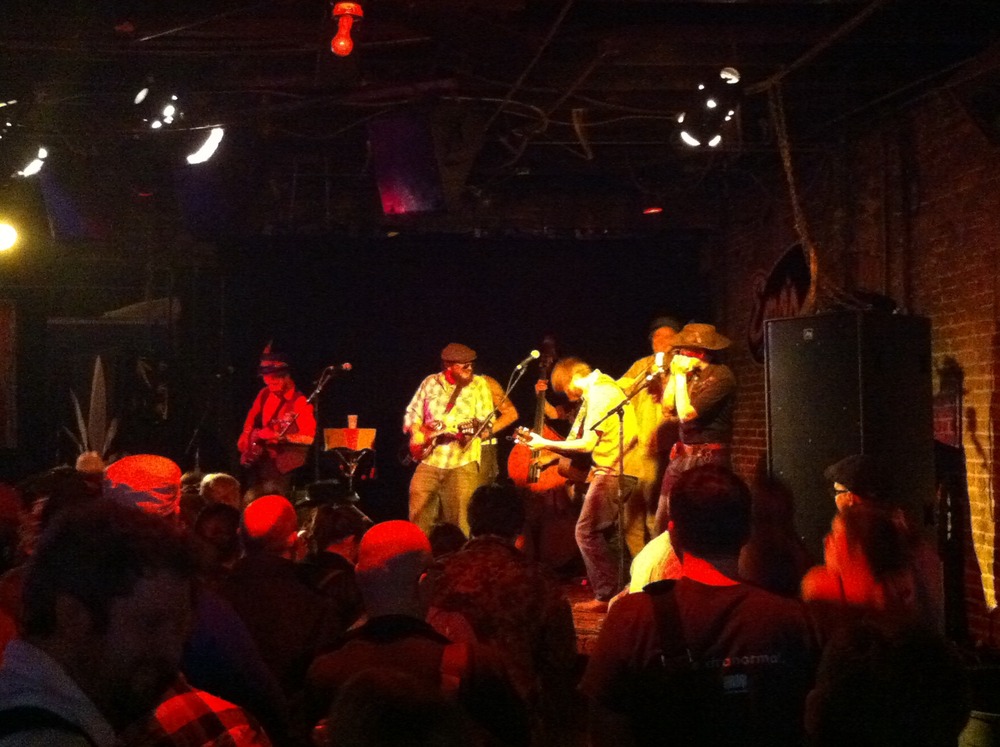
Over the past year, the Awesome Foundation has been growing globally, providing micro-grants for creative genius in multiple continents. Last night, hundreds of people bought “Tickets to Awesome” and joined the DC chapter of the Awesome Foundation at a launch party in One Lounge in Dupont Circle.

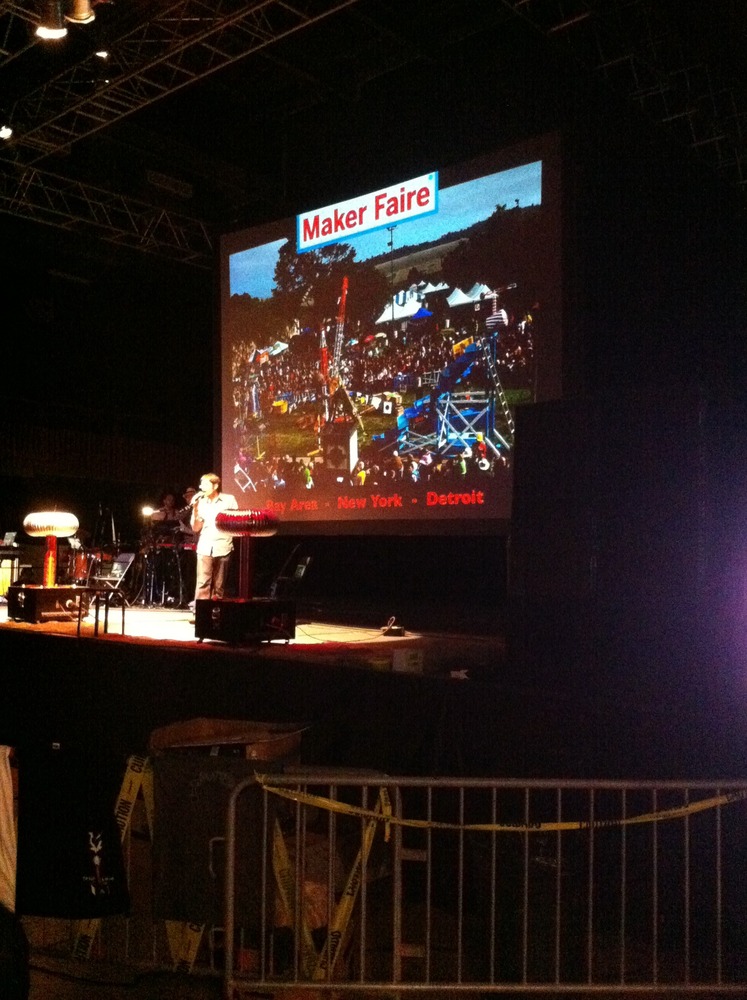
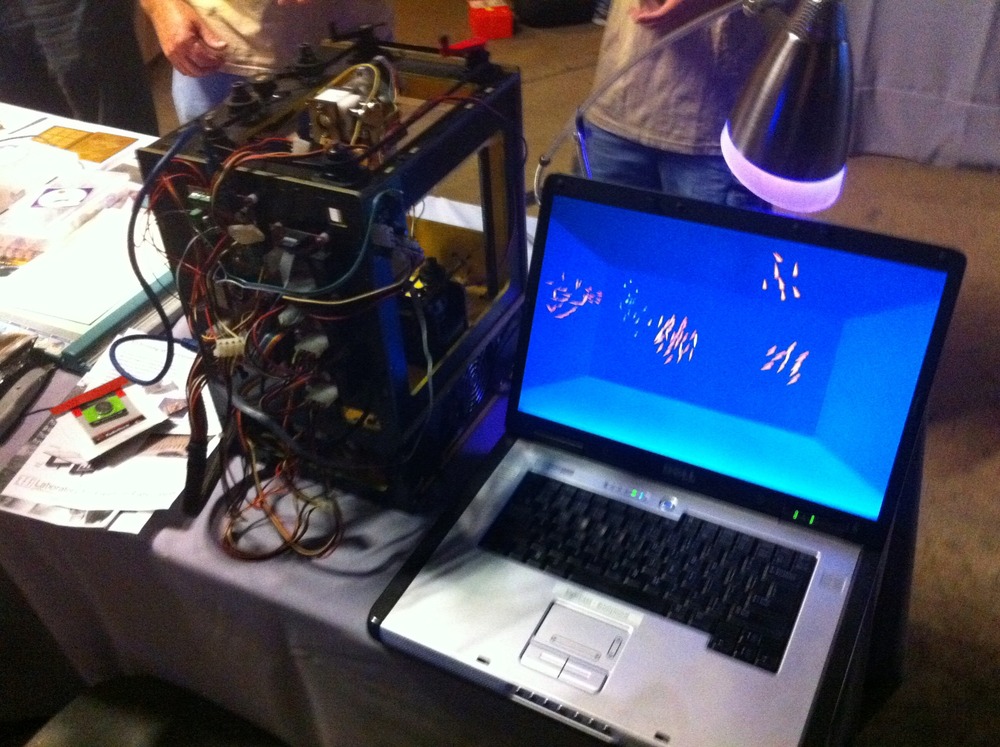
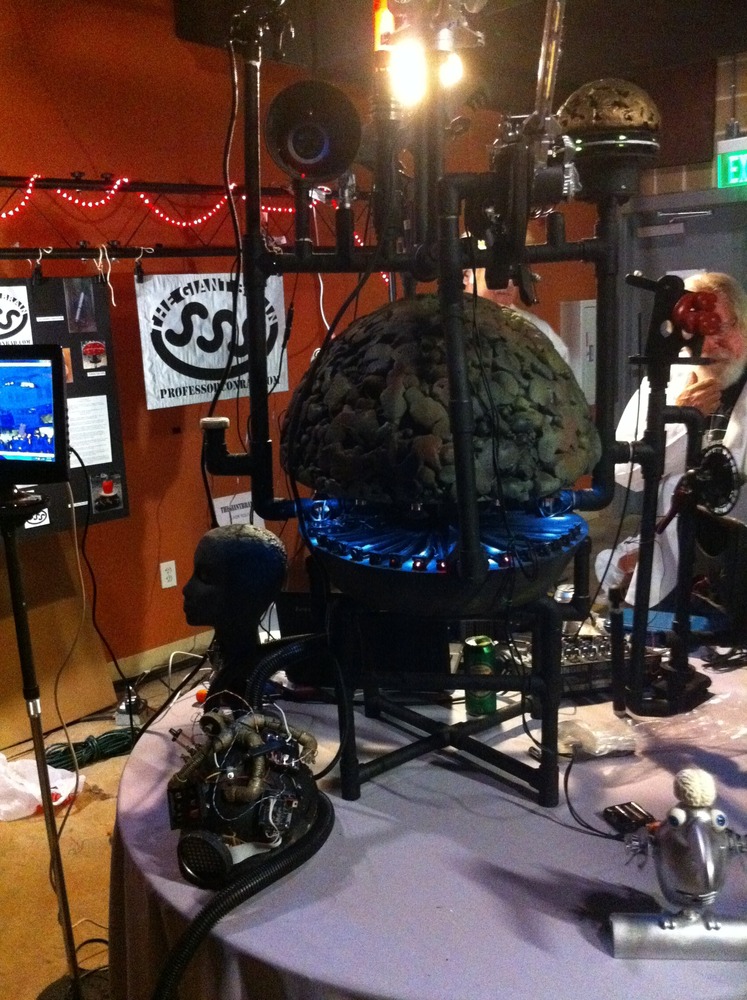
Party goers mixed and mingled with the DC chapter’s microtrustees, including this correspondent, and checked out exhibits and demonstrations from the first four recipients of awesome grants. DC FabLab, Ward 8, Petworth and Counterpoint were in attendance for awards ceremony. Bonnie Shaw (@Bon_Zai), DC’s “Dean of Awesome,” gave a brief speech at the launch party ceremony:

Curious folks also checked out exhibits from My Dream of Jeanne, ExAparatus and ScrapAction, donating to the projects they liked the most using the awesome tokens that came with their tickets. Counterpoint even performed upstairs in front of a packed lounge.

You can follow the Awesome Foundation DC on Twitter for updates on new grants, performances, installations and other awesome events at @AFdnDC.

2 Comments

Filed under art, article, education, friends, journalism, music, photography, social media, technology, video

Scenes from SXSWi

P39P57P55P52P50P48P46P44P74P72P69P67P65P63P61P42P59

Leave a comment

Filed under Uncategorized

Smarter social networking at SMCDC

Tonight, I’ll be moderating a discussion at Porter Novelli DC about what “smarter social networking” means.

Fortunately, posing questions to this particular set of panelists will be much more easier than trying to herd LOLcats.

Some time shortly after 7 PM EST, I’ll start asking Frank Gruber (@FrankGruber), CEO & co-founder of TechCocktail, Shana Glickfield (@dcconcierge), partner at Beekeeper Group, and Shonali Burke (@shonali), principal at Shonali Burke Consulting, what “smarter social networking” means in 2011. We’ll be talking about forming relationships and acting professionally in the context of the Internet. I might even ask about what good “netiquette” means.

I expect to see Federal News Radio Chris anchor Chris Dorobek (@cdorobek) to be there in person to heckle me online, along with the rest of one of the more connected group of people in the District of Columbia. The DC Social Media Club, after all, comes heavily loaded with BlackBerrys, iPhones, iPads and Android devices. Some will even have two of those devices – one official, one not, and will be wired into Facebook, Twitter, email and txt messaging.

This is clearly a group of people that has thought a lot about how to practice “smarter social networking.” As prepared for the discussion last night, I was reminded that the actions that humans take online increasingly are aligned what they do offline.

That’s because the idea of a separate “cyberspace” is on life support. That’s was one conclusion that Clay Shirky brought to a discussion of the recent report by the Pew Internet and Life Project on the social side of the Internet at the State of the Net Conference.

In wired communities, people are increasingly integrating their online lives with their offline actions. As that trend grows with more of humanity coming online, the role of the Internet as a platform for collective action increases. The world has seen some of that power at work in Tunisia and Egypt this winter.

Those connections are not always strongly made, due to the anonymity sections of the Web of 2011 provide. You only have to look at the quality of civil discourse between commentary on YouTube or newspaper comment threads without moderation to see how anonymity can enable the id of humanity to wash over a page. Teachers, freedom fighters, activists, law enforcement, aid workers, insurgents, journalists or criminals can and will use the Internet for different ends. When any tool is put to ugly or evil use, naturally it provokes outrage, concern, regulation or outright bans.

As Stowe Boyd wrote this weekend in his essay on cognition and the Web, however, “throwing away the web because you don’t like what you see is like breaking a mirror because you don’t like your own reflection. It is us we are staring at in that mirror, on the web: and it is us looking out, too.”It is us we are staring at in that mirror, on the web: and it is us looking out, too.”

In this age of radical transparency, it’s becoming harder and harder to hide to hide demonstrated bad character over time. That’s even more true of people who choose to live their lives more publicly on Facebook, Twitter, Foursquare and where ever else there digital nomadism leads them next.

This isn’t an entirely happy development, as the number of citations of social networking in divorce filings suggest. By the end of the next decade, more people may well be paying money to assure their privacy than to gain more publicity.

In that context, “smarter social networking” in an age of digital transparency may well rely more on good character, better business ethics and placing value in building trusted relationships than faster wireless broadband, the newest smartphone or millions of followers or fans.


3 Comments

Filed under article, blogging, friends, personal, social media, technology, Twitter, Uncategorized

Your Twitter journalism is so phat that _____

Today, spurred by a (rather absurd) debate about whether Twitter is journalism, Brian Solis asked whether tweets are recognized as acts of journalism, and as such, regarded as bona fide journalism. That’s a much better question. As of yet, unfortunately, no media law expert has sprung to answer it in the comments for his post.

Del Harvey Somebody else did answer the question on Twitter, albeit substituting snark for substance: @delbius, also known as Del Harvey, the head of Twitter’s Trust & @Safety team.

Her reply, below, set off one of the funniest exchanges I’ve ever had in more than 3 years of tweeting.

Del: Not gonna lie, read that Tweet and what sprang to mind was “Your mom’s an act of journalism.”

Alex: Your journalism is an act of Mom! Or to put it another way, your journalism is so fat, it had to create a @yearly account.

Del: My journalism is phat, thank you.

Alex: Ok, I’ll play. Your journalism is so phat, it can only be published in 140 characters or more.

Del: Your journalism is so phat that it uses the full title of weblog.

Alex: Your micro journalism is so phat that you have to make the Twitter display widgets auto-width.

Del: Your journalism is so phat your lede takes up a paragraph.

Alex: Your journalism is so phat that the IEEE had to create a new standard data format for your letters.

Del: Your journalism is so phat that your angle is obtuse.

Alex: Your journalism is so phat that you have to use deck.ly to share what your officemate ate for lunch.

Del: Your journalism is so phat your informant was Mrs. Fields.

Alex: Your zombie journalism is so phat that your editor has to use liposuction to find where you buried the lede.

Del: Your journalism is so phat you’re below the *second* fold.

Alex: Your journalism is so phat that your readers are directed by their physicians to go on Lipitor after reading it.

Del: Your journalism is so phat your b-roll had butter on it. (wince @ self)

Alex: Your journalism is so phat that newly elected Congressmen are considering a vote to defund it.

Del: Your journalism is so phat your jump cut is a jiggle cut.

Alex: Your journalism is so phat that you had to get 5000 TB SATA drives to be the scratch disks for your video editing.

Del: Your journalism is so phat your POV pieces are for two people at once.

Alex: Your journalism is so phat that your hyperlinks are coated in myelin.

Alex: Your journalism is so phat that @cjoh had to start running marathons to stay on his information diet.

If you have more reasons your journalism is phat, please add them in the comments.

11 Comments

Filed under blogging, journalism, social media, technology, Twitter

“Internal evidence of harm has a lot to do with freedom of speech”

“Remember that privacy harm is not only a question of reputation – that’s external harms – but internal harm. if you’re concerned about your reading or watching habits could be watched, you could be chilled. To me, knowing that other people might know, we might say it’s a privacy invasion that could be chilling.

Internal evidence of harm has a lot to do with freedom of speech. If we don’t have a right to read or watch something in a way that can’t be monitored, it goes to free speech.” –Danielle Keats Citron, Professor of Law, University of Maryland School of Law, commenting on an iTunes privacy hole.

[Image Credit: Rob Pongsajapan]

Leave a comment

Filed under technology

In the Category of Awesome: Legend of Zelda movie trailer, 80s style

Perfect mental health break for the day: seminal Nintendo adventure game mashed up with live action spoof trailer, with nods to half a dozen cult classic films from the 1980s. It’s like a glorious stew of my childhood television and gaming in less than 5 minutes. Well done, Gamervision.com team. Full credits and show notes are available at the Legend of Zelda movie trailer YouTube page.

The complete version of the electronica theme is available at Chipocrite.com: Bizarre Love Triangle

From the shownotes:

You’ve seen God of War. You’ve watched Inglourious Plummers more times than you’d readily admit. Now find out where it really all began with this recently discovered hidden gem from 1987.

In this charming critically-acclaimed tale of first love, Link (Jon Tomlinson), an eternal optimist and adventurer, seeks to capture the heart of Zelda, an unattainable high school beauty and straight-A student (Zane Bauer). He surprises just about everyone-including himself-when she returns the sentiment. But the high school’s over-possessive, megalomaniacal Principal Ganondorf (Dominic Moschitti) doesn’t approve and it’s going to take more than just the power of love to conquer all.

Perfectly capturing the essence of what it means to be a teenager in the 80s, Nick Murphy, Mike Sadorf, and Dom Moschitti reimagine one of the most celebrated video game franchises of all time with the heart, charm, and wit that only they could. It’s the legend of high school. It’s the legend of love. It’s The Legend of Zelda.

And no, they’re not actually making this.

1 Comment

Filed under movies, technology, video

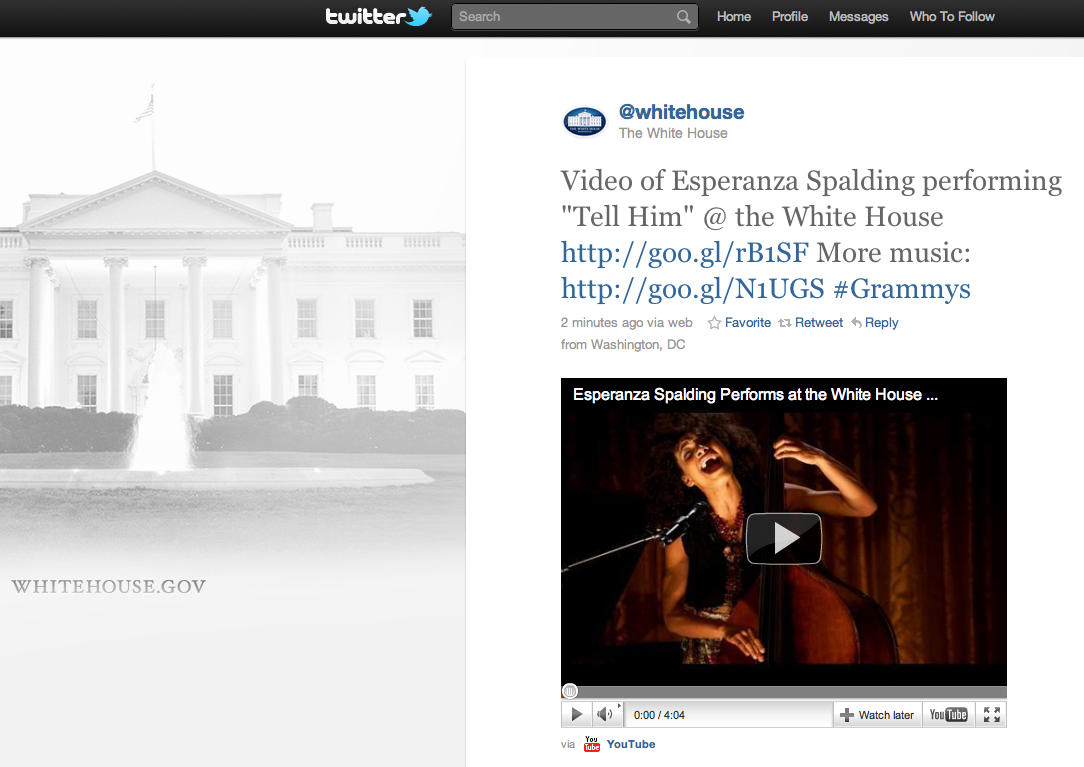
Esperanza Spalding wins Grammy for Best New Artist, @WhiteHouse celebrates the moment

Esperanza Spalding won a Grammy for Best New Artist tonight. She’s an extraordinary talent. Moments after her win, White House new media director Macon Phillips congratulated her on Twitter and linked to a video of her performance at the White House Poetry Jam on YouTube:

Shortly after that, the White House account shared the same video, along with a link to all of the performances on the White House YouTube channel.

It’s good to know there are some music fans down the road at 1600 Pennsylvania Avenue. Congratulations to Spalding for the well-deserved recognition.

2 Comments

Filed under art, music, social media, Twitter, video

Atlantic Jobs and Economy Forum at the Newseum

Img_0302Img_0303Img_0304Img_0305Img_0306Img_0307Img_0308Img_0309Img_0310

Leave a comment

Filed under Uncategorized

Strata Conference

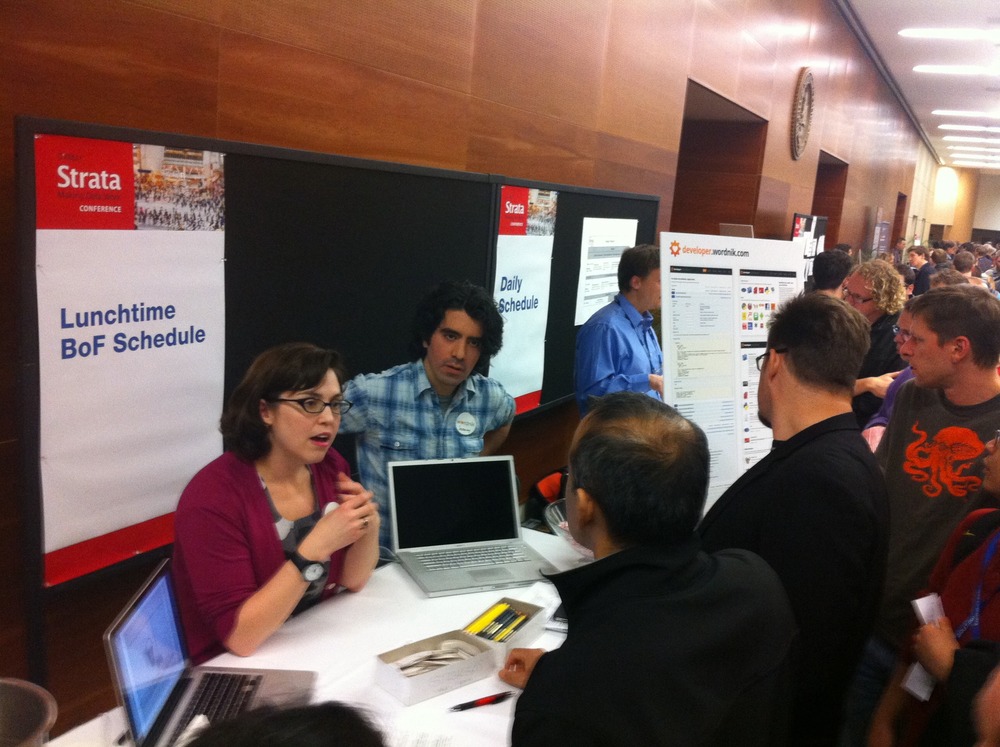
Img_0300Img_0299

Leave a comment

Filed under Uncategorized

5 ways government social media matters to citizens

An important role of any technology journalist’s role in the 21st century is to explain how the broader trends that are changing technology, government and civic society relate to average citizens. Some peope call this broader trend towards smarter, more agile government that leverage technology “Gov 2.0.” If you follow Mashable, you might have read about the ways that social media promotes good health or how government works better with social media. The folllowing stories have little to with technology buzzwords and everything to do with impact. Following are five stories about government 2.0 that matter to citizens, with issues that literally come home to everyone.

1) The Consumer Product Safety Commission has launched a public complaints database at SaferProducts.gov. You could think of it as a Yelp for government, or simply as a place where consumers could go to see what was safe. Add that to the mobile recalls application that people can already use to see whether a product has been recalled.

2) New traceability rules for food safety, resulting from a new law that the President signed earlier this month. These rules will give consumers new insight into where food is from and whether it’s been recalled. And yes, there’s an app for that: a California-based company is making stickers that consumers can use their smartphones to scan for more information.

3) The new Consumer Financial Protection Bureau will use technology to listen to citizens online to detect fraud. If you haven’t heard, DC has a new startup agency. That hasn’t happened in a long time. Your could think of it as Mint.gov mashed up with HealthCare.gov. The CFPB plans to use technology in a number of unprecedented ways for fraud detection, including crowdsourcing consumer complaints and trends analysis. Given how much financial fraud has affected citizens in recent years,and how much of the anger that the public holds for the bailouts of banks remains, whether this agency leveraging technology well will matter to many citizens.

4) Social data and geospatial mapping join the crisis response toolset. Historic floods in Australia caused serious damage and deaths. Government workers used next-generation technology that pulled in social media in Australia and mapped the instances using geospatial tools so that first responders could help citizens faster, more efficiently and more effectively. It’s an excellent example of how an enterprise software provider (ESRI) partnered with an open source platform (Ushahidi) to help government workers use social media to help people.

5) New geolocation app connects first responders to heart attack victims.The average citizen will never need to know what Web 2.0 or Gov 2.0 means. Tens of thousands, however, will have heart attacks every year. With a new geolocation mobile application that connects citizen first responders to heart attack victims, connected citizens trained in CPR now have a new tool to help them save lives.

Better access to information about food safety, product recalls and financial fraud will help citizens around the country. Improvements to the ability of government workers to direct help in a disastrous flood or for citizens to receive immediate help from a trained first responder in an emergency are important developments. As 2011 takes shape, the need for governmet to use social media well has become more important than ever.


Leave a comment

Filed under Uncategorized