Ode to Boston: Of Friends, Fried Clams and Fans

I moved to the District of Columbia this summer. I originally drafted this post in August, early in the steep rise of the learning curve for navigating around Washington. Aside from the humidity, heat and the clouds of mosquitos that showed up late in the afternoon, I like my new home.

A classmate, Graham Nelson, asked me whether “I missed Boston at all” that month on Twitter.

It was easy to answer that answer simply: Yes, I do. Particularly the people, but any number of other things, too.

Since 140 characters was utterly insufficient, here’s my list of things I miss about Boston, in no particular order.
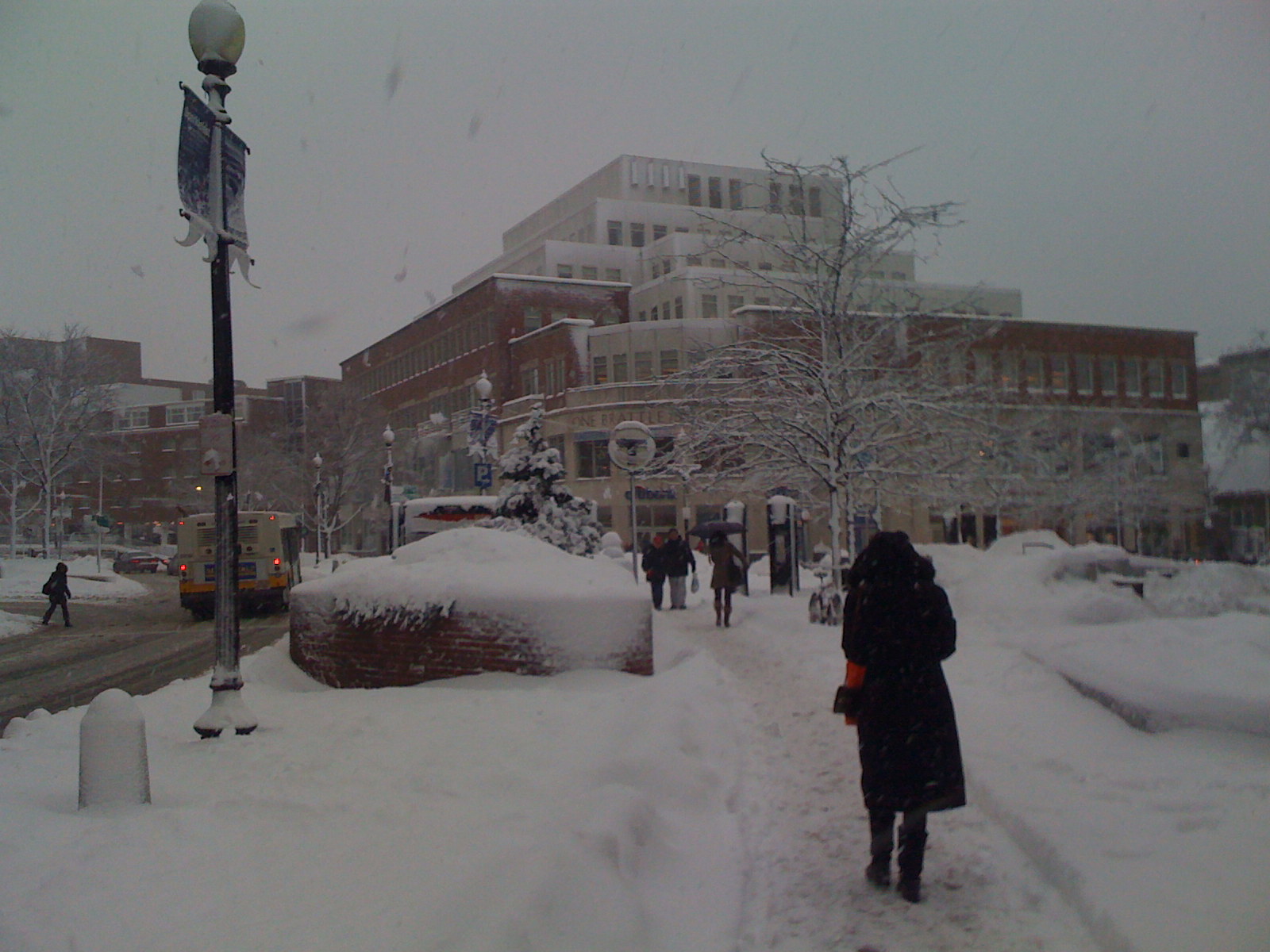
1. New England weather. If you don’t like it, wait 15 minutes. I particularly miss August on the Cape, since DC was beastly humid when I arrived. I might miss it less in February.

2. Fresh lobster, bought on the dock, from the lobsterman or the local “lobstah coop.” Steamed, grilled, boiled, baked in a clambake.

3. Late night “cold tea” in Chinatown.

4. The Esplanade. Despite the fissure of Storrow Drive snaking between Back Bay and the grassy shores next to the Charles, I spent many happy hours running, cycling, reading or walking there. I’m glad I went to July 4th at the Hatch Shell this year with the ‘rents.

5. Proximity to natural escapes. Forests, mountains and ocean are all available in less than an hour in any direction. 2 hours took you to New Hampshire, 3 to Maine or Vermont.

6. Boston Media Makers. I’ve been going to DC Media Makers but this group of bloggers, videographers, artists, writers, hackers, technologists and characters taught me something new whenever I attended. Thank you, Steve Garfield.

7. For that matter, I miss Doyle’s, where Media Makers meets. Doyle’s is a Boston institution for politicians and JP residents alike, and serves a damn good pint of stout.
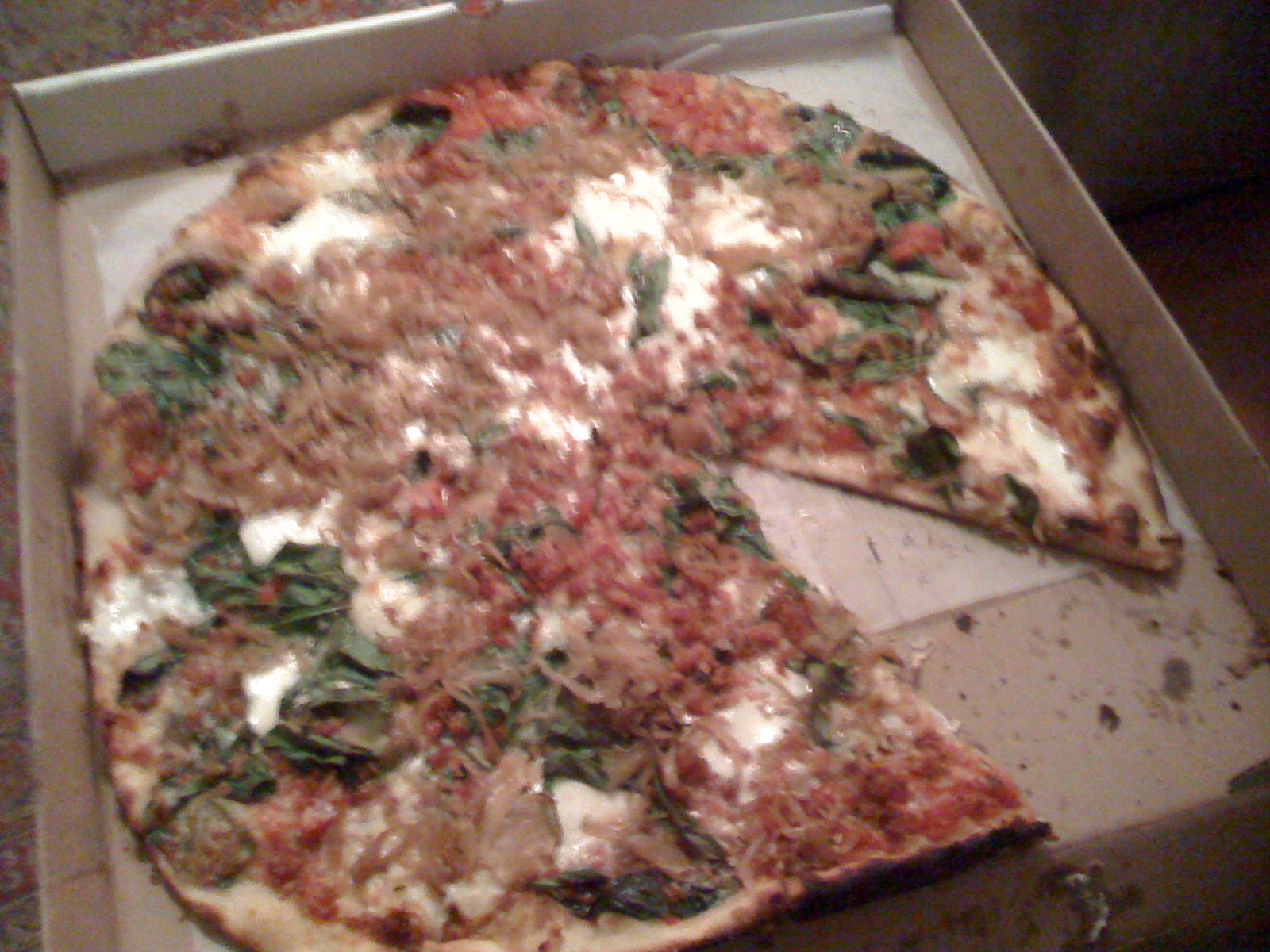
8. Pizza. Sure, pies in NYC are consistently better but I used to be able to easily enjoy thin crust deliciousness from Oggi, Upper Crust, Armando’s, Cambridge 1, Emma’s, the Pleasant Cafe or Pinocchio’s Sicilian-style slice. I haven’t found a pizzeria to match any of them yet in DC.

9. Harvard’s museums. I live near world-class institutions in DC now, to be fair, and the Smithsonian’s price is right. That said, I enjoyed learning at the Peabody & Fogg.

10. Since I’m on to museums, add the Museum of Fine Arts. The special exhibition of Da Vinci recently was particularly fine.

11. The Isabella Stuart Gardner. Jazz in the courtyard in the summer? Sign me up.

12. The Science Museum. Endless geeky wonders, terrific traveling exhibitions. I saw the art of the Lord of the Rings there, BodyWorks, and many other geeky wonders.
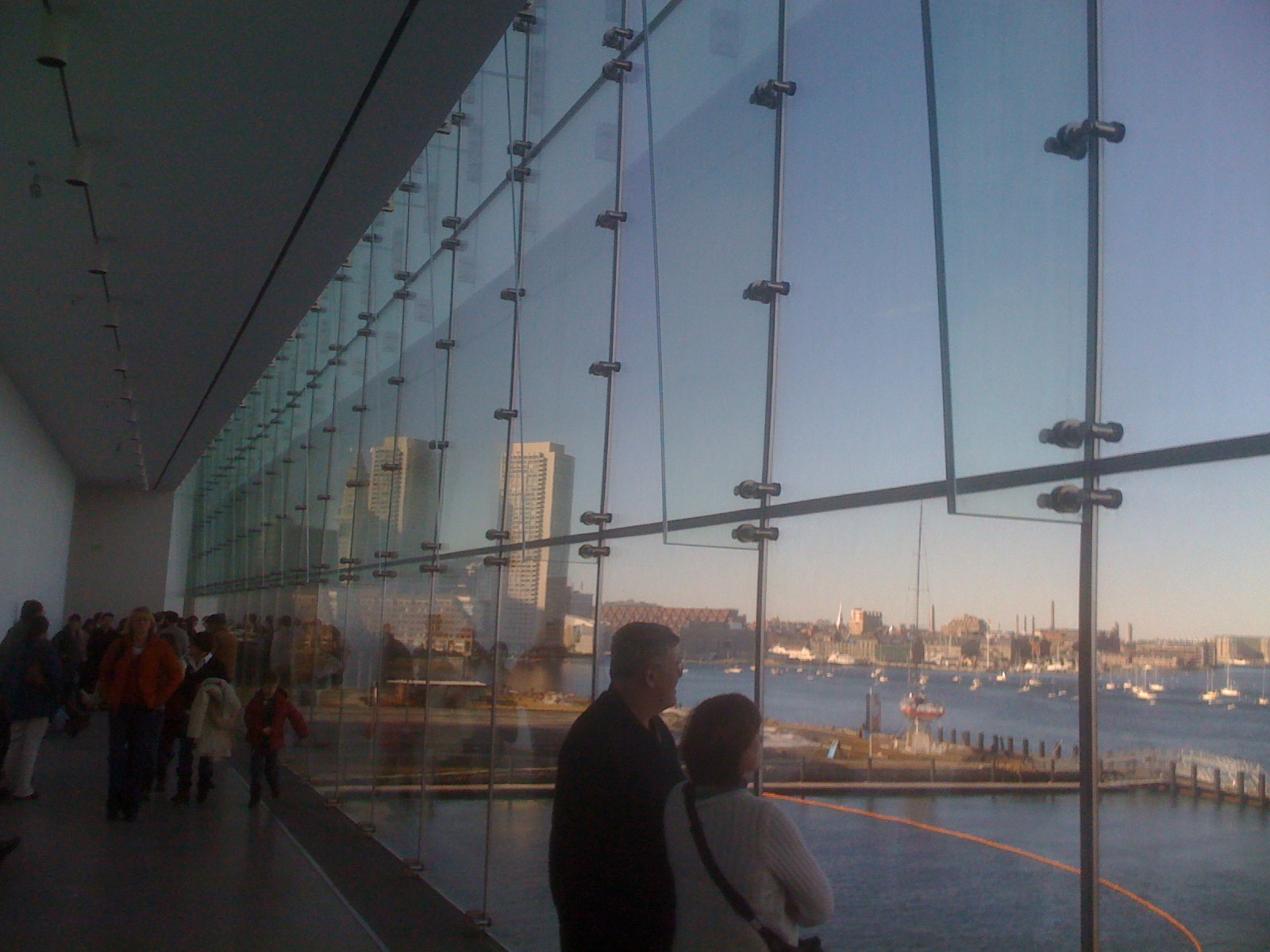
13. The new Institute for Contemporary Art. Gorgeous architecture, on the waterfront. Live music and dancing in the summer.

14. Harvard, particularly the Berkman Center. I learned much from its fellows and professors, though happily much of their work and writing is made available online.

15. The Red Sox and Red Sox Nation. When a game is on, the entire region is full of the sound of the calls and reactions. When the season is over, the hot stoves sizzles all winter. Some people hate Boston sports fans. I found the transition from long-suffering foils to champions to be redemptive in the best possible way.
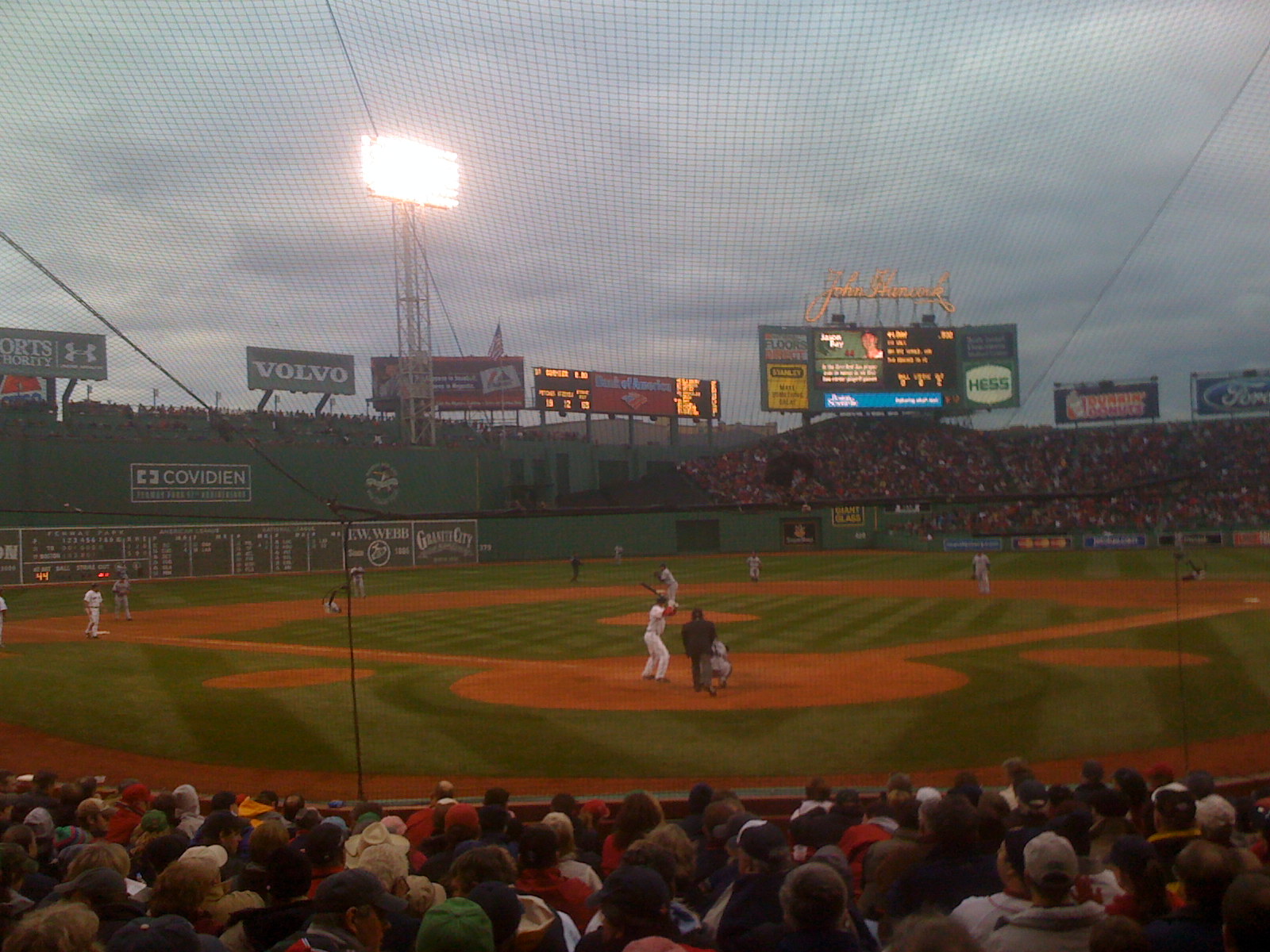
16. Fenway Park. It’s a baseball temple. I’m sure I’ll catch a few Nationals games now that I’m in DC. I don’t expect the same experience!

17. Might as well throw the Patriots and Celtics in, as well. I realize that both teams may elicit groans from around the league and country, for any number of reasons, but I’m happy to have rooted for the Pats in 2001 and the Celtics’ Big 3 when each made their championship runs, even if I grew up as a Phillies and Eagles fan.

18. Fresh Pond. Moving nearby Cambridge’s reservoir gave Shadow and I more than two years of jogging pleasure.

19. Cycling on the Minuteman Bikeway.

20. The WBOS Earthfest at the Hatch Shell. Some years were better than others. I still smile about waiting out the rain to see Sheryl Crow.

21. Swimming, reading and reveling in simplicity at Walden Pond.

22. Striper fishing at Castle Island.

23. Enjoying a cocktail from the Top of the Hub.
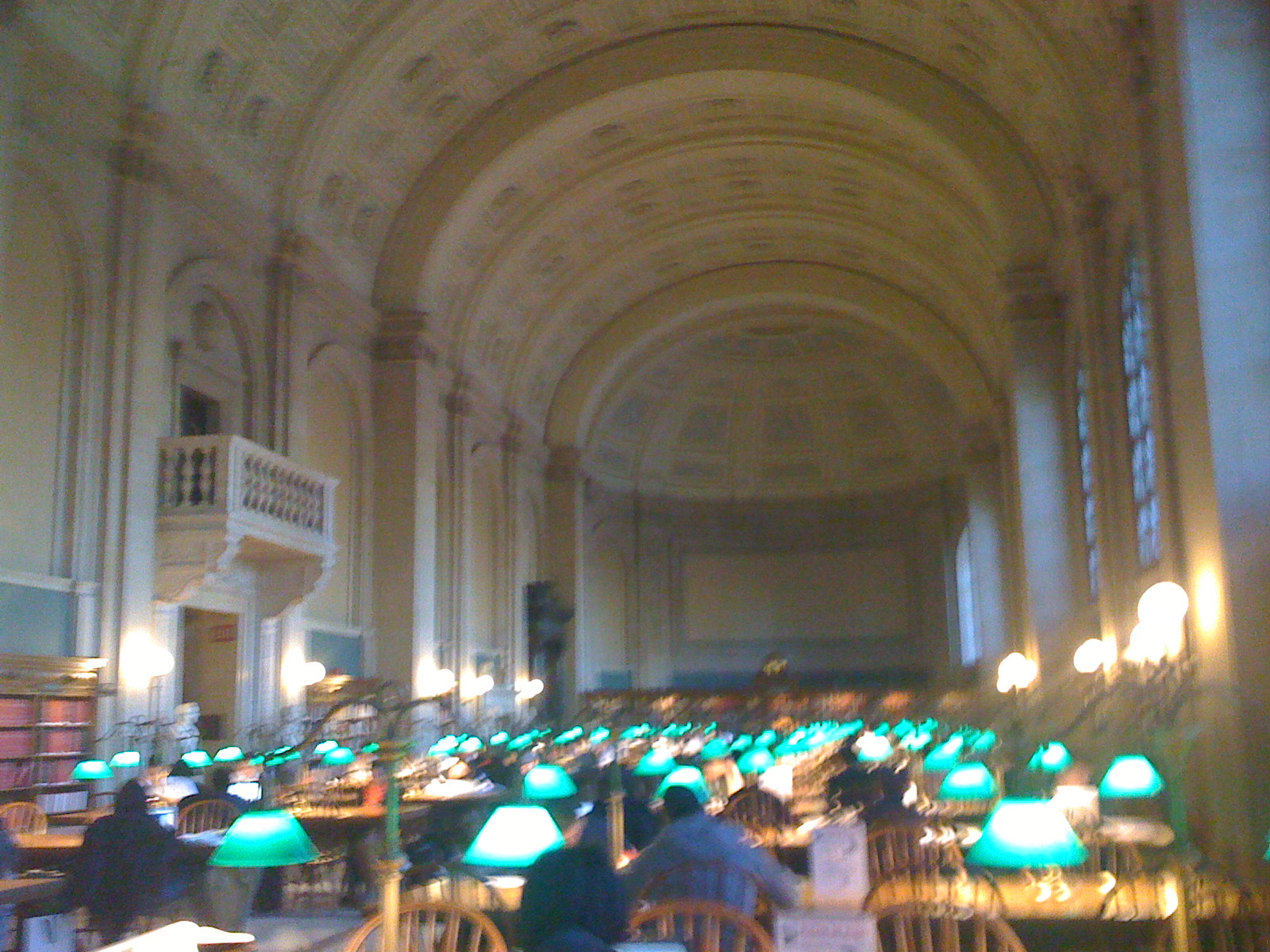
24. Researching and writing in the Boston Public Library‘s Reading Room.

25. Irish seisiúns at the Burren or Kitty O’Sheas.

26. The Head of the Charles (although I’ll never attend again with a bad mustache.)

27. Patriot’s Day: The Boston Marathon and a Red Sox game, all on a regional holiday? Good times.

28. Canoeing, kayaking and sailing on the Charles River

29. Tower Records on Newbury Street. Closed for years now, but I enjoyed browsing albums there.

30. Trident Booksellers. There are many terrific bookstores in Boston. Trident includes a fantastic magazine rack and tons of healthy brunch options.

31. Harvard Bookstore. My favorite bookstore in the region, bar none.

32. Burdick’s Chocolate. The best hot chocolate in Boston, bar none, right in Harvard Square.

33. Woodman’s. Sure, those sublime fried clams are up in Essex, on the North Shore, but I never minded the trip, especially combined with a visit to Crane’s Beach. I miss being proximate to both, along with Wingaershaek Beach and Singing Sand Beach, a bit further down the coast.

34. The Public Gardens. Regardless of the season, walking by the ducklings and stately trees feels quintessentially Bostonian.

35. Shakespeare in the Park. Classic plays, under the stars on Boston Common with a picnic? Loved it.

36. High tea at the Four Seasons.

37. MIT. I miss easy access to the lectures, films, speakers and geeky community of this world-class institution.

38. Lectures at the First Unitarian Church in Harvard Square.

39. The Arnold Arboretum, year-round, but particularly during the spring. Sledding down Peters Hill with the greyhound was memorable too.

40. Live music at the Middle East, the Wonder Bar, the Orpheum, the Paradise and the Somerville Theater.

41. Universal Hub. Adam Gaffin’s hyperlocal blog remains the best place to look for news that mattered around Greater Boston, from morning to late at night.

42. Ace Wheelworks. I’ve found a few decent bike mechanics in DC but no one in the same class for service or quality. They kept me tuned up and repaired for a decade.
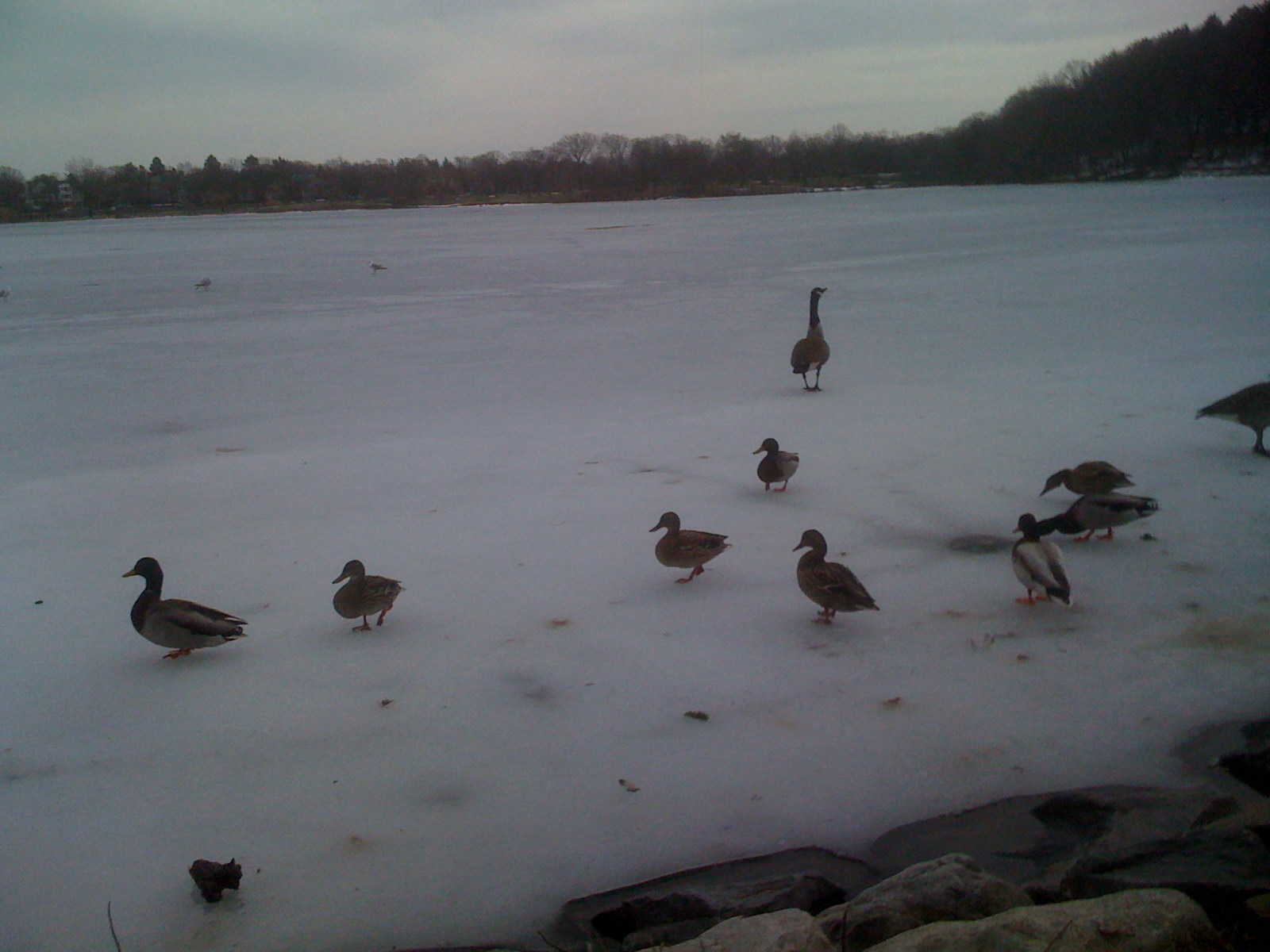
43. Jamaica Pond. Whether it was fishing, sailing, rowing, cycling, running, reading or enjoying an amble in the annual Lantern Parade, this kettlehole pond was always a joy to visit.

44. Charlie’s Kitchen. Great beer? Comfort food, served until late at night? A new bier garden? I miss you, Charlie’s.

45. The Diesel Cafe. Once the Someday Cafe closed and turned into a creperie, this Davis Square coffeehaus became a great option for a red eye or other high octane beverage. Crema‘s terroir cup of joe in Harvard Square made for tasty jave jive too.

46. The mixology at Drink, Green Street Grille, Noir and Craigie on Main.

47. The Freedom Trail, stretching from the gold dome of the Capitol to Bunker Hill Monument. Walkable history.

48. The North End, for pignoli, a great slice, ever-changing Italian cuisine, gelato, good cappucino and a walk down Hanover Street during summer festivals or under holiday lights.

48. Savenor’s, for when the ingredients needed to be a few cuts above what I could gather at Shaw’s, Whole Foods, Harvest Coop or the farmer’s market.

49. Dinner out. Sure, DC has no shortage of great eateries, although due to its role as a political nexus, Washington is a bit heavy on the steakhouses. I’ll miss sushi at Oishii, ribs at Blue Ribbon, chowder on the patio at Legal’s in Harvard Square, tapas at Cuchi Cuchi, paella at Oleana, skate wing at Blue Room, chicken at Hammersley’s or Clio — and anything involving meat at Craigie on Main. I could write thousands of words about Boston’s restaurants.

50. Friends. Boston truly is the Hub of the social media universe. Boston’s community is on par with much larger communities in Silicon Valley, New York or London, and its influence on the social networks of the world is far outside of the raw user numbers.

I’m thinking about digerati like Chris Brogan, Paul Gillin and Laura Fitton.

I wish I could have spent more time learning from Andrew McAfee, Doc Searls, danah boyd, David StephensonDavid Weinberger, Ethan Zuckerman, Yochai Benkler or Jonathan Zittrain. Or that I’d met @Ed in person.

I also really miss seeing friends like Shava Nerad and her companion, Tuna Oddfellow, around town too. Or Brian Del Vecchio, Mike Schneider, Laurel Ruma, Rachel Happe, Gradon Tripp, Jeff Cutler, Eric Andersen, Thomas Edwards, Ari Herzog, Doug Haslam, Todd Van Hoosear, Bob Collins, Adam Zand, Leslie Poston, Rebecca Corliss, Christina Major, Chris Penn, Mike Krigsman, Mike Langford, Al Willis, and Jim Storer.

I wish D.C. had someone as energetic as Tom “@BostonTweet” O’Keefe around to share what was happening around the city.

And I miss seeing past or current colleagues like Jack Loftus, Yuval Shavit, Dana Gillin, Dana Brundage, Andrew Burton, Bill Brenner, Barney Beal, Dennis Fisher, Rachel Lebeaux, Kristen Caretta, Michael Morisy, Linda Tucci, Eric Pierce, Elisa Gabbert and Beth Pariseau too.

I know I’ve left many friends out but don’t want to leave this “ode to Boston” feeling like the orchestra at the Academy Awards is playing me out as I frantically list people to recognize. (Too late? It was great fun seeing what each was up online pulling together these links. There are many other friends who haven’t put up virtual selves who aren’t added here.)

If we should be connected on Facebook, Twitter and LinkedIn, I trust that we are. If not, click away.

Reblog this post [with Zemanta]I’m enjoying my new life in DC, on many levels. After a decade in Boston, however, there are endless moments to savor. Enjoy Beantown, my friends. I hope I’ll get back to the Hub soon.

13 Comments

Filed under Uncategorized

I do not like retweets and spam. I do not like like them Spam-I-am.

My friend Elisa asked me what I thought of the new RT feature of Twitter, since, as she tweeted, I’m an “add value” kind of guy.

Here’s what I think so far: I’m not a big fan. I don’t think I’ll use the feature much if I can avoid it.

But I think I understand the issue that Twitter has on its hands. I just finished writing an article on a security panel composed of federal CISOs last week, where the topic of the secure use of social media dominated the discussion. The conference was on application security, which meant that standards for authentication, identity and verifiability were elevated in importance.

As a DHS security official put it, “one of the fundamental issues with the Internet is that sending a trusted message is difficult. We don’t have any kind of mechanism like that for rapid fire social media communications.”

Trust but verify has been the watchword for me whenever I have decided to RT something for years  now. Is the link safe? Who had control of the account? What other accounts were associated with the tweet and how were they annotated? Tricky, especially in the real-time.

Twitter’s own terms of service are crystal clear about its Impersonation, Trademark, and Terms of Service policies:

“Re-posting other’s content without attribution and without their permission is a violation of Twitter’s rules. Accounts that re-post others’ updates (with or without crediting the author) may be immediately suspended because

  • Re-posting others’ updates as one’s own without giving credit to the original author is tantamount to plagiarism
  • Re-posting or others’ updates, regardless of stating authorship, is a potential form of spam.”

And yet, we have the RT, which reposts the content of others.

Tricky, no? That’s at least part of the reason that some folks have said that a  RT = Spam.

I think the RT caught on and stuck around because it gave attribution and offered a simple, user-generated mechanism for users to share the content of others using microsyntax. I’ve argued that a RT is social media currency.

In aggregate, many retweets of the same message can build both trust in the content and validity of a link or quote. That implied veracity, given by those phatics of trust, can be in turn dangerous. Messages that went viral and contained a link to a malware-laden page or to a phishing syndicate are like viruses circulating around a Twitter biosphere, given the stamp of approval by the brands of trusted senders.

The number of RTs a message receives has also been one of the most useful metrics used to measure the rapid growth of social messaging on Twitter. If you haven’t read danah boyd’s draft IEEE paper on the RT, “Tweet, Tweet, Retweet,” it’s worth your time if you’re interested in how digital ethnography applies to Twitter.

Earlier this week, Twitter rolled another community generated convention into its code with a new RT button. First came the @reply, which was replaced by @mention. Now, we have retweets. Sort of.

(What follows is a conversation I had earlier this week with my friend, Ed Shahzade, on first impressions.)

When @leolaporte tweeted that “Twitter would have been better off implementing its “retweet” feature as “like.” That’s all it really is,” I retweeted him, adding “Spot on” before the RT.

Ed @replied to us: “That’s so far off. It’s republishing, not putting a star on the only copy. It’s like adding to a friend’s newspaper.”

“I disagree,” I @replied. “IMHO, the coding isn’t how the community has used RTs. Implementation amounts to a positive rating, removes annotation.”

“Yes, my chief complaint is lack of commentary(option),” @replied @Ed. “They could have listened better. Bear in mind- fraud prevention was a goal.”

“I understand,” I @replied.

That was because Ed is right, after all. Verifiable messaging is an issue as old as human communication. It’s a serious issue for use in crisis response for government. There are unscrupulous criminals and bored teenagers at play in the system.

But the way that this was implemented may really upset the community and users can still be bad actors under the current system. I’d rather see some kind of system where the highest rated tweets can be ranked by meta juice from likes. Xeni Jardin recently tweeted that she’d like a “spam” button IN the tweet, next to reply, RT and Favorite.

I’m not sure about that feature, given the potential for abuse, but a Flag might be helpful as a way of adding a thumbs down or “dislike” feature. That “dislike,” after all, has cropped up on Facebook, along with the “Like” feature that’s so familiar to Friendfeed users.

Perhaps a RT could be attributed in API and still allow the retweeting user to appear inline? The attribution for tweet sourcing is built into the current code. The issue is that substitutions of those that we do not follow in our timelines are jarring to many.

Part of Twitter’s allure, at least for me, lies in having control over your timeline. Follow, unfollow, block, spam, RT, etc.

I don’t like the new RT but I understand that better trust and authentication mechanisms need to be built in to prevent fraud and ensure better online security for Twitter. I do think an audit trail is key, so that users can easily follow RTs to an original and compare if they like. I do that constantly if I need to verify who said what when. And I like to annotate the tweets.

The reason that it’s important to get the coding right on spam, security and authentication, however, doesn’t rest in my usage. I’m an IT journalist, after all. I find Twitter useful, educational and frequently entertaining but I can live and work perfectly well without it. And, to be blunt, I know it will survive without me.

Many enterprises block social networking platforms like Facebook and Twitter precisely because of such security concerns, along with resilient questions about productivity.  Earlier this week, I reported on a study that surveyed senior IT security executives at federal agencies. Outsourcing, an increasingly mobile workforce and cyberterrorism topped the lists of their security concerns, along with unstructured data resulting from social networking platforms and Web 2.0.

If Twitter is really going to be a “global information utility” for government private industry and nonprofits, security and trust will be at issue. So will privacy. Twitter updated its privacy policy to “explicitly include geotagging and to describe the public nature of most of what people post to Twitter.”

For Twitter to effectively compete and thrive, adding features that don’t map to how its community uses them may not be in its best interest. Since I’m a long-time user and have found it useful, I hope that the feedback they receive is replicated in the code.

1 Comment

Filed under Uncategorized

Amended Google Books Settlement: analysis & reactions

Yesterday, Brad Stone and Miguel Heft reported at the New York Times that the terms of the digital book deal with Google had been revised.

Danny Sullivan has written an excellent post on the amended Google Books settlement, where he liveblogged the press call and links to many other excellent resources, including the discussion on TechMeme.

The Amended Settlement Agreement (11/13/2009) is embedded below.

Google’s official response contained a link to a summary of the changes made here and includes a FAQ. More information is also available at th Google Books settlement page.

The Open Book Alliance has posted its own response to the Google Book Settlement.

Echoing the dismissal of the amendments by the Open Book Alliance, which called it “sleight of hand, Peter Brantley,  (as quoted in the Financial Times) said that “None of the proposed changes appear to address the fundamental flaws illuminated by the Department of Justice and other critics that impact public interest.” Brantley is director of the Internet Archive, which has been archiving digital content for years and has proposed an alternate vision for e-books, OpenLibrary.org.

I’m still reading through the settlement. The amendments would create a trustee for each one of the so-called “orphan works.” As Stone and Helft reported at the Times, “that trustee, with Congressional approval, can grant licenses to other companies who also want to sell these books, and will oversee the pool of unclaimed funds that they generate. If the money goes unclaimed for 10 years, according to the revised settlement, it will go to philanthropy and to an effort to locate rights holders. In the original settlement, unclaimed funds reverted to known rights holders after five years.”

The settlement also reduces the number of books that Google may proceed to digitize into its catalog at Google Books to books published in the United States, Britain, Australia or Canada.

“The changes will mean that 95 per cent of all foreign works will no longer be included in Google’s digital book archive,” said Richard Sarnoff, chairman of the Association of American Publishers, as quoted by Richard Waters in the Financial Times.

As Waters also pointed out, the settlement “also means that ,illions of out-of-print works that could previously only be found in a handful of university research libraries.” For researchers like Alexis Madrigal of Wired Magazine, who wished earlier for the parties involved to find a way to preserve Google Books, this settlement is one step closer to a successful resolution.

For authors or their trustees, it’s more complex. Whether amendments go far enough in providing other Internet companies with the means to successfully compete in providing an index of digitized books is not immediately clear. There’s going to be scrutiny of the settlement from the Department of Justice over the coming weeks, not to mention Congress. If Google remains as only company able to offer a comprehensive archive of all digital books to online readers, antitrust concerns may force further adjustments by the search giant.

Reblog this post [with Zemanta]

Continue reading

Leave a comment

Filed under Uncategorized

When “we are the media,” how does it change us or society?

The changes that smartphones with camera and an Internet connection are wreaking in society have been both thoughtfully reported upon, relentlessly evangelized and ruthlessly derided, depending upon the angle or intent of the commentator.

The past days will occupy a few lines in the history books. Last night, the U.S. House of Representatives passed a milestone healthcare bill. And earlier in the week, a soldier killed fellow servicemen and women at Fort Hood.

Today, Paul Carr wrote that “citizen journalists can’t handle the truth at TechCrunch.

I agreed with him on a few things. The video from “This American Life” (below) that Carr embedded was deeply affecting on this point, in terms of what becoming an observer can do to our involvement in what we are filming.

Changing an avatar to green or changing a location to Tehran did not, despite good intentions, prove to substantively help students escape repression. I gather from reading accounts from journalists that the solidarity demonstrated by doing so was both noticed and appreciated there. And there was a tipping point in terms of the use of the platform to bring attention to a political cause.

Where I was left frustrated is in Carr’s suggestion that those who are watching should be doing something more, whether in the hospital or, in the case of Neda, on the streets of Tehran, instead of documenting events with the digital tools at hand.

Mathew Ingram posted a thoughtful response about this notion on his blog, “Citizen Journalism: I’ll take it, flaws and all.” David Quigg wrote   a thoughtful reply to Carr’s post as well. Dave Winer was less charitable.

I found the example of Neda to be unworthy of the point I think Carr was trying to make.

It also brushed off two key factors: the effect that the release of that video had in revealing the death of a protester and that of the bullet’s impact itself on her heart.

As Suw Charman-Anderson pointed out in her detailed critique and debunking of Carr’s post, “Killing Strawmen,” (which I won’t repeat here), there was a doctor on-site, who was unable to do anything because of the massive trauma to her chest.

In my limited experience, you provide the standard of care to which you are certified and are able to deliver, ceding primary responsibility to others more able as they arrive on scene. As an EMT couldn’t do much more, for instance, than to gauge consciousness, stanch bleeding, stabilize injuries, provide oxygen and transport people. Your choices must change if someone is in the wilderness but in most scenarios, that’s accurate. Paramedics, nurses, doctors and surgeons each have progressively more expertise and responsibility.

In all of that, communication with the nearest hospital and ER docs available is crucial. Transferring information to both medical professionals and law enforcement is something a bystander can and should do.

And to some extent, communication and documentation is precisely what a member of the public equipped with a cameraphone can contribute, despite the vigor with which Carr has chosen to deride that role.

I don’t doubt that seasoned correspondents, armed with an understanding of the ethics and laws that pertain to reporting, are needed to convey information from the battlefield or to analyze the meaning of the trends that confront us.

In fact, Brock Meeks, one such trusted newsman, made a comment on my post about Twitter lists that emphasized just how important getting the facts right is to both the audience and media.

I was left wondering about other situations where the “citizen journalists” Carr derides are providing an important function in the newsgathering ecosystem, whether in reporting national disasters, disease, voting irregularities or consumer sentiment.

A more calm approach might consider whether models of “hyperlocal” journalism that marry traditional media to online platforms might have a chance of success.

My intention is not to suggest that observers couldn’t play a useful role in a crisis. It was to say that when there are qualified staff on scene, documenting what is happening in the absence of mainstream journalists may be useful for those that follow – including news outlets that may use video or audio gleaned on site.

I agree with Paul that running images shouldn’t occur without a full understanding of the ethics or privacy rights involved.

Unfortunately, many tabloids have shown a poor grasp of either historically.

The fact that technology changes behavior doesn’t make it inherently bad. We’re all struggling to make sense of exactly what living in a modern panopticon created by one another will mean. It changes news, our conception of privacy, and even our perception of self.

The traits for good character and decency that the Greeks described millennia ago remain applicable, however, just as the ethics taught in journalism schools pertain to modern reporters armed with Flip cams, iPhones and a direct line to YouTube.

There will continue to be moments when war correspondents are confronted what choices about how covering conflict, versus participating in it, will mean.

Similarly, people driving by an accident will need to be thoughtful about “playing paparrazzi” as opposed to making sure that those involved are receiving the aid they need. Anyone who has a conflict about whether to “tweet or treat” might to do well to consider what basic human decency means to them, personally.

Does an event need to be documented? Or does calling 911 and then moving to help trump rendering assistance?

Citizens are looking for truth, honesty and facts, where ever we can find them.  That need was frequently the subject of discussion during Public Media Camp, after which I wrote that “2009 is the year of We, the Media.”

Perhaps, as news organizations and citizens alike contribute to the body of knowledge online, a new model for collaborative journalism will emerge that serves each better.

Reblog this post [with Zemanta]

4 Comments

Filed under blogging, journalism, social media, technology, Twitter, video

Twitter Lists: We are informed by those we follow. We are defined by those who follow us.

“The power of Twitter is in the people you follow.”-@nytimes

You’ll find that quote at NYTimes.com/Twitter, where the New York Times has built a page of Twitter lists curated by its editors, its writers and, presumably, the help of its considerable audience.

As this feature has rolled out, I’ve read knee jerk criticism, thoughtful analysis, wild evangelizing and observed “lists of lists” be collected as sites like Listorious and Listatlas.com spring up to rank them.

Tech pundits and, rapidly, news organizations have all created lists that offer apply new taxonomies, imposed human-defined categories onto the roiling real-time tweetstream.

Readers are defined and informed by the diversity of the information sources that they consume. In a user-created Web, we are defined by those who choose to follow us, including any lists or tags that they associate with  our names.

It’s been exciting to watch. And if you’re a reader of David Weinberger, author of “Everything is Miscellaneous,” you might recognize this emergent behavior as a familiar phenomenon. Twitter users are using lists to organize one another into understandable taxonomies. Folksonomies, to use the term coined by Thomas Vander Wal.

Users have some control over which Twitter lists they appear upon. If you block a user, for instance, you can remove yourself from that user’s lists, if for some reason you don’t want to appear on it.

What we can’t control, once we make ourselves public there or elsewhere on the Web, is how others tag or list us.

This goes back to what Weinberger (along with Doc Searls, Rick Levine and Christopher Locke) wrote about in “The Cluetrain Manifesto” ten years ago. “Markets are conversations.”

I suspect that in the weeks ahead, both companies and individuals may find themselves on lists that they perhaps would not wish to define as part of their brand identities.

“I would not join any club that would have someone like me for a member”

As I quote Groucho Marx, today, I feel fortunate, for two different reasons.

First, to date, I’ve been included on 176 lists, none of which I’m embarrassed or insulted to be on. You can see all of them at “memberships,” which is a friendly way of describing inclusion.

Thank you. I’m humbled.

Second, most of the lists are being used by an individual user to categorize others for providing particular sort of information.

Overall, I’m most closely associated with technology, journalism, security and media. That’s  a good sign, given my profession! I was glad to see that the account I maintain at work (@ITcompliance) has been added to 33 lists, primarily compliance, information security, cybersecurity and GRC.

I’m talking about the right things in the right places.

Certain lists, however, have meant that many more people reading me than would have otherwise because of the hundreds or thousands of people that have chosen to follow them, due to the influence of their creators.  I’m thinking about lists like these, some of which have gone on to become popular at Listorious.com.

@palafo/linkers

@palafo/newmedia

@kitson/thought-leaders

@jayrosen_nyu/best-mindcasters-i-know

@Scobleizer/tech-pundits

@Scobleizer/my-favstar-fm-list

Thank you, fellas.

Like any other tools, lists will no doubt be used for good and ill. An outstanding article by Megan Garber, “Fort Hood: A First Test for Twitter Lists” in the Columbia Journalism Review, shows how news organizations can leverage the feature to curate the real-time Web for the online audience.

The lists—which offer a running stream of information, updates, and commentary from the aggregated feeds—represent a vast improvement over the previous means of following breaking news in real time. In place of free-for-all Twitter hashtags—which, valuable as they are in creating an unfiltered channel for communication, are often cluttered with ephemera, re-tweets, and other noise—they give us editorial order. And in place of dubious sources—users who may or may not be who they say they are, and who may or may not be worthy of our trust—the lists instead return to one of the foundational aspects of traditional newsgathering: reliable sources. Lists locate authority in a Twitter feed’s identity—in, as it were, its brand: while authority in hashtagged coverage derives, largely but not entirely, from the twin factors of volume and noise—who tweets the most, who tweets the loudest—authority in list-ed coverage derives from a tweeter’s prior record. Making lists trustworthy in a way that hashtagged coverage simply is not.

Garber goes further in exploring what role lists may play in journalism’s future, as organizations collaborate with both their audience and one another in curating user-generated content. It’s a great piece. Pete Cashmore, of @mashable, has written more about this at CNN in “Twitter lists and real-time journalism.”

Individuals and news organizations alike can create lists as needed. For instance, as the House debates a historic health care bill here in Washington, you can follow the discussion at @Mlsif/healthdebatelive

As Cashmore points out, in the social, “people-centric Web,” we use our friends as a filter. As Paul Gillin observed,  everything that you’ve learned about SEO may be useless in a more social Web. Google’s new Social Search shows how, if we choose, our search results can be populated with content from our circle of friends.

On Twitter, we can now use the lists from trusted friends and news organizations to curate the real-time Web. That makes them useful, immediately.

And after a week full of public grief here in the U.S., that’s good news.

21 Comments

Filed under blogging, journalism, social bookmarking, social media, technology, Twitter

A night at the Spy Museum: What keeps cybersecurity experts awake at night?

photo(2)Last week, I enjoyed an unusual evening: a panel of some of the nation’s preeminent cybersecurity experts at the International Spy Museum. I didn’t have to practice any spycraft to learn more about the risks posted to national security and business in cyberspace.

Michael Assante, chief security officer for the North American Electric Reliability Corporation (NERC),  warned of cybersecurity threats and risks to the smart grid.

Melissa Hathaway, President Obama’s former”” called for more public and private cybersecurity partnerships.

James Lewis, director and senior fellow of the Technology and Public Policy Program at the Center for Strategic and International Studies, described how new rules for cyberwar are being defined as cybersecurity threats grow.

Those interested in cybersecurity may find the article and posts linked to above useful.

When asked “what keeps them up at night,” each panelist responded thoughtfully.

Melissa Hathaway is worried about “our overall economic competitiveness” due to corporate cyberespionage. Assante is concerned about restoring a lack of confidence after a massive cyberattack. And James Lewis is concerned that a scenario from World War II might repeat itself in a future cyberwar.

“Think of Germans in WWII,” he suggested. “The Brits were able to break the Enigma machine through Program Ultra. That probably shortened the war by two or three years. I worry that whomever we might be fighting would know what we’re going to do before we do it.” Lewis is concerned about more than anticipation: what if opponents were to change the data, replicating the “fog of war” online?

“Look at the DOD’s ‘Blue Force Tracker – if that were compromised, the first thing is that you’d shoot your own folks,” he said. “Second, every commander would slow down.” ( The New York Times‘ excellent “At War” blog published a post today about the digital fog of war, in fact, though its author focused on the challenges of using technology in the background, not the scenario wherein it is compromised.)

Keith Epstein, the veteran investigative journalist who moderated the “Emerging Cyber Threats” panel, observed that he’s noticed a reluctance of people to really talk about this. What can be done? Assante calls the lack of public discussion a “plague of suffering and silence. “In the electric system, our regulations require entities to, if they have a cyberattack, to report them.” Despite the concerns of some in Congress, he suggested that agencies reconsider safe harbor. “We have to be willing to share information with our allies.”

What are the scenarios that will enable cybersecurity to move forward?

Start with raising public awareness, said Lewis, which would require the mainstream media to cover cybersecurity with the seriousness that the threat deserves.

“There’s a bunch of other things we could do too, “ he said. “Make better use of the DoD. Define their role in a way where they can defend cyberspace. Work with the private sector. There are many things we can do to incentivize better cybersecurity. International engagement: Reach out to allies – and maybe to opponents.”

Hathaway observed that “we are considering a national data breach law. Our allies are considering similar legislation.” S.1490, the Personal Data Privacy and Security Act of 2009, would require data brokers and companies to both establish and implement data privacy and security programs. Hathaway said that “we need to start talking about the issue: the fleecing of America.”

In her view, it’s not just consumer behavior that’s at issue: “We have the Tylenol scare in all of our computers. It’s there and they’re not telling us.”

Reblog this post [with Zemanta]

Leave a comment

Filed under Uncategorized

25 Inspirational Dog Portrait Photographs

Media_httpdigitalphotographyschoolcomwpcontentuploads200911dog17jpg_nrcxqyschbrjwze

Dogalicious.

Leave a comment

Filed under Uncategorized

Sunday meditation: a media meal in a news snacking universe

On Friday, Dan Conover wrote a terrific long-form narrative essay about long-form narrative, in which he made a case for “a non-narrative future for journalism.”

To further illustrate his point in practice, he also created a three-page, home-printer-optimized PDF for readers “who prefer to read long-form essays on paper” and “a shorter, semi-structured online summary” that is remarkably like a Gawker post, sans snark.

I think he’s on to something, both in approach, example and analysis of news consumption in the present. I’m not alone in comparing consuming media on the real-time Web to dining:  Steve Rubel described Twitter as “a sushi boat moving at 100 mph.” Fine dining, fast.

Perusing the menu

And since I enjoy cooking, dining and reading, the following metaphor for news flow and how we consume our daily “media meals” came readily to mind.

If reading were like dining:

An amuse-bouche is like a tweet. It’s the essence of the cook’s art, delights the palate and leaves you wanting more.

An appetizer is like a blog post. That could be a microblog post, too. Appetizers can be either light or heavy.

An entree is like a long-form narrative article. Sides include video, graphics and comments.

Dessert is like a money quote, figure or key analysis. It’s something the reader can savor, including a link to save or share.

Of course, there’s plenty of flexibility in the concept.

As @stevebuttry suggested today, for instance, an interactive database might be a recipe.

News organizations are now considering how to deliver news in a way that provides value, draws readers and perhaps solvency.

I suspect making it easy for readers to” consume media” as the readers wish may be as important for the success of online media outlets as making dining enjoyable has been for restaurants during the recession.

Time to go enjoy Sunday dinner: reading feeds & enjoying a smorgasbord of vegetables, cheese, brown beer and sausage.


Reblog this post [with Zemanta]

1 Comment

Filed under Uncategorized

Imogen Heap reanimates Thriller, just in time for Halloween

Haunting. Gorgeous. And completely different from Michael Jackson’s iconic version.

[First played on the BBC. Hat tip to Popeater, via Kirstin Butler via Steve Silberman]

Leave a comment

Filed under music

At the NPR and PBS unconference, 2009 is the year of “We, the media”

John Boland at Pubcamp

John Boland at Pubcamp

“TV, radio and pro journalism still matter in this new ecosystem”-John Boland, PBS.

This past weekend, I attended Public Media Camp, an unconference at American University in Washington, D.C.

I came away from the two days of sessions, talks, informal discussions, random encounters and rapid-fire information exchange inspired, exhilarated and a bit exhausted. That last is why it took a day to get a post up. By its nature, I couldn’t go to everything. What I did attend, I tried to take notes upon and livestream to Livestream.com and uStream. When it comes to the archiving that video, unfortunately, I endured two crashes and suffered from the lack of a decent mic. Happily, much better video will be coming online from other sources over the next week. What follows are my thoughts, links and video from “Pubcamp.”

Citizen Journalism and public media

The first session of the day remains one of the most memorable. Citizen journalists and local bloggers have much to learn from – and about – one another. “We the media” is a theme I pick up later in this post. Suffice it to say that democratization of the tools for information sharing has taken some producers unaware and left many stations understaffed, at least at the level it takes to effectively engage with those in the community creating the content. That said, many NPR editors and writers are doing quietly effective work in finding, engaging and collaborating with bloggers in the community. I mentioned Universal Hub in Boston, although I’ll leave it to Adam Gaffin, Radio Boston and WBUR to relate exactly how well that relationship works.

@jessieX referenced the tensions in this session in her post on generational differences, “My Takeaway,” where she captures the insight she shared with me in person.

Video of the  citizen journalism session is available on-demand.

Tools for curation of audience-generated content

This was one of the best attended sessions of Public Media Camp and, due to any number of reasons, one of the best, at least in my view. The standing room-only group was organized into as a circle and shared dozens of useful tools and services that can aid stations and editors in aggregating, organizing, filtering and curating pictures, video and text generated from listeners.”We all want to open up the floodgates to UGC and crowdsourcing but there’s issues of trust,” said Andrew Kuklewicz.

My favorite metaphor from Public Media came from Andy Carvin here, in the idea of “trust clouds,” or the social network of people around us that represent who we can believe, retweet, link or otherwise invest with our own reputation. A tool for doing just that if at Trustmap.org. Newstrust.net also came up as “a guide to good journalism.”

Such tools and relationships are critical to both the use of user generated content by stations and the decision of readers and listeners to trust and, in the social media world, pass on information. As I commented during the session, increasingly consumers of media follow bylines, not masthead. To borrow David Weinberger’s phrase, “transparency is the new objectivity.” By showing readers how and where the audience was sourced in real-time, media organizations can make a stronger case for the veracity of such information.

Tools included:

Greg Linch shared the approach to curation that Publish2 takes: “Social Journalism: Curate the Real-Time Web.”

Social Media Success

The most obvious case study in social media success may be Andy Carvin himself. The impact of his efforts have been deep and far-reaching throughout NPR’s shows and staffers. As Amy Woo put it, “I feel the same way about Andy and his tweeting as I do about Diane Rehm.”

Carvin offered compelling examples of success, like an NPR partnership with content discovery service Stumbleupon to create a reciprocal connection w/Twitter. With a little tweaking, a retweet can equal a stumble.

Another site, criticalexposure.org, “teaches kids to take pics as a way to be advocates for social change,” said Carvin.

He also said that NPR’s Facebook fan page generates some 8% of NPR web traffic. Their testing shows 1 post every 60-90 minutes is ideal for audience. That connection came courtesy of a listener, at least at the outset: The NPR fan page on Facebook was created by a fan. That fan then gave it back to the organization, says Jon Foreman. Carvin’s curation of public radio content took it to the next level.

Hurricanewiki is likely to be cited as a classic case in social media success, where more than five hundred people came together, organized through Twitter by @acarvin. You can see the results  at Hurricanewiki.org. Carvin also created a hurricane resources community for Gustav on Ning, built in about 48 hours.

One example that came up in multiple sessions is NPR’s Vote Report . Jessica Clark and Nina Keim wrote a report on it: “Building #SocialMedia Infrastructure to Engage Publics.” And while Carvin pointed out where Vote Report fell short, the idea behind enabling listeners to “help NPR identify voting problems” holds some promise. The use of social media for election monitoring is spreading globally now, as can be seen in Votereport.in in India.

The was a different issue with InaugurationReport:- volume. Carvin said that there was simply “too much social media content to effectively curate.” By way of contrast, even a few hundred engaged listeners could effectively use the #factcheck hashtag by http://npr.org/blogs/politics to fact check the U.S. presidential debates in real-time.

Greg Linch shared a collection of social media guidelines curated at Publish2, including NPR’s social media guidelines. There’s a careful eye keeping watch here on the ethics that go with the new territory: the @NPR ombudsman was present (she’s @ombudsman on Twitter) and brought attention to how the public will relate to any perceived bias shown on social media platform.

A standard for conduct matters. It’s not all peaches and cream, after all, given the ugliness that online discourse descend into on many occasions. “Posting on our site is a privilege, not a right,” said Carvin regarding the scrum on comment trolls, online spammers & NPR sites.

Video of the social media success session is available online at uStream.com.

Public Media and Gaming

One of the more entertaining and creative sessions at Public Media Camp was the hour on gaming. Educational gaming can raise literacy rates in children, after all – could NPR deliver further by reaching into this interactive medium? Nina Wall (@missmodular) said, in fact, that PBS Kids will soon have available an API similar to NPR’s for educational games.

An excellent summary of this discussion can be found at AmericanObserver.net. Video of the public media and gaming session is available online at uStream.com.

PictureTheImpossible is one intriguing example of the genre. The online, community-based game jointly developed by RIT & the Rochester Democrat & Chronicle.

The discussion also included  Kongregate and their “social gaming” model, which provides a platform & revenue share for developers. Could NPR follow suit?

Or what if NPR created a fantasy league for news? Points could be accrued for newsgathering, with players trading shows or writers.

It’s been done for politics – check out the case study of an @NPR fantasy league, from Julia Schrenkler: Minnesota Public Radio’s “fantasy legislature.”

My favorite suggestion, however, came from Andy Carvin: a social “Wait, Wait, don’t tell me!” game where the audience can create news quizzes and then challenge one another on Facebook or the Web.

Social Media FAIL

The first FAIL from Andy Carvin? When the hype around crowdsourcing with Amazon’s Mechanical Turk didn’t deliver. Here’s the Wired story on questions about crowdsourcing.

Video of the social media FAIL session is available on-demand. Amy Woo and other attendees offered many more examples of failures.

Apps for Public Media

The last session of Pubcamp kicked off with a description of @AppsForDemocracy by Peter Corbett. Interesting examples about:

ParkItDC helps people find parking in DC, including which meters are broken.

AreYouSafeDC shows potential threats.

StumbleSafely is a guide to bars & avoiding crime in DC.

FixMyCityDC is a web-based application that allows users to submit service requests by problem type.

And the winner, DC311, enables iPhone access (download from iTunes) to the District’s 311 city service site, coupled with a  Facebook App.

There’s more to come: In 2 years, the vision laid out by Corbett  includes “muni data standardization, open civic app ecology and the ‘real-time muni web.’ And in 5 years, the vision for includes ideas seemingly lifted out of science fiction: augmented civic reality, AI-driven civic optimization & “virtual flow working.”

What could be created for public media? Apps that enable listeners to create channels from the API for specific topics. Apps that combine real-time data feeds from government sources with local bloggers and radio stations. Apps that allow listeners to help filter the flood of information around events, like the Vote Report project.

Why develop such apps? Andy Carvin believes that  “the line between content, services & apps is blurring. To create a more informed public, it now takes more.” To not create such innovation would, in effect, be irresponsible.

More posts, eclectica and public media resources

The PBS News Hour has partnered with the Christian Science Monitor on “Patchwork Nation.”

The work of Doc Searls at the Berkman Center on “vendor relationship management” came up, mentioned by one Keith Hopper. More details at http://projectvrm.org.

FrontlineSMS.com is a free group text messaging tool for nonprofit that is useful in disaster and crisis response.

Swiftapp.org was shared by @kookster: free, #opensource toolset for crowdsourced situational awareness.

Plenty of social media application develop is going on at PBS. Their social media guru, Jonathan Coffman,  pointed to the tools at PBS.org/engage.

The Participatory Culture Foundation has launched Videowtf.com.

Economystory.org is a cooperative effort of public media producers to provide financial literacy.

Check out Radio Drupal and Radioengage.com for open source public netcasting information.

Session notes for @PublicMediaCamp are going up at the wiki at PublicMediaCamp.org and are being aggregated under #pubcamp on Delicious.com by Peter Corbett.

My Takeaways

There a lot of smart, savvy, funny geeks in public media, passionate about delivering on the core mission of education, media literacy and good  journalism.

This same cadre is pushing innovative boundaries, whether it’s engaging the audience, creating new technology platform or expanding the horizons of computer assisted reporting. Database journalism is alive and well at NPR – just look at this visualization of the U.S. power grid.

Vivian Schiller said during her keynote that “2009 was the year everything changed.” Out of context, that statement drew raised eyebrows online. In person, there was more clarity. The massive disruption to the newspaper and traditional media industry is now resulting in significant layoffs and a seachange in how people experience events, share information and learn about the issues. Despite the issues presented by ingesting a torrent of new sources of information, the concept of “We the media” has deep roots, given that so many more people now have the ability to contribute news and help analyze it now that the tools for communication have been democratized and often made freely available online.

What’s missing in that fluid mix of updates, streams and comments is trust in veracity. As we all move into the next decade of the new millennium, the central challenge of public media may be making sense of the noise, taking much the same approach that it has in the past century: report on what’s happening, where it happened, who did it and why it’s important, with a bit more assistance from the audience. Given the loyalty of tens of millions of listeners, “we the media” might just have some legs.

Mark all as read
Refresh
Feed settings…

digiphile: Next up from @acarvin’s presentation of #socialmedia successes: @VoteReport: “Help NPR Identify Voting Problems” http://j.mp/1fysxf #pubcamp

digiphile: Next up from @acarvin’s presentation of #socialmedia successes: @VoteReport: “Help NPR Identify Voting Problems” http://j.mp/1fysxf #pubcamp
Add starShareShare with noteKeep unreadSend to
Reblog this post [with Zemanta]

7 Comments

Filed under blogging, journalism, social bookmarking, social media, technology, Twitter