+>÷

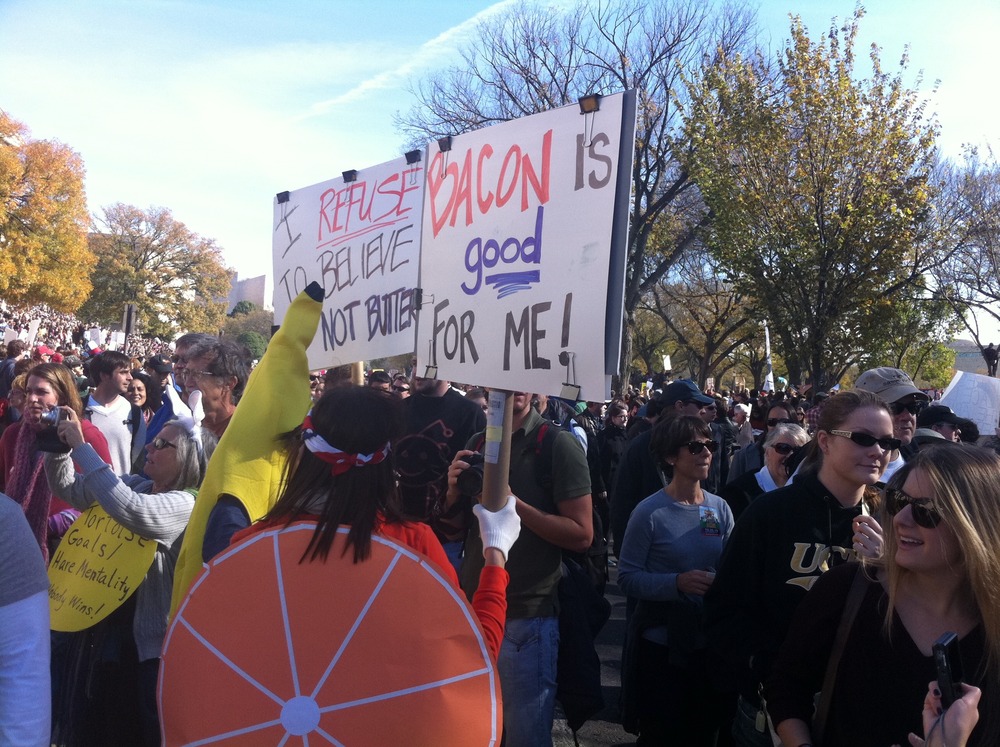
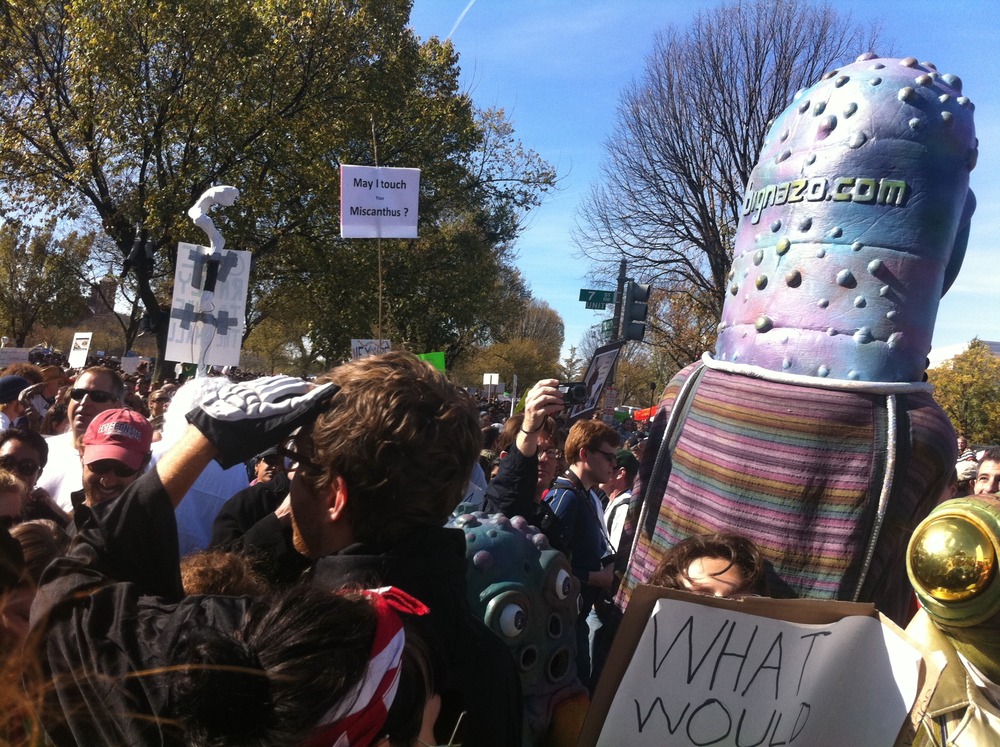
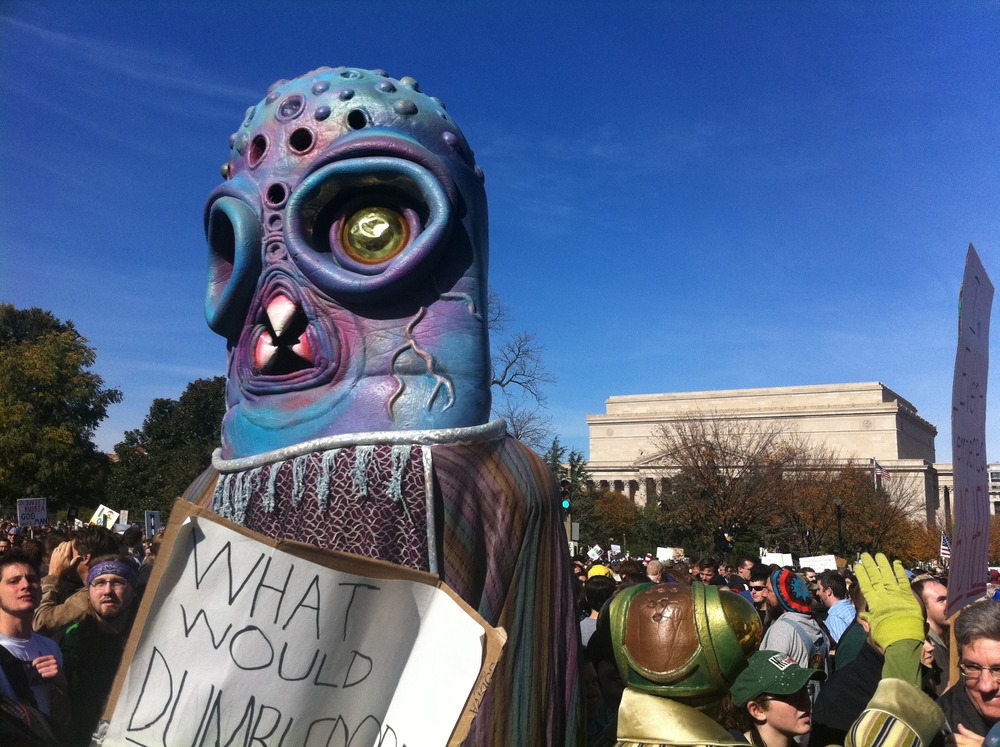
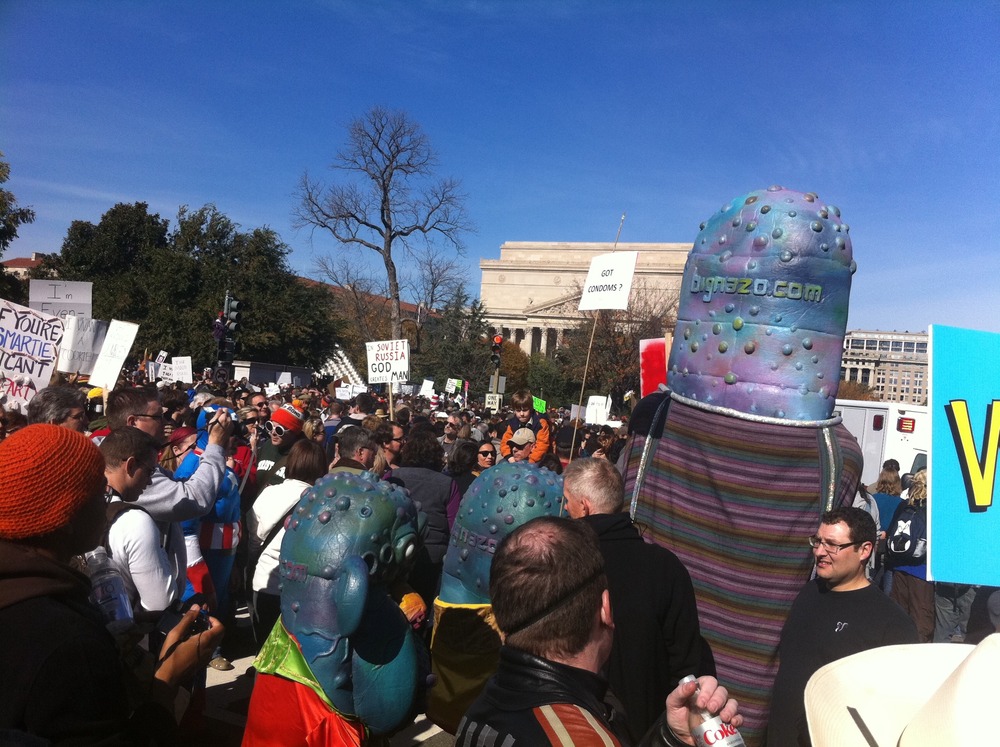
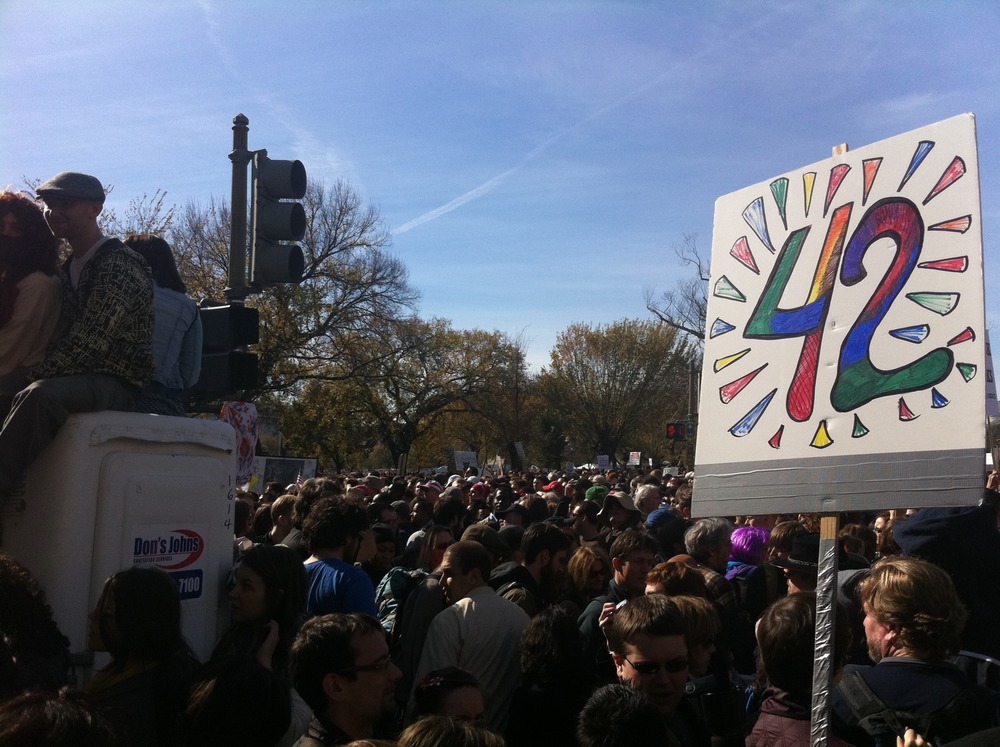
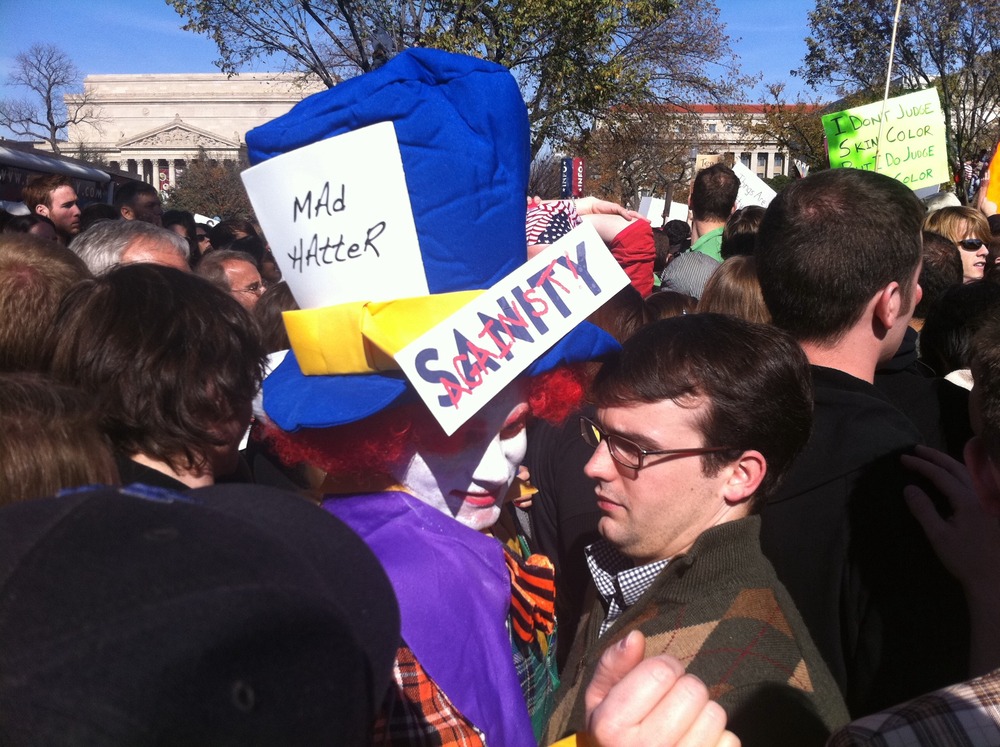
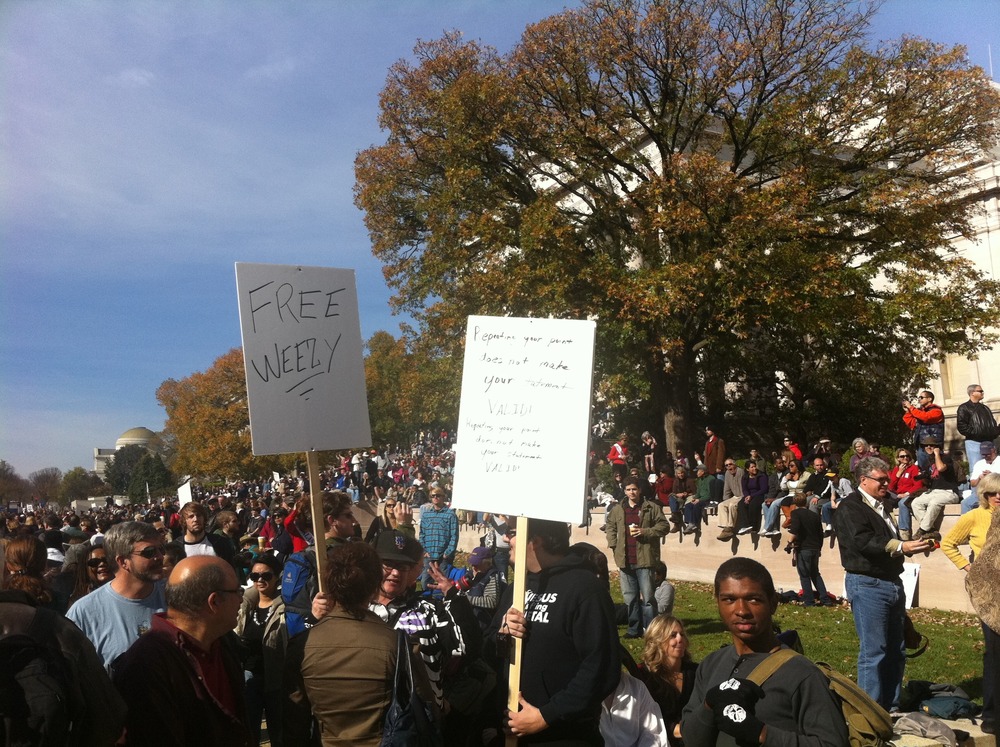
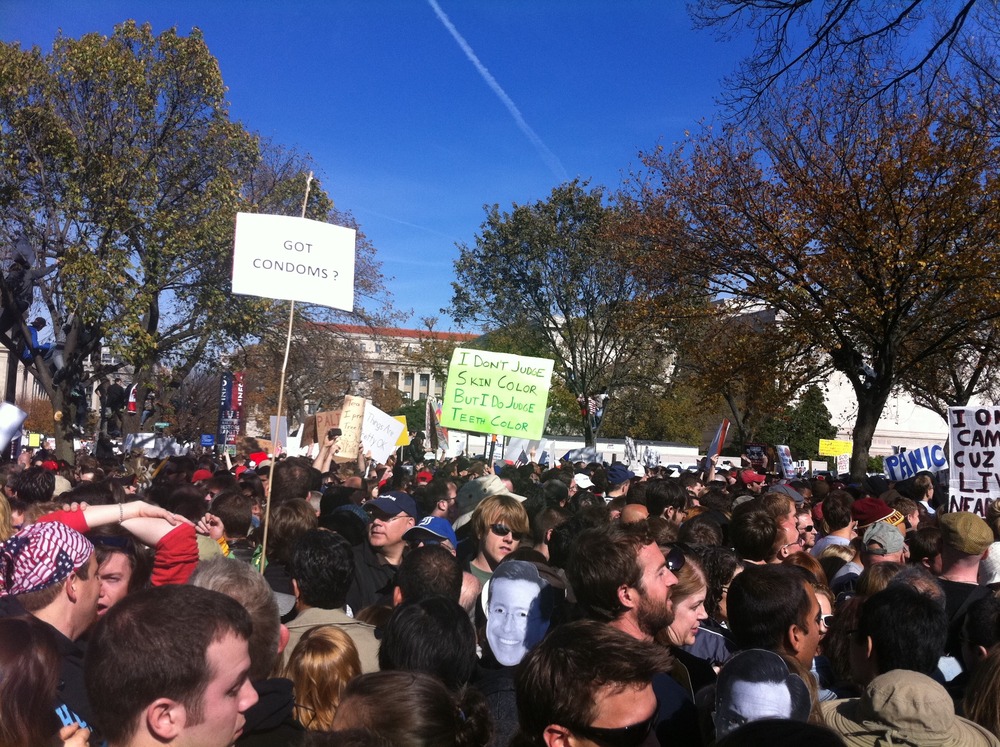
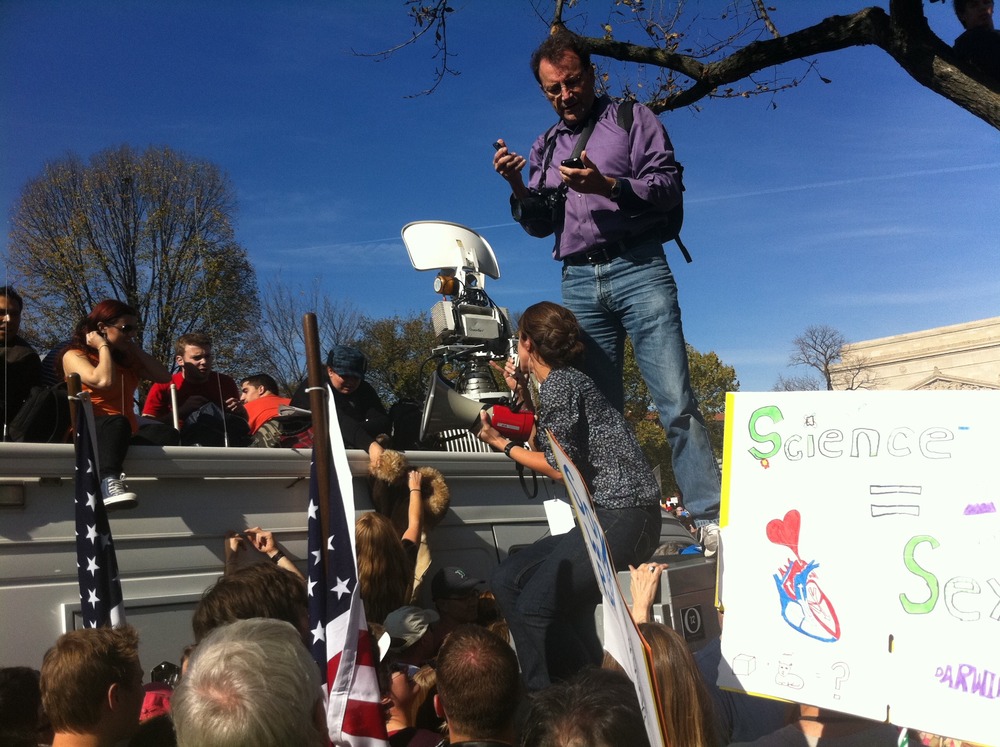
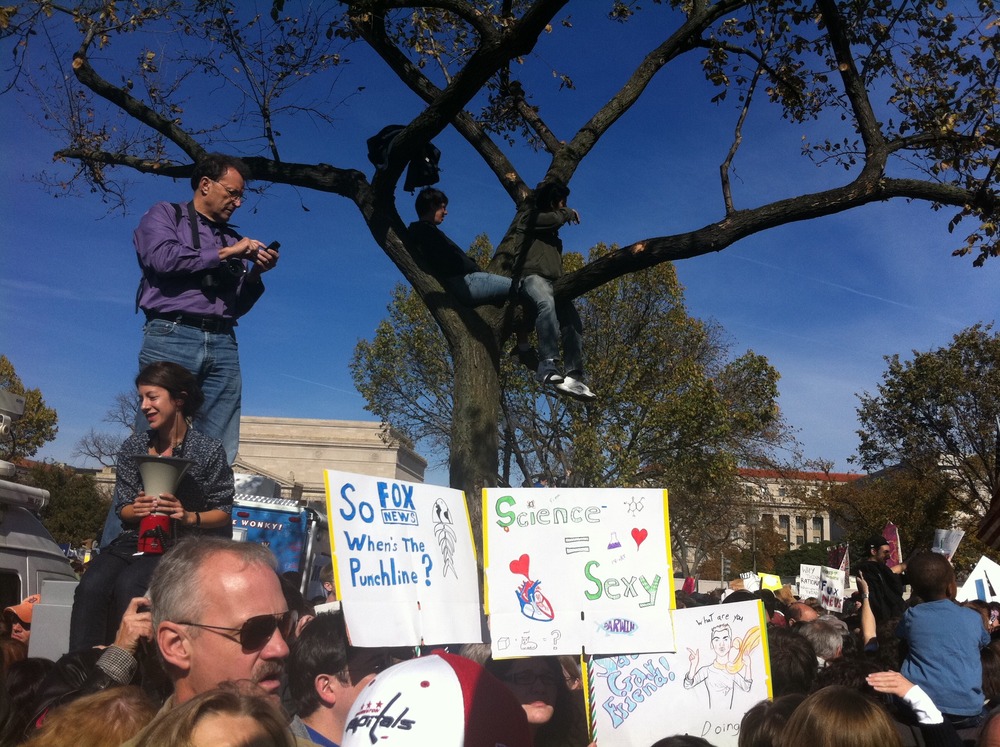
I saw hundreds of signs on the Mall today. One was notable for its clarity.

Math is beautiful.

David Annino expressed the equation another way: “We are stronger together than we are divided.”

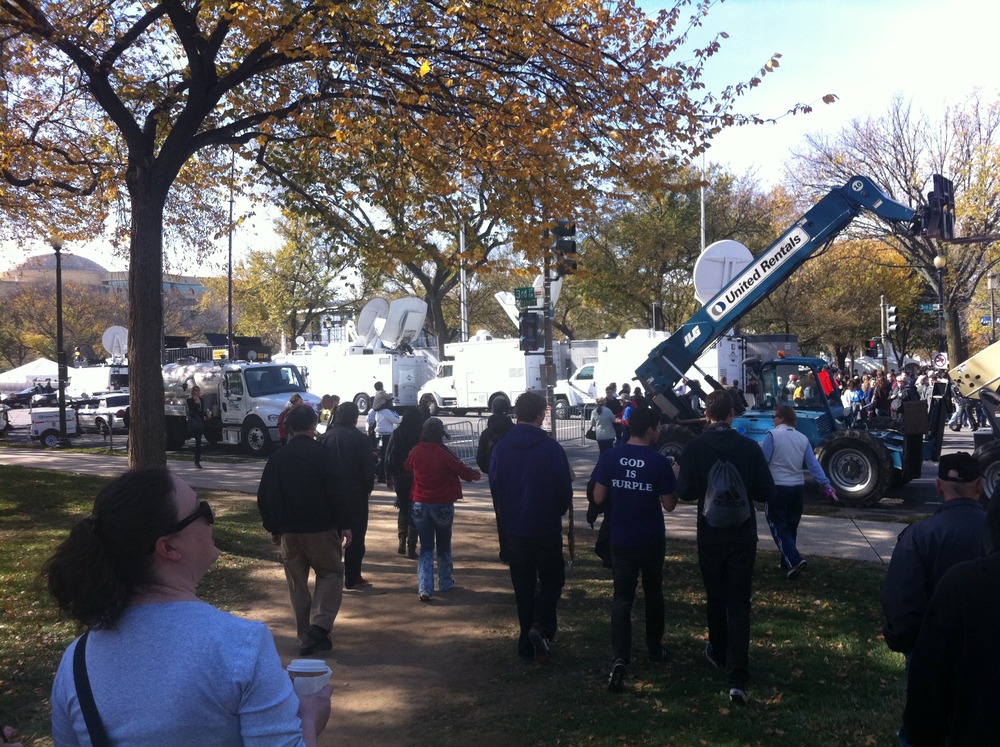
Today at the Rally for Sanity in Washington, John Stewart’s closing speech supported that contention:

Americans live their lives more as people that are just a little bit late for something they have to do—often something that they do not want to do—but they do it–impossible things every day that are only made possible by the little reasonable compromises that we all make…

…Because we know instinctively as a people that if we are to get through the darkness and back into the light we have to work together. And the truth is, there will always be darkness. And sometimes the light at the end of the tunnel isn’t the promised land. Sometimes it’s just New Jersey. But we do it anyway, together.

Jeff Jarvis hailed Stewart’s final thoughts as notable tonight in the Huffington Post:

Stewart’s close was pitch-perfect, presenting optimism, perspective, honesty, and humor in exact proportion.

He brilliantly separated himself from media, politics, and government, setting him closer to us, the people. In other circumstances, that might sound like a populist’s positioning: Stewart as Evita (don’t laugh for me, New Jersey). But that’s why the apolitical nature of the event matters: He wasn’t selling an agenda or buying power. He was leading and inspiring. He was recognizing and supporting the best in us.

Stewart was raising a standard for how our alleged leaders should respect us so we could respect them in return. “Because the image of Americans that is reflected back to us by our political and media process is false,” he said. Stewart was doing nothing less than resetting the relationship of the powerful to the public. He was re-empowering us. His speech and his event were profoundly democratic. Not Democratic or Democrat–democratic. 

As a sharp media critic himself, Jarvis recognized the rally as a larger critique of the media. The New York Times review of the rally also espouses that view: the “Rally for Sanity will be remembered, in part, as an engrossing act of media criticism,” tweeted Brian Stelter.

Media criticism aside, the strength of Stewart’s argument lies in his invocation of the shared character that has distinguished the American people throughout the country’s relatively short history.

“You go, then I go.” When we act collectively, we’re greater than when we’re divided. It’s an ancient lesson that flocks of birds, swarms of ants and schools of fish have fluidly demonstrated in nature for millennia, and yet it’s one that humans seemingly must learn and relearn as we grow.

Given the scope of the challenges that lie before the nation in the 21st Century, the need for co-operation is as pressing as ever.


2 Comments

Filed under Uncategorized

Rally to Restore Sanity / Fear

Img_0244Img_0243Img_0242Img_0241Img_0240Img_0239Img_0238Img_0237Img_0236Img_0235Img_0234Img_0233Img_0246Img_0248Img_0260Img_0259Img_0258Img_0257Img_0256Img_0255Img_0254Img_0253Img_0252Img_0251Img_0250Img_0249Img_0232Img_0231Img_0213Img_0211Img_0209Img_0208Img_0206Img_0205Img_0204Img_0203Img_0202Img_0201Img_0200Img_0199Img_0214Img_0216Img_0230Img_0229Img_0227Img_0226Img_0224Img_0223Img_0222Img_0221Img_0220Img_0219Img_0218Img_0217Img_0198

Leave a comment

Filed under Uncategorized

PBS 2.0

Earlier tonight, ReadWriteWeb dropped the news that PBS has rolled out a major new redesign. The news about the rebooted PBS.org and a new iPad app confirmed a notable aspect of the digital future that PBS vice president of digital strategy, Robert Bole, described at Fedtalks. His talk is embedded below:

As Curt Hopkins points out at ReadWriteWeb:

18 months ago, PBS launched an initiative to make the public broadcasting corporation’s site a player in multimedia. They introduced their media player, made 4,700 hours of broadcast offerings available for free, created mobile apps for kids and rolled out a subscription-based teaching platform. The next several months may add significantly to the organization’s new media juice.

Along with that iPhone app, “PBS 2.0” includes national-local integration of programming. People that follow how convoluted the licensing and syndication of public media can be for local stations know that’s a notable evolution.

New PBS apps for the iPhone and iTouch are also on the way. Note: Android apps are “on the road map” but don’t have a delivery date at the moment. I don’t think PBS is afflicted with “shiny app syndrome,” exactly, but it will be worth watching to see if an Android app is forthcoming, along with HTML5 support and more mobile optimization.

In the meantime, PBS viewers who want to watch full length episodes of programs like Frontline can now do so on demand using a Web browser. They can watch Sesame Street on YouTube. And, of course, viewers can let the folks behind all of it know what they think about it and engage them at @PBS on Twitter or Facebook.

The press release about PBS 2.0 also highlights the premiere of the first full episode of series CIRCUS, a documentary about life at the Big Apple Circus, on the new iPad app. CIRCUS can also be streamed today, in advance of the broadcast premiere.

Leave a comment

Filed under application, technology, video

Mental Health Break: @GoRemy drops a D.C. Metro Rap on Fedtalks

I’ve only been a resident of the District of Columbia for a year or so but, man, does this rap by Remy hit some funny bones. (Sore ones today, given my broken toe.) He laid this down at this year’s Fedtalks, with a big old shoutout to DCRepresents.com.

And here’s an acoustic version of Remy’s DC Metro rap that blew up on YouTube:

Here’s the original DC Metro rap:

Leave a comment

Filed under technology, video

Columbus Day 2010: Lost River Valley, West Virginia

Leave a comment

Filed under Uncategorized

“Talk to Me” about Web 2.0, MoMA

“Design is really part of life. In particular, it’s a fundamental ingredient for progress. When technology people and when scientists create revolutions or create something new, designers are the ones who make these revolutions into objects that people can use.”

-Paola Antonelli at this year’s Web 2.0 Expo in New York City.

It’s a marvelous talk, if you’re into art, technology, design or human creativity.

Antonelli also introduced the Web 2.0 community to an exciting prospect:

The Museum of Modern Art will open a new show called “Talk to Me” on July 24 2011.

Talk to Me is an exhibition on the communication between people and objects that will open at The Museum of Modern Art on July 24th 2011. It will feature a wide range of objects from all over the world, from interfaces and products to diagrams, visualizations, perhaps even vehicles and furniture, by bona-fide designers, students, scientists, all designed in the past few years or currently under development. –Talk to Me blog

Booked: A trip to NYC to visit the MoMa next summer!

2 Comments

Filed under art, technology, video

Why don’t more tweets get @replies or retweets?

As Jennifer Van Grove wrote at Mashable yesterday, “research shows that 71% of all tweets produce no reaction — in replies or retweets — which suggests an overwhelming majority of our tweets fall on deaf ears.”

Sysomos, maker of social media analysis tools, looked at 1.2 billion tweets over a two-month period to analyze what happens after we publish our tweets to Twitter. Its research shows that 71% of all tweets produce no reaction — in the form of replies or retweets — which suggests that an overwhelming majority of our tweets fall on deaf ears.

Sysomos findings also highlight that retweets are especially hard to come by — only 6% of all tweets produce a retweet (the other 23% solicit replies).

I’ll admit, this doesn’t shock me, based upon my experience over the years.

Many of my tweets are retweeted but then I have above-average reach at @digiphile and engaged followers.

I know I’m an outlier in many respects there, and that the community that I follow and interact with likely is as well.

This research backs that anecdotal observation up: people are consuming information rather than actively interacting with it. But my own experience doesn’t gibe with that greater truth, and that’s why I chimed in, even though I know it may expose me to more of my friend Jack Loftus‘ withering snark. (If you don’t read him at Gizmodo you’re missing out.)

Why Don’t People @Reply more?

So what’s going on? I have a couple of theories. The first is that @replies are much like comments. Most people don’t make either. Even though social networking has shifted many, many more people into a content production role through making status updates to Twitter, Facebook, Foursquare (and now perhaps LinkedIn), the 90-9-1 rule or 1% rule still appears to matter most of the social Web. Participation inequality is not a new phenomenon.

That scope of that online history suggests that the behaviors of yesteryear aren’t completely subsumed by the explosion of a more social Web. Twitter and Facebook do appear to have diminished long form blogging activity or comments on posts, as netizens have moved their meta commentary to external social networks. And even there, recent Forrester research suggest that social networking users are creating less content.

In other words, it’s not that Facebook or Twitter sucks, it’s that human behavior is at issue.

It’s not that Twitter or its employees or developers per se are at fault, though you can see where, for example, Quora or Vark are expressly designed to create question and answer threads.

It’s that, for better or worse, the culture of the people using Twitter is expressed in how they use it, including the choice to reply, RT or otherwise engage.

If the service is going to grow into an “information utility” and become a meaningful venue with respect to citizen engagement with government, the evolution of #NewTwitter may need to add better mechanisms to encourage that interaction.

So is Twitter useful?

As Tom Webster pointed out at his blog [Hat tip to @Ed]:

As a researcher, if I were writing this headline, I would have written it thusly: “Nearly 3 in 10 Tweets Provoke A Reaction.”

I follow about 3,000 people on Twitter. If we assume that this lot posts five tweets per week (a conservative figure), that’s 15,000 tweets I could see in a given week, were I to never peel my eyes away from Tweetdeck. The Sysomos data suggests that of those 15,000 tweets, 4,350 were replied to or at least retweeted. See, I think that’s actually a big number.

In other words, 29% of tweets do get a response. That’s better than the direct mail or email marketing, as far as I know. I don’t expect a response from every tweet, though I’ve been guilty of that expectation in past years. That’s why I often ask the same question more than once now, or tweet stories again, or why I’ll syndicate a given post, video or picture into multiple networks.

I continue to find Twitter a useful tool for my profession. While inbound Web traffic from Twitter is negligible when compared to Google, Facebook, StumpleUpon or even Fark, I’ve found it useful for sourcing, sentiment analysis, Q&A, a directory, a direct line to officials and executives, and of course for distributing my writing. Twitter may not be essential in the same sense that a cellphone, camera, notebook and an Internet connection are in my work but I’ve found it to be a valuable complement to those tools. I’ve definitely sourced stories, gathered advice or recommendations through crowdsourcing questions there, with far less effort than more traditional means.

15 Comments

Filed under blogging, government 2.0, microsharing, research, social bookmarking, social media, technology, Twitter

Strong ties, weak ties, social software and online friendship

Relationships are hard. Friendships take time to build, even if annealed in the heat of a moment. Often they’re situational, forged in school, work, church, or sporting teams, and may fade over time if not renewed regularly.

Online social networking can change that, to a certain extent, but asking people with whom you have weak ties to continually renew them asks a lot. Those with strong ties may tolerate it and continue to follow new accounts, accept requests, correct links or the like. Or even a Like. Until we have an interoperable social graph that can be saved, exported and imported between social networks, we’re wedded to our investments in sites like Facebook, Twitter, LinkedIn and whatever is coming next, whether it’s Diaspora, Foursquare, Ping or Twitcher. The relationships we build in those networks are the social ties that find, as Professor McAfee put it.

To ground that risk in recent events, my colleague in tech journalism, George Hulme, accidentally deleted his Twitter account this month and has had to ask people to follow the new one. Tough row to hoe, though all of the social capital he’s amassed means he’s already back to 583 follows and 42 lists.

People with weaker ties are unlikely to reconnect unless their interest is sufficiently strong based upon the perceived value of the reconnection. Social karma derives in part from the strength of that past relationship.

I think that’s variably true on the Web, at work or on private social networks. The value of link, follow or fan differs from network to network, as does its permanence. To stop following people on Twitter is much different than to unfriend someone or Facebook or delink on LinkedIn, for instance. In a workplace, where enterprise social software is deployed it could be a huge issue.

These technologies allow us to enrich our networks with many important weaker ties, although sometimes at the cost of investing in reinforcing the stronger ones.

In that vein, I’m looking forward to a family celebration tomorrow where the social circle is as wide as the dinner table, deep as a lifetime and the tweets come from the trees around the patio.

Here’s to being better friends.

UPDATE: Shaun Dakin shared some research in the comments from Paul Adams, a usability researcher at Google, that’s relevant. The Real Life Social Network v2.

3 Comments

Filed under friends, social bookmarking, technology

Priceless: Futurama lampoons the eyePhone and “Twitcher”

As a huge fan of Matt Groening, a long-time Apple customer and a serious Twitter user, I found a recent episode of Futurama, “Attack of the Killer App,” to be crackling good satire. Excerpt below:

Yes, I know this all blew up back in July. I saw it tonight, and it made me laugh. The episode pokes fun at pokes fun at Apple and iPhone customers in all sorts of ways, along with viral video and Internet culture. As Engadget pointed out, Futurama critiqued modern gadget and social media obsession using 50s technology. The folks over at EdibleApple.com also highlighted that this is far from the first time Futurama has satirized Apple:

Futurama’s focus on Apple is, of course, nothing new. Series co-founders David X. Cohen and Matt Groening are both big Apple nerds. We previously chronicled Futurama’s subtle and comical use of Apple and Mac references over here.

The viral Twitworm that creates many zombies is one of the best pop references to botnets and IT security I’ve seen recently, too. And there was one more (seriously geeky) detail that Engadget, Edible Apple and Mashable missed:

“When did the Internet become about losing your privacy?” asks Fry.

“August 6, 1991”-Bender.

Why? That was the day when Tim Berners-Lee posted “a short summary of the WorldWideWeb project online. The real world has never been the same since.

WorldWideWeb – Executive Summary

The WWW project merges the techniques of information retrieval and hypertext to make an easy but powerful global information system.

The project started with the philosophy that much academic information should be freely available to anyone. It aims to allow information sharing within internationally dispersed teams, and the dissemination of information by support groups.

Reader view

The WWW world consists of documents, and links. Indexes are special documents which, rather than being read, may be searched. The result of such a search is another (“virtual”) document containing links to the documents found. A simple protocol (“HTTP”) is used to allow a browser program to request a keyword search by a remote information server.
The web contains documents in many formats. Those documents which are hypertext, (real or virtual) contain links to other documents, or places within documents. All documents, whether real, virtual or indexes, look similar to the reader and are contained within the same addressing scheme. To follow a link, a reader clicks with a mouse (or types in a number if he or she has no mouse). To search and index, a reader gives keywords (or other search criteria). These are the only operations necessary to access the entire world of data.

UPDATE: Ok, ok, sharp-eyed readers: The AVClub totally got that Bender reference.

3 Comments

Filed under research, scifi, social media, technology, Twitter, video

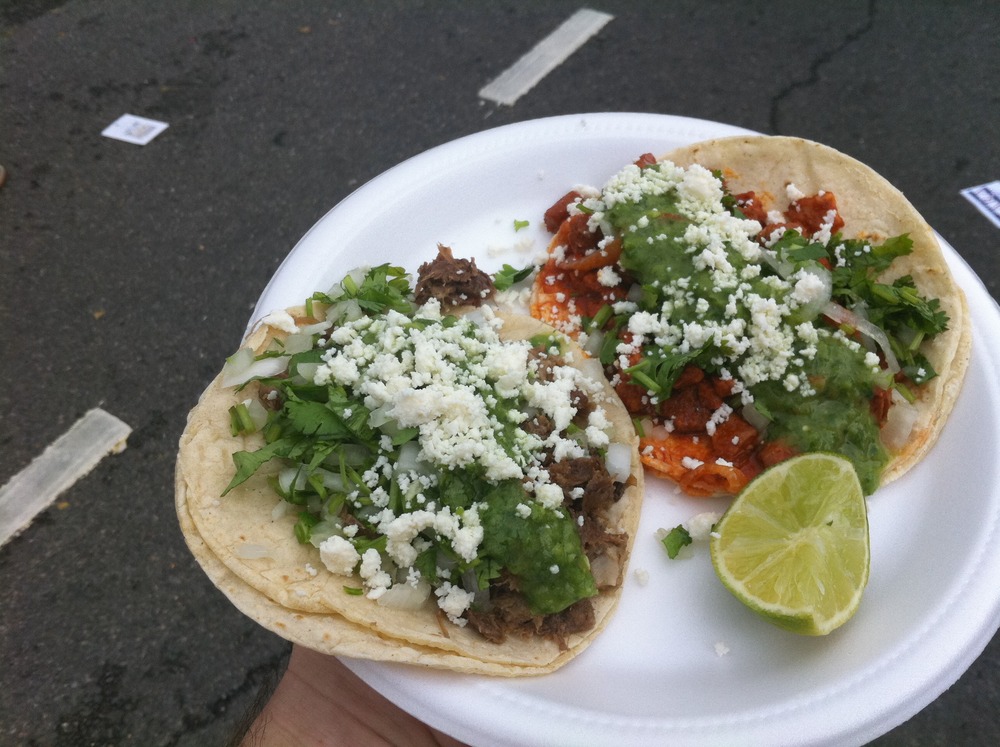
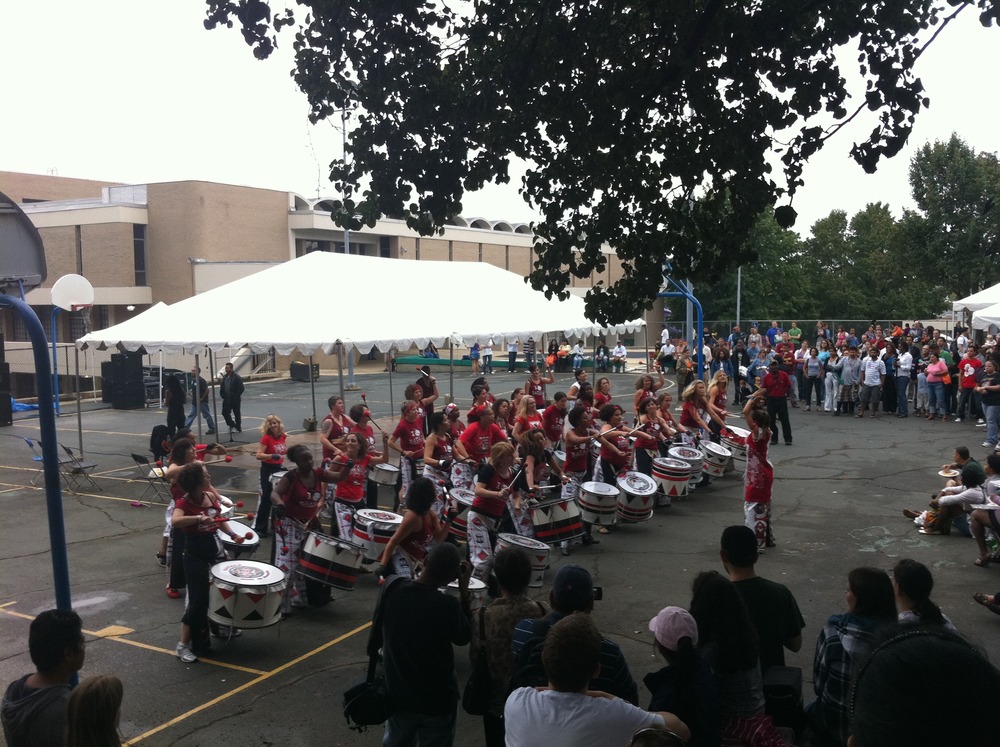
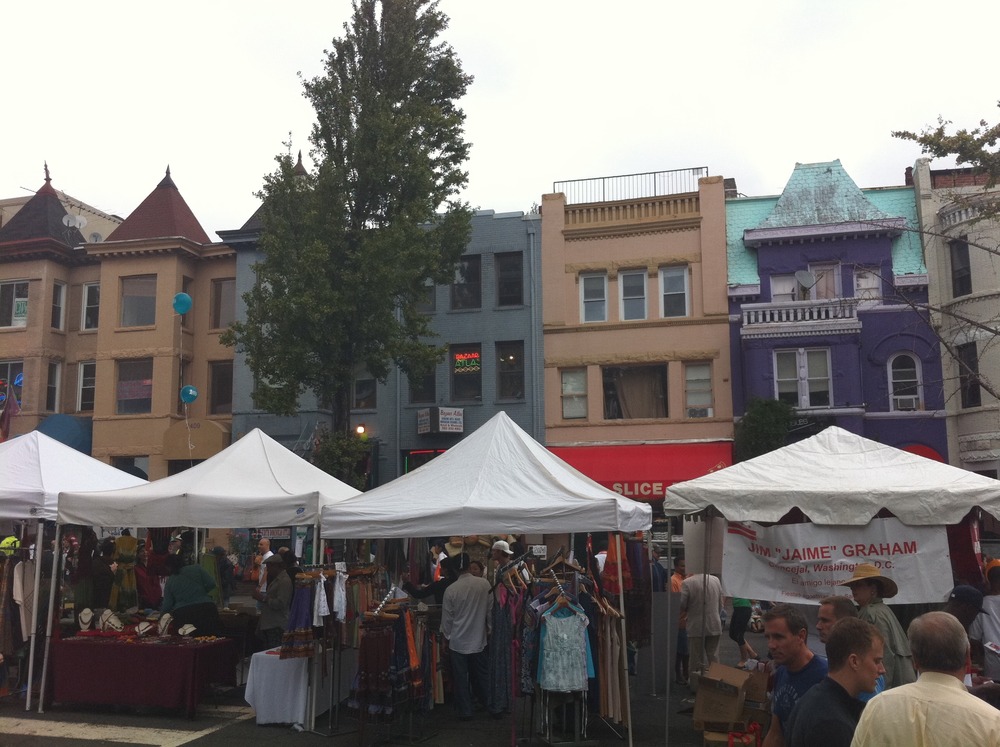
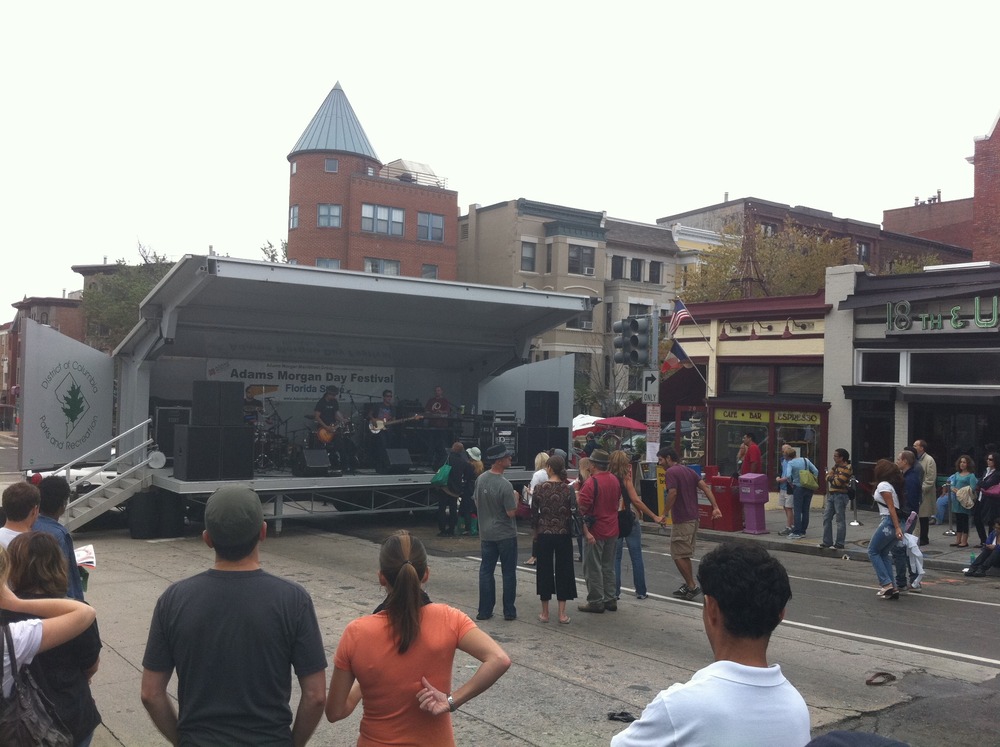
Dupont Farmers Market and Adams Morgan Festival

Img_0063Img_0076Img_0075Img_0074Img_0073Img_0072Img_0071Img_0070Img_0069Img_0068Img_0067Img_0066Img_0065Img_0064Img_0077

Leave a comment

Filed under Uncategorized