Category Archives: microsharing

Why don’t more tweets get @replies or retweets?

As Jennifer Van Grove wrote at Mashable yesterday, “research shows that 71% of all tweets produce no reaction — in replies or retweets — which suggests an overwhelming majority of our tweets fall on deaf ears.”

Sysomos, maker of social media analysis tools, looked at 1.2 billion tweets over a two-month period to analyze what happens after we publish our tweets to Twitter. Its research shows that 71% of all tweets produce no reaction — in the form of replies or retweets — which suggests that an overwhelming majority of our tweets fall on deaf ears.

Sysomos findings also highlight that retweets are especially hard to come by — only 6% of all tweets produce a retweet (the other 23% solicit replies).

I’ll admit, this doesn’t shock me, based upon my experience over the years.

Many of my tweets are retweeted but then I have above-average reach at @digiphile and engaged followers.

I know I’m an outlier in many respects there, and that the community that I follow and interact with likely is as well.

This research backs that anecdotal observation up: people are consuming information rather than actively interacting with it. But my own experience doesn’t gibe with that greater truth, and that’s why I chimed in, even though I know it may expose me to more of my friend Jack Loftus‘ withering snark. (If you don’t read him at Gizmodo you’re missing out.)

Why Don’t People @Reply more?

So what’s going on? I have a couple of theories. The first is that @replies are much like comments. Most people don’t make either. Even though social networking has shifted many, many more people into a content production role through making status updates to Twitter, Facebook, Foursquare (and now perhaps LinkedIn), the 90-9-1 rule or 1% rule still appears to matter most of the social Web. Participation inequality is not a new phenomenon.
That scope of that online history suggests that the behaviors of yesteryear aren’t completely subsumed by the explosion of a more social Web. Twitter and Facebook do appear to have diminished long form blogging activity or comments on posts, as netizens have moved their meta commentary to external social networks. And even there, recent Forrester research suggest that social networking users are creating less content.

In other words, it’s not that Facebook or Twitter sucks, it’s that human behavior is at issue.

It’s not that Twitter or its employees or developers per se are at fault, though you can see where, for example, Quora or Vark are expressly designed to create question and answer threads.

It’s that, for better or worse, the culture of the people using Twitter is expressed in how they use it, including the choice to reply, RT or otherwise engage.

If the service is going to grow into an “information utility” and become a meaningful venue with respect to citizen engagement with government, the evolution of #NewTwitter may need to add better mechanisms to encourage that interaction.

So is Twitter useful?

As Tom Webster pointed out at his blog [Hat tip to @Ed]:

As a researcher, if I were writing this headline, I would have written it thusly: “Nearly 3 in 10 Tweets Provoke A Reaction.”

I follow about 3,000 people on Twitter. If we assume that this lot posts five tweets per week (a conservative figure), that’s 15,000 tweets I could see in a given week, were I to never peel my eyes away from Tweetdeck. The Sysomos data suggests that of those 15,000 tweets, 4,350 were replied to or at least retweeted. See, I think that’s actually a big number.

In other words, 29% of tweets do get a response. That’s better than the direct mail or email marketing, as far as I know. I don’t expect a response from every tweet, though I’ve been guilty of that expectation in past years. That’s why I often ask the same question more than once now, or tweet stories again, or why I’ll syndicate a given post, video or picture into multiple networks.

I continue to find Twitter a useful tool for my profession. While inbound Web traffic from Twitter is negligible when compared to Google, Facebook, StumpleUpon or even Fark, I’ve found it useful for sourcing, sentiment analysis, Q&A, a directory, a direct line to officials and executives, and of course for distributing my writing. Twitter may not be essential in the same sense that a cellphone, camera, notebook and an Internet connection are in my work but I’ve found it to be a valuable complement to those tools. I’ve definitely sourced stories, gathered advice or recommendations through crowdsourcing questions there, with far less effort than more traditional means.

15 Comments

Filed under blogging, government 2.0, microsharing, research, social bookmarking, social media, technology, Twitter

Voices from the #Gov20LA Unconference: On Innovation and #Gov20

Earlier this month, I stopped in Los Angeles to see what was happening at Goverment 2.0 LA, a hybrid of the unconference/camp and conference model organized by Alan W. Silberberg and Lovisa Williams. I’ve already shared some thoughts on what I learned about language of government 2.0, the history of disruptive innovation and the ways government adapts to technological change.

While I’m proud of those posts, one of the themes that emerged from the weekend was the importance of video for communication. I’m not at all on “video as the new text,” especially for countries with low Internet penetration or bandwidth, but there’s no denying that online video has extraordinary power in conveying messages. Just look at video of Iranian protesters on the streets of Tehran, reports from the earthquake in Haiti or the President of the United States on YouTube. Tune in to CitizenTube any minute of the day to witness that power in action.

Following are short videos from Gov2.0 LA organizers and attendees that share their takeways from the event.

Lovisa Williams

@lovisatalk talks about the goals of the Gov2.0 LA Camp.

Ben Berkowitz

@BenBerkowitz is the CEO of SeeClickFix.

Lewis Shepherd

@LewisShepherd discusses collaborative technology and government.

Wayne Burke

@wmburke talks about Govluv.org, on online platform for connecting to government representatives using Twitter.

Antonio Oftelie

@AntonioOftelie conducted a Government 2.0 Survey for Harvard’s Kennedy School.

Alan Webber

@AlanWebber talks about the international flavor of the Gov2.0 LA Camp.

Laurel Ruma

@LaurelRuma on her impressions from Day 1.

Lisa Borodkin

@LisaBorodkin on the language of Government 2.0.

Christina Gagnier

Christina @Gagnier on communicating about Government 2.0.

Justin Herman

@JustinHerman goes West Coast.

Adriel Hampton

@AdrielHampton on his impressions from Day 1.

Finally, here’s GovFresh.tv‘s video that features interviews with some of the people above and more:

2 Comments

Filed under application, blogging, friends, journalism, microsharing, research, social bookmarking, social media, technology, Twitter, video

Google Buzz: adding algorithmic authority and relevance to social media

A few minutes ago, Google Buzz went live at http://buzz.google.com. Google posted a video introducing the Buzz, which ties together Google contacts into a distributed social network accessed through a new tab in Gmail.

In a live webcast on YouTube, Bradley Horowitz (@elatable) explained what Google was after with Buzz: a way to add relevance to the information firehose represented by social messaging and activity. The Web application will act as a user interface to for social data.

Based upon the demo, it will be a snappy app for processing, sharing and annotating images, video and conversations. “Organizing the world’s social information has been a large problem, the kind @Google likes to solve,” said Buzz product manager Todd Jackson, explaining at least some of the why behind the application of algorithmic authority to social media. Jackson writes more in his introduction to Google Buzz at Google’s official blog.

Content shared on Buzz can be posted publicly to a Google Profile (like the one for, say, Alexander Howard) or sent privately within a network. At first glance, the user interface and contrls looks like a Friendfeed clone, with the additional of familiar keyboard shortcuts from gmail and Google Reader. And, notably, Google has adopted the “@reply” convention from the Twitter community as a means of initiating a conversation with contact.

To get a user started with a network, Buzz will autofollow people you’ve emailed. In other words, as Jeremiah Owyang predicted last summer, Google made email into a social network.

Buzz is also mobile.

The mobile Web application, which works on both iPhone and Android, includes geotagging and voice recognition, allowing the user to make spoken updates. While Google profiles will aggregate a user’s Buzz activity, “Places” will aggregate location-based reviews. (In other words, look out Yelp.) A “Nearby” button provides location-based context for Buzz users. Google also launched a new mobile verion of  Google Maps, adding a a social layer to its maps. The new “conversation bubbles” on Google Maps indicate geotagged Buzz updates and look like a lightweight, useful version of Twittervision.

Coming soon to the enterprise

Google Buzz will be launched as an enterprise product, says Horowitz. Buzz would likely serve as microblogging layer for Google Apps, providing helpful filtering for the noise of the social Web, unlike Wave, which added it. “A lot of the functionality is inspired by Wave,” said Horowitz, a likely nod to a decision to adopt the best features of the often maligned social messaging platform.

Google co-founder Sergey Brin was on hand to share his personal experience with Buzz, offering a preview of how it might be pitched to other business executives or CIOs. “I found a huge amount of productivity from using Google Buzz internally,” said Brin. “I posted [an] OpEd to Buzz. I looked at the broad categories and did a general edit based on that feedback. It was far more efficient.”

Open APIs?

Public feeds are supported as an XML feed and are fully supported by PubSubHub as of today, said another Google exec. By going open API and openly courting developers to join them on Google Code, Google may be after the same fertile ecosystem that surround Twitter.

What does Google Buzz mean?

All of the above gives an idea of what Google’s newest Web application can do and how it might work. Altimeter Group’s Jeremiah Owyang has already posted a quick take on what Google Buzz will mean. Key insights:

  • At the high level, this is a strong move for Google, they continue to aggregate other people’s social content, and become the intermediatry. This helps them to suck in Twitter, Flickr, and any-other-data type as the APIs open up, giving them more to ‘organize’. This is Google acting on its mission to the world.
  • For consumers, the risk of privacy will continue to be at top of mind. Although the features allow for sharing only with friends or in public. expect more consumer groups to express concern. Overtime, this will become moot as the next generation of consumers continues to share in public.
  • For consumers, this could potentially have more adoption than Twitter as Gmail has a large footprint Google told me it’s tens of millions (active monthly unique). Of course, most Gmail users likely aren’t Twitter users, but there could be a large platform to draw from.
  • For Facebook, this is a direct threat, these features emulate Friendfeed and the recently designed Facebook newsfeed. Expect Google to incorporporate Facebook connect, commoditizing Facebook data as it gets sucked into Google and displayed on Google SERP.
  • For small busineses and retailers, this will impact their search engine results pages, as a single top ‘buzzer’ could cause their content to be very relevant, if that person was relevant, then their influential content could show at top of SERP pages. Expect Google to continue to offer advertising options now around buzz content –fueling their revenues.
  • Strong, near real-time analysis from Owyang. One area he didn’t dwell as much on is the utility to both businesses and many users of the social Web who want relevance for work or for specific topics, without the noise that often obscures both on Twitter, Facebook or other social networks. Power users have had to evolve many strategies to filter signal from the noise, including shadow accounts, lists, keyword searches or alerts. Google Buzz has the potential to allow over 150 million gmail users to quickly filter the most useful content from the social Web and then selectively share it with either friends, colleagues or the open Web. That action, often termed “curation” in the digital journalism space, is singularly useful.

    If Buzz easily enables that activity for mobile users, it will have the potential to massively disrupt the nascent mobile social networking space that currently includes Yelp, Gowalla, Brightkite, Loopt and Foursquare. If users turn to Buzz for reviews, to find who is nearby or what’s being discussed in the neighborhood, Google will also have made Google Maps much stickier, which could in turn make it a more useful platform for contextual mobile advertising. Given the potential for targeted ads based on location to be more useful, that might in turn be of great utility to both users and the search engine giant, though electronic privacy advocates are likely to look at the move with concern.

    Will people use Buzz? That’s the multi-million dollar question. Facebook and Twitter own the social Web, as it stands. If Buzz offers a UI that adds relevance, it has a shot. If users find utility in the way that Buzz helps them filter social media from other platform, it could stack up well against Brizzly, Seesmic or similar “social dashboards.”

    I’ll keep an eye out for the function to go live in my inbox in the meantime and read TechMeme for other reactions.

    2 Comments

    Filed under application, blogging, microsharing, social bookmarking, social media, technology, Twitter, video

    On Twitter, neither a Luddite nor Biltonite be. Simply be human.

    The wrangling about whether Twitter is revolutionary, useful or mindless twaddle simply will not end. Given the continued interest in the microblogging platform in the media, that is perhaps to be expected.

    Last month, David Carr wrote in the Sunday edition of the The New York Times that “Twitter will endure,” exploring how he’d initially dismissed the platform and then found it useful. In late January,  The New Yorker‘s George Packer responded to  Carr, deriding Twitter as “information hell” and comparing it to an addiction to crack in “Stop the world.” That brought a flood of attention from online media outlets, including Nick Bilton, lead writer for the excellent Bits blog at the Times, who wrote that “The Twitter train has left the station,” defending Twitter from the point of view of a journalist who has found utility amidst the stream.  On Thursday, Mr. Packer offered a rebuttal, positioning himself as neither a “Luddite or a Biltonite.” Jeffrey Goldberg has now weighed in at the Atlantic, consigning Bilton and others who might share his conviction to the arena of “info freaks.”

    Well and good. (At least Goldberg tweets.) Two disclaimers:

    1) I am a long-time reader of George Packer’s excellent work in the New Yorker. I found “The Assassin’s Gate” to be one of the best books written about the early stages of the war in Iraq.

    2) I’ve found considerable utility in Twitter since I joined in March of 2007.

    I don’t expect either truth to be degraded by the spat between Bilton and Packer.

    I was, however, surprised that Packer had chosen to criticize a platform that he hadn’t used. Few serious technology journalists, book reviewers, movie or restaurant critics would consider rendering judgment without personal experience. Such considerations don’t hold back millions of Twitter users, bloggers or, I believe, any number of television pundits, but since I admire Mr. Packer’s professionalism, that approach surprised me.

    When he wrote “The Revolution Will Not Be Blogged” six years ago, my sense was that, despite his misgivings and evident frustration with pajama-clad pundits, he’d read some blogs, even if he doubted their utility as serious platforms for commentary or criticism. Given the maturation of blogs in the years since (including, I might note, at New Yorker.com), I wonder if revisiting that analysis might have been more useful, rather than dismissing Twitter without first dipping into the ebb and flow of news there.

    In his second pass, Packer wrote that he had, in fact, “sought out a Tweeter,” without linking to or identifying that person. Well and good, but perhaps a weak strawman. As a commenter at Packer’s blog reflected, much of the content produced there is ambient noise, or digital “phatics” as Kevin Marks has rightly described them.

    Twitter is profoundly social. That’s is why, despite the mindless hype surrounding the phrase, “social media” has had staying power in describing Twitter, Facebook or other platforms that allow two way conversations.

    Twitter, like so many other things, is what you make of it. Some might go to a cocktail party and talk about fashion, who kissed whom, where the next hot bar is or any number of other superficial topics. Others might hone in on politics, news, technology, media, art, philosophy or any of the other subjects that the New Yorker covers. If you search and listen, it’s not hard to find others sharing news and opinion that’s relevant to your own interests.

    Using intelligent filters for information, it’s quite easy to subscribe and digest them at leisure. And it’s as easy as unfollowing someone to winnow out “babble” or a steady stream of mundanity. The impression that one is forced to listen to pabulum, as if obligated to sit through a dreary dinner party or interminable plane ride next to a boring boor, is far from the reality of the actual experience of Twitter or elsewhere.

    There’s also genuine utility there for the journalists who choose to experiment. When stories break, we can use it for real-time news and information. In the case of Haiti, Twitter was relevant, immediate and helpful, given that phones went down and the Internet stayed up. NPR was able to use Twitter and Skype to find sources on the ground. Disaster relief agencies were able to coordinate with one another. And in one notable instance, Doctors Without Borders was able to call attention using Twitter at @MSF_USA to the fact that its plane was getting turned away. Ann Curry heard them and helped to amplify the issue:

    “@usairforce find a way to let Doctors without Borders planes land in Haiti: http://bit.ly/8hYZOK THE most effective at this. 11:52 AM Jan 17th

    Packer and others are right to caution against hype and techno-worshipers. On balance, however, Packer errs in tarring much of the online community with a broad brush.

    One passage in particular stands out: “There’s no way for readers to be online, surfing, e-mailing, posting, tweeting, reading tweets, and soon enough doing the thing that will come after Twitter, without paying a high price in available time, attention span, reading comprehension, and experience of the immediately surrounding world.” As Marc Ambinder tweeted earlier today, “I read many, many books in 2009. Including yours. And I Tweet.”

    The same is true for me, and for many others. I read much of the New Yorker, the Economist and the Atlantic each month, along with numerous newspapers and technology blogs or trade publications online. (I write for one of the latter.) I also read on average 2-3 books every month, depending upon the rigor of travel, conferences or other factors. I also dip in and out Twitter throughout the week. That may not be an ideal information diet for everyone but for this tech journalist, it works. Even if I miss a story, it’s extremely rare that my network of friends and sources won’t find it and share it.

    That’s why this “social news” phenomenon has become of keen interest to Google, as evidenced by the inclusion of social search into its results.

    I share Packer’s concern about how the use of the Internet is changing literacy, critical thinking and creativity. Well and good, if not exactly novel. I look forward to more research on how and where those effects are found. I find hypotheses that place high consumption rates video games, television and movies is at the heart of poor information literacy instead of the wired world more convincing.

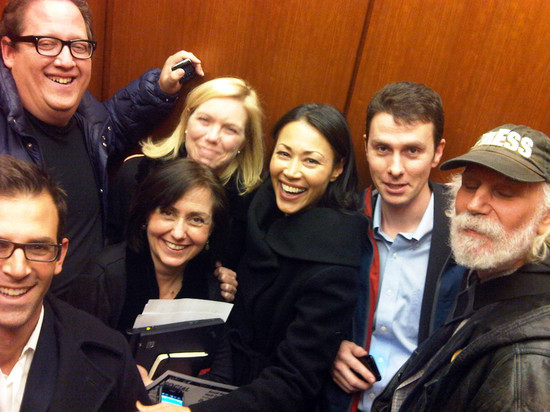
    As for another comment regarding the tweets that flew about Ann Curry being stuck in the elevator, I share the amusement from the perspective of the man who sat next to that remarkable woman for ninety minutes. (So did the folks at Gawker, who wrote about the elevator incident at length.) Ann and I talked about Haiti, changes in media, religion, the utility of the iPad and yes, Twitter, all gloriously offline and in depth. I enjoy that memory; there’s a lovely montage of images up at GeoGeller.com, whose camera took the excellent shot below.

    The fact that the world knew we were all stuck in that elevator was merely amusing, however, as opposed to a critical message that would best be conveyed to a 911 operator. We all found the intercom more useful than our smartphones, given the awful reception.

    Sharing our experience with our networks of friends, however, was a natural extension of life in 2010. It certainly wasn’t breaking news but the act of communicating about it offered me, at least, an opportunity to interact with a broader audience of other humans around globe. That’s an unalloyed good.

    I agree that “cheerleading uncritically” is not useful, nor a mentality that any writer should adopt. I do not share Packer’s conviction, however, that the news landscape can’t be occupied by more technological platforms, including reporters tapping away on BlackBerrys. One important example of that is Mark Knoller, the CBS White House correspondent whose tweets read like a they’ve been adapted from a history book already written.

    If Mr. Packer would like to meet over coffee in DC to talk further about how life has changed in the age of Twitter, consider this an open invitation. Given my experience with his writing, I am certain that @GeorgePacker would be worth following.

    -Alexander B. Howard
    @digiphile.

    7 Comments

    Filed under blogging, journalism, microsharing, personal, photography, social media, technology, Twitter

    George Washington’s Rules for Social Media

    George Washington will always be counted amongst the greatest citizens of the United States, for any number of reasons. The first President of the United States was far from a perfect man, given his history as a slave owner, but his contemporaries saw in him a rare nobility of character that still distinguishes Washington today. My heart may lie with Franklin, my spirit with Jefferson, and my mind with Hamilton… but Washington lays claim to respect, for any number of good reasons.

    Last year, I came across a list of rules for civility and decent behavior that were ascribed to him by the editors of Foundation Magazine. Their origin?

    According to the article:

    “By age sixteen, Washington had copied out by hand, 110 Rules of Civility & Decent Behavior in Company and Conversation. They are based on a set of rules composed by French Jesuits in 1595. Presumably they were copied out as part of an exercise in penmanship assigned by young Washington’s schoolmaster.

    The first English translation of the French rules appeared in 1640, and are ascribed to Francis Hawkins the twelve-year-old son of a doctor.”

    It struck me as a worthy mental exercise to adapt each to the present day online culture.

    The following “rules” are interpretation of his intent, not President Washington’s words.

    Make of them what you will and share them as you like.

    Note Bene: As I observe below, everyone will use social media differently. A given person’s position, industry or context may mean a given suggestion doesn’t make sense.

    And as my friend Paul Gillin has written, it’s important to recognize when to avoid using social media.

    As we look ahead to the new year ahead, astute observers may even ditch “the s word” in favor of collaborative media. I’ve commented that I’m open to that terminology when if it comes into wider use.

    [Image Credit: wallyg on Flickr / CC BY-NC-ND 2.0]

    For now, here are “George Washington’s Rules for Social Media.”

    On the left is Washington’s original phrase. To the right, my interpretation.

    Every Action done in Company, ought to be with Some Sign of Respect, to those that are Present. Every public update to social networks should be made with respect for your audience.
    When in Company, put not your Hands to any Part of the Body, not usually Discovered.
    When you’re on the webcam, keep your hands above board and out of your nose.
    Show Nothing to your Friend that may affright him. Don’t post NSFW pictures or links to them on the enterprise social network. Or mask them in links on public ones.
    In the Presence of Other, Sing not to yourself with a humming Noise, nor Drum with your Fingers or Feet. Don’t hum on conference calls or on Skype, nor tap on the table.
    If You Cough, Sneeze, Sigh, or Yawn, do it not Loud but Privately; and Speak not in your Yawning, but put Your handkerchief or Hand before your face and turn aside. No coughing, sneezing, sighing or yawning while on a call. Unless you’re on mute.
    Sleep not when others Speak, Sit not when others stand, Speak not when you Should hold your Peace, walk not on when others Stop. Stay awake in meetings, bring enough chairs, listen first, don’t stay and chat on empty IRC threads.
    Put not off your Cloths in the presence of Others, nor go out your Chamber half Dressed. Avoid NSFW avatars on public social networks, or bathrobes on Web conferences.
    At Play and at Fire its Good manners to Give Place to the last Commer, and affect not to Speak Louder than Ordinary. Whether you’re online or at home, welcome guests and don’t shout. (NO CAPS, friends.)
    Spit not in the Fire, nor Stoop low before it neither Put your Hands into the Flames to warm them, nor Set your Feet upon the Fire especially if there be meat before it. Don’t bury shared bandwidth during the day with P2P filesharing. Don’t dry out your socks in the office microwave.
    When you Sit down, Keep your Feet firm and Even, without putting one on the other or Crossing them. Ergonomics will help Web workers avoid repetitive stress injuries. Avoid slumping, position keyboard properly.
    Shift not yourself in the Sight of others nor Gnaw your nails. You don’t need that fourth Red Bull. Nail clippers are a helpful gadget to be used at home. Easy to type with shorter talons.
    Shake not the head, Feet, or Legs roll not the Eyes lift not one eyebrow higher than the other wry not the mouth, and bedew no mans face with your Spittle, by approaching too near him when you Speak. Truly listen first to what someone else says or read it through with care. Avoid instant “WTF” or “FAIL” comments. Respect the intellect of others.
    Kill no Vermin as Fleas, lice ticks &c in the Sight of Others, if you See any filth or thick Spittle put your foot Dexterously upon it if it be upon the Cloths of your Companions, Put it off privately, and if it be upon your own Cloths return Thanks to him who puts it off. If you must block spammers and trolls, do so quietly and without malice. Inform the community moderator and move on. If you see the opportunity to vote down nasty comments from a discussion thread, do so for the community’s sake.
    Turn not your Back to others especially in Speaking, Jog not the Table or Desk on which Another reads or writes, lean not upon any one. Be mindful of generational or vocational differences around the use of smartphones in person. Don’t lean on the keyboards of others.
    Keep your Nails clean and Short, also your Hands and Teeth Clean yet without Showing any great Concern for them. Keep your Web design clean and simple. What are people there to do? Help focus that user interface on those tasks.
    Do not Puff up the Cheeks, Loll not out the tongue rub the Hands, or beard, thrust out the lips, or bite them or keep the Lips too open or too Close. A goofy avatar may express your personality and professionalism perfectly. Then again, it may not.
    Be no Flatterer, neither Play with any that delights not to be Play’d Withal. Don’t mindlessly RT, share or echo the insights of others. If you admire someone, tell them as much and share content because of its worth, not because of social gain.
    Read no Letters, Books, or Papers in Company but when there is a Necessity for the doing of it you must ask leave: come not near the Books or Writings of Another so as to read them unless desired or give your opinion of them unasked also look not nigh when another is writing a Letter. Think again before addictively checking your email or texting next to someone. If you have to, explain why it’s important. If you see someone else’s private messages, don’t comment unless invited to do so.
    Let your Countenance be pleasant but in Serious Matters Somewhat grave. Tune your speech, replies and links to the context of the conversation they are being shared within.
    The Gestures of the Body must be Suited to the discourse you are upon. Use language appropriate to the forum you are speaking within. In general, don’t post anything you wouldn’t want your mother to see.
    Reproach none for the Infirmities of Nature, nor Delight to Put them that have in mind thereof. Don’t mock anyone because of social facts, nor celebrate the mockery of others.
    Show not yourself glad at the Misfortune of another though he were your enemy. Don’t publicly celebrate the failures of competitors.
    When you see a Crime punished, you may be inwardly Pleased; but always show Pity to the Suffering Offender. Share the news of verdicts or fines but do so, if possible, with empathy.
    Do not laugh too loud or too much at any Public Spectacle. Share your humor, your goodwill and the reasons for it — but don’t overloard the stream of others.
    Superfluous Complements and all Affectation of Ceremony are to be avoided, yet where due they are not to be Neglected. Show respect for the time and experience of others. Use concise greetings and salutations in social messaging. Get to the point quickly.
    In Pulling off your Hat to Persons of Distinction, as Noblemen, Justices, Churchmen &c make a Reverence, bowing more or less according to the Custom of the Better Bred, and Quality of the Person. Amongst your equals, expect not always that they Should begin with you first, but to Pull off the Hat when there is no need is Affectation, in the Manner of Saluting and resaluting in words keep to the most usual Custom. Introduce yourself or provide context when initiating a conversation. Treat each person you encounter with respect, until evidence to the contrary is introduced.

    You can learn from anyone, even if it’s how not to do something.

    Tis ill manners to bid one more eminent than yourself be covered as well as not to do it to whom it’s due. Likewise he that makes too much haste to Put on his hat does not well, yet he ought to Put it on at the first, or at most the Second time of being asked; now what is herein Spoken, of Qualification in behavior in Saluting, ought also to be observed in taking of Place, and Sitting down for ceremonies without Bounds is troublesome. Relatively, it’s worse manners to remind someone else of a lack of netiquette than whatever deficiency they are showing. Observe proper netiquette when ever entering a conversation, especially when social messages are broadcast to an audience that is unfamiliar with you.

    Look around to see what the established norms for appearance and speech are on a given platform before contributing.

    If any one come to Speak to you while you are are Sitting Stand up though he be your Inferior, and when you Present Seats let it be to every one according to his Degree. Respond to @replies, comments and direct messages, if you can. Respect and offer thanks for whomever has taken the time to offer an opinion, with the singular exception of spammers.
    When you meet with one of Greater Quality than yourself, Stop, and retire especially if it be at a Door or any Straight place to give way for him to Pass. If you cite the insights or build on the ideas of a bonafide online authority, make sure you link to him or her. Web karma comes around.
    In walking the highest Place in most Countries Seems to be on the right hand therefore Place yourself on the left of him whom you desire to Honor: but if three walk together the middest Place is the most Honorable the wall is usually given to the most worthy if two walk together. At conferences, offer the best viewing angles to those who plan to livestream. Share access to outlets.
    If any one far Surpasses others, either in age, Estate, or Merit yet would give Place to a meaner than himself in his own lodging or elsewhere the one ought not to except it, So he on the other part should not use much earnestness nor offer it above once or twice. Be gracious in all areas of netiquette, especially to all those, young or old, who are new to a medium or platform. If you receive invitations to betas, try to pass them to those who will actually test the services.
    To one that is your equal, or not much inferior you are to give the chief Place in your Lodging and he to who ‘is offered ought at the first to refuse it but at the Second to accept though not without acknowledging his own unworthiness. Make sure it’s easy for everyone to comment upon or share your content. Always attribute to the original source of a link, photo, tweet or story with a hat tip and link.
    They that are in Dignity or in office have in all places Precedency but whilst they are Young, they ought to respect those that are their equals in Birth or other Qualities, though they have no Public charge. Founders of companies or other “c-level” executives have the final say in most matters and merit respect. That said, on the Internet, netizens can be from any age, creed or station. An opinion or perspective can have merit on its own, regardless of the source.
    It is good Manners to prefer them to whom we Speak before ourselves, especially if they be above us with whom in no Sort we ought to begin. Listen first and give others the opportunity to express a perspective, especially if his or her expertise on a topic exceeds your own.
    Let your Discourse with Men of Business be Short and Comprehensive. Get to the point, especially with VCs, CIOs or other business executive. Have an elevator pitch memorized, and a goal for meetings.
    Artificers & Persons of low Degree ought not to use many ceremonies to Lords, or Others of high Degree but Respect and highly Honor them, and those of high Degree ought to treat them with affability & Courtesy, without Arrogance. Writers or authors that have earned authority should be respected but not fawned over. Likewise, people in those positions should neither dismiss commenters nor fail to mentor young talent.
    In speaking to men of Quality do not lean nor Look them full in the Face, nor approach too near them at lest Keep a full Pace from them. Don’t cyberstalk Web celebrities – or general celebrities and business personalities, for that matter. Everyone deserves privacy, especially with respect to family.
    In visiting the Sick, do not Presently play the Physician if you be not Knowing therein. Suggesting drugs or treatments for others online if you are not a physician isn’t recommended. Generally, even doctors will not make diagnoses or treatment recommendations without an in-person examinations. Social media may create new outlets for healthcare. Sharing personal experiences with treatments, diseases or physicians may be helpful. Using online platforms always should be done with an eye towards preserving electronic privacy.
    In writing or Speaking, give to every Person his due Title According to his Degree & the Custom of the Place. If you are writing about others, take the time to properly spell names, titles and identify employers or other affiliations, preferably with a link to a biography.
    Strive not with your Superiors in argument, but always Submit your Judgment to others with Modesty. Focus on presenting solutions to problems, not in assigning blame. Always look for ways to elevate the good ideas of others.
    Undertake not to Teach your equal in the art himself Professes; it Savours of arrogance. Don’t remind savvy bloggers or published authors how to write. If you see a mistake in a link or copy, point it out with tact and, if possible, privacy. Everyone makes mistakes.
    Let thy ceremonies in Courtesy be proper to the Dignity of his place with whom thou converses for it is absurd to act the same with a Clown and a Prince. Adopt the conventions of whatever online forum you are in, keeping in mind basic codes of online conduct. Don’t be shocked if gamerspeak about fragging & “n00bs” doesn’t go over well in a healthcare debate.
    Do not express Joy before one sick or in pain for that contrary Passion will aggravate his Misery. Be mindful about celebrating business successes or promoting sports and entertainment news during moments of national tragedy.
    When a man does all he can though it Succeeds not well blame not him that did it. Recognize good faith efforts to contribute something of value, even if the end result falls short of the quality required.
    Being to advise or reprehend any one, consider whether it ought to be in public or in Private; presently, or at Some other time in what terms to do it & in reproving Show no Sign of Cholar but do it with all Sweetness and Mildness. Look for ways to correct behavior or express your displeasure in a direct message or email, as opposed to a comment, unless such public commentary serves the greater common good of an online community. Look for ways to lead with a compliment, if possible.
    Take all Admonitions thankfully in what Time or Place Soever given but afterwards not being culpable take a Time & Place convenient to let him him know it that gave them. Accept constructive criticism of your words or actions with grace. If you were not at fault for a given outcome, follow up to explain why and suggest a resolution, if possible.
    Mock not nor Jest at any thing of Importance nor make Jests that are Sharp Biting, and if you Deliver any thing witty and Pleasant abstain from Laughing thereat yourself. For the few topics don’t lend themselves well to humor, abstain. For the rest, look ways to joke that aren’t demeaning, cruel nor mocking. If you do deliver a perfect one-liner, don’t repeat it until it isn’t funny anymore.
    Wherein you reprove Another be unblameable yourself; for example is more prevalent than Precepts. If you’re going to publicly critique another’s social media use, be mindful of whether you’ve made the same mistake. If so, be helpful tactfully.
    Use no Reproachful Language against any one neither Curse nor Revile. Skip the curses, misogyny, racism or any other sort of ‘isms that come to mind.
    Be not hasty to believe flying Reports to the Disparagement of any. Follow rumors, bad news & smears to a primary source to judge validity, particularly before sharing them with your network. Alternately, quote attribution for such news, allowing your audience the opportunity to debunk it.
    Wear not your Cloths, foul, ripped or Dusty but See they be Brushed once every day at least and take heed that you approach not to any Uncleaness. Make sure to take a good, clear picture for your avatar. Or use high resolution logos for a corporate identifier. Check your blog or profile pages against multiple browsers make sure templates or CSS code display correctly.
    In your Apparel be Modest and endeavor to accommodate Nature, rather than to procure Admiration. Keep to the Fashion of your equals Such as are Civil and orderly with respect to Times and Places. Stay away from busy backgrounds, garish color schemes or eye-popping animations. Assume users will be browsing your content on mobile browsers, too.

    Observe Web standards for accessibility.

    Run not in the Streets, neither go too slowly nor with Mouth open go not Shaking your Arms kick not the earth with R feet, go not upon the Toes, nor in a Dancing fashion. Don’t overwhelm your followers or audience with status updates or banal content. Focus on being useful, not being first.
    Play not the Peacock, looking every where about you, to See if you be well Decked, if your Shoes fit well if your Stockings sit neatly, and Cloths handsomely. Be considered about adopting the newest trend in avatars or adding so many widgets or script to a page. Load time matters.
    Eat not in the Streets, nor in the House, out of Season. Be thoughtful about sharing sports news or spoilers from highly anticipated movies until the next day.
    Associate yourself with Men of good Quality if you Esteem your own Reputation; for ‘is better to be alone than in bad Company. We are informed by those we follow. We are defined by those who follow us.
    In walking up and Down in a House, only with One in Company if he be Greater than yourself, at the first give him the Right hand and Stop not till he does and be not the first that turns, and when you do turn let it be with your face towards him, if he be a Man of Great Quality, walk not with him Cheek by Joul but Somewhat behind him; but yet in Such a Manner that he may easily Speak to you. When commenting on a blog, in a distribution group or other forum, make sure to read the comments of others before you. Take time to read the post itself and comment meaningfully.

    Acknowledge good contributions and make sure that your comment doesn’t simply echo others or ignore facts that controvert the original post.

    Never express anything unbecoming, nor Act against the Rules Moral before your inferiors. Keep in mind that your comments on social media platforms ma reflect upon your employer. They will certainly reflect upon you should you be seeking employment.
    Be not immodest in urging your Friends to Discover a Secret. If you need help learning something, make sure it isn’t a fact that can be learnt through a simple search of the Web.
    Utter not base and frivolous things amongst grave and Learned Men nor very Difficult Questions or Subjects, among the Ignorant or things hard to be believed, Stuff not your Discourse with Sentences amongst your Betters nor Equals. Tailor your language and references to the conversations you are engaged within, focusing on expressing your point in as few words as possible.
    Speak not of doleful Things in a Time of Mirth or at the Table; Speak not of Melancholy Things as Death and Wounds, and if others Mention them Change if you can the Discourse tell not your Dreams, but to your intimate Friend. Death, taxes and war are facts of life. That said, constant reminders of them may not endear you to others unless you’re, say, a war journalist, IRS agent or ER doc.
    A Man ought not to value himself of his Achievements, or rare Qualities of wit; much less of his riches Virtue or Kindred. Bragging is rarely attractive. Focus on being useful and relevant, not on sharing what you’ve done or how smart you are, much less your net worth or family connections.
    Break not a Jest where none take pleasure in mirth. Laugh not aloud, nor at all without Occasion. Deride no mans Misfortune, though there Seem to be Some cause. Jokes without context don’t work well. It’s easy to mistake sarcasm for cruelty. Humor isn’t welcome in every context. Writing “LOL” also may not convey professionalism, though the need for that is also contextual.
    Speak not injurious Words neither in Jest nor Earnest Scoff at none although they give Occasion In general, avoid trashing your company, coworkers or other services in public. HR departments can and will use those comments to pre-screen you. Legitimate issues can easily be expressed constructively and are much more likely to be resolved by doing so.
    Be not froward but friendly and Courteous; the first to Salute hear and answer & be not Pensive when it’s a time to Converse. Approach each conversation with positivity. It comes through. Listen to what people are saying about you and thank others for their compliments.
    Detract not from others neither be excessive in Commanding. Cede the glory of a link, scoop or witty remark to someone else. Share his or her content. Try to avoid the trap of saying “this is how to use [x] service” unless asked. (There’s some irony of writing this is in the context of this guide. Please forgive its author.)

    Everyone uses social media differently.

    Go not thither, where you know not, whether you Shall be Welcome or not. Give not Advice without being Asked & when desired do it briefly. Use PowerTwitter to expand small URLs to avoid phishing or malware. Be mindful of tracking cookies and virus-infected sites, or of allowing unfamiliar third-party Facebook apps access to your data. Thinking before clicking.
    If two contend together take not the part of either unconstrained; and be not obstinate in your own Opinion, in Things indifferent be of the Major Side. Argue constructively. Try to understand what someone else’s position or grievance is thoroughly before stating your own position. Take debates that are not helpful to the public private.
    Reprehend not the imperfections of others for that belongs to Parents Masters and Superiors. Be helpful, not critical. Be useful, not scornful. Karma can be rough.
    Gaze not on the marks or blemishes of Others and ask not how they came. What you may Speak in Secret to your Friend deliver not before others. Humans are by nature imperfect beings. Highlighting the physical, emotional, spiritual or relational imperfections isn’t likely to endear one over time. Avoid “DM fails” at all cost; don’t write anything on a social network, protected or not, that you wouldn’t want everyone to read. Cut and paste is easy.
    Speak not in an unknown Tongue in Company but in your own Language and that as those of Quality do and not as the Vulgar; Sublime matters treat Seriously. Write in the language that others in a conversation are using. Use translators integrated into the Web to aid the effort, or the feature in Tweetdeck that does the same. Avoid cursing.
    Think before you Speak pronounce not imperfectly nor bring out your Words too hastily but orderly & distinctly. Self-edit and spellcheck twice before hitting send. Get to the point with the best words possible. If you’re podcasting or video blogging, take the time to annunciate.
    When Another Speaks be attentive your Self and disturb not the Audience if any hesitate in his Words help him not nor Prompt him without desired. Interrupt him not, nor Answer him till his Speech be ended. Listen first. Read your @replies and comments and, if possible, respond. Wait a beat on webinars and podcasts to ensure that speakers don’t cross over (and to make editing easier).
    In the midst of Discourse ask not of what one treateth but if you Perceive any Stop because of your coming you may well intreat him gently to Proceed: If a Person of Quality comes in while your Conversing it’s handsome to Repeat what was said before. Put answers to public question in context; one half a conversation is a challenge. If someone joins a conversation with something substantive to say, offer a quick summary to get him or her up to speed – or provide a link to the thread.
    While you are talking, Point not with your Finger at him of Whom you Discourse nor Approach too near him to whom you talk especially to his face. Don’t poke or nudge people. Seriously. Just talk to them.
    Treat with men at fit Times about Business & Whisper not in the Company of Others. Focus on sharing hard news that you want to see read on Monday – Thursday mornings. Soft news will play better in the weekends, particularly on sports, entertainment and gaming.
    Make no Comparisons and if any of the Company be Commended for any brave act of Virtue, commend not another for the Same. Share links liberally and equitably. If you have a broad audience, try to share the views of those who don’t.
    Be not apt to relate News if you know not the truth thereof. In Discoursing of things you Have heard Name not your Author always; A Secret Discover not. Confirm a link goes to where it says it does before sharing it. If your job is to curate news, make it clear where something is sourced and attribute/quote accordingly. Don’t pass on unattributed, unsourced rumor, especially if it’s by anonymous sources. Cultivate a network that does the same. Trust is currency.
    Be not Tedious in Discourse or in reading unless you find the Company pleased therewith. Get to the point, both in writing and speaking. Save the 9,000 word rants for a personal blog you aren’t depending upon professionally.
    Be not Curious to Know the Affairs of Others neither approach those that Speak in Private. Don’t hack into the servers or Web accounts of others. If you find digital identities or sensitive data online, whether on a P2P site or other board, don’t publish it for profit. Respect the privacy of others.
    Undertake not what you cannot Perform but be Careful to keep your Promise. Your word is your bond. If you commit to work, meet that expectation. Don’t overpromise and underdeliver.
    When you deliver a matter do it without Passion & with Discretion, however mean the Person be you do it too. When it comes to controversial news, if you choose to pass on news, stick to the facts. If you don’t, understand you’re going to segment or outright lose some audience.
    When your Superiors talk to any Body hearken not neither Speak nor Laugh. Save unconstructive criticism of a boss for offline discussions. (Or skip it entirely.) Don’t tweet or update anythiing you wouldn’t want him or her to read.. After all, forgetting that you’ve friended a superior can be worse than embarrassing.
    In Company of these of Higher Quality than yourself Speak not til you are asked a Question then Stand upright put of your Hat & Answer in few words. If you’re going to ask a celebrity, politician or busy executive a question, listen first to how or she uses a platform and consider whether an answer is likely. If so, be informed, be polite and get right to the point.
    In Disputes, be not So Desirous to Overcome as not to give Liberty to each one to deliver his Opinion and Submit to the Judgment of the Major Part especially if they are Judges of the Dispute. If you’re using social media for a dialogue, as opposed to a monologue, make sure to actually listen to the responses of others. Is your aim to “win the argument” or to get to the truth of the matter being discussed. If the consensus of a community supports a policy decision that you disagree with, voice the difference of opinion with clarity, respect and evidence supporting your contention. An uniformed majority isn’t always right in the long run.
    Let thy carriage be such as becomes a Man Grave Settled and attentive to that which is spoken. Contradict not at every turn what others Say. During meetings, be aware that updating a service or focusing on the social media backchannel instead of those present is often a breach of etiquette. Face to face meetings are too valuable to damage the relationship by prioritizing any request that can wait. Listen first, reply with context. And don’t always take a contrary position.
    Be not tedious in Discourse, make not many Digressions, nor repeat often the Same manner of Discourse. Keep your copy short and your voice messages even shorter. Brevity is a vertue. Focus on the topic at hand and what you want the reader to take away. Avoid redundancy.
    Speak not Evil of the absent for it is unjust. Posting unconstructive criticism or personal attacks to conference backchannels reflects more poorly upon the writer than the speaker.
    Being Set at meat Scratch not neither Spit Cough or blow your Nose except there’s a Necessity for it If you’re out to dinner with friends, family or colleagues, focusing too frequently on your smartphone may be regarded in the same way as spitting or burping loudly.
    Make no Show of taking great Delight in your Victuals, Feed not with Greediness; cut your Bread with a Knife, lean not on the Table neither find fault with what you Eat. Unless you’re a chef or food critic that adds a lot of flavor to the update, reconsider updating social media platforms with whatever you’re eating. Notable meals deserve recognition, just like good books, movies or any other media form you “consume,” but banal updates about eating humdrum food aren”t likely to endear you to friends.
    Take no Salt or cut Bread with your Knife Greasy. Don’t use smartphone touchscreens after eating pizza, fries or other greasy fast good. Especially the devices of others.
    Entertaining any one at the table, it is decent to present him with meat; Undertake not to help others undesired by the Master. Unless the circumstance demands extra security or privacy, make it easy for visitors to register to comment or view content. Once acquired, don’t pass out your login credentials to other parties.
    If you Soak bread in the Sauce, let it be no more than what you put in your Mouth at a time and blow not your broth at Table but Stay till Cools of it Self. Avoid directly linking to large media files on social media platform unless you offer clear information to readers concerning what users may be clicking upon.
    Put not your meat to your Mouth with your Knife in your hand neither Spit forth the Stones of any fruit Pie upon a Dish nor Cast anything under the table. Don’t spam the comments of blogs with unrelated links or simply to promote a product or service. Don’t flood a popular hashtag on Twitter or a Facebook group with links to a similar service, especially if it’s unrelated to the topic.
    It’s unbecoming to Stoop much to ones Meat. Keep your Fingers clean & when foul wipe them on a Corner of your Table Napkin. Be aware of both posture and keyboard position. Logging many of typing without care puts you at increased risk of repetitive strain injuries.
    Put not another bit into your mouth till the former be swallowed. Let not your morsels be too big for the jowls. Wait for a while between updates, especially if you’re in charge of curating an organization’s content. On Twitter, that might be 15 minutes. On Facebook, the ideal may be closer to 60-90 minutes, at least for NPR.
    Drink not nor talk with your mouth full; neither gaze about you while you are drinking. Don’t update social media platform when you’re drunk. Unless you want uncomfortable publicity about drunk tweets.
    Drink not too leisurely nor yet too hastily. Before and after drinking, wipe your lips; breath not then or ever with too great a noise, for its uncivil. If a fact seems doubtful, out of place for a user or it’s a breaking news story, take a moment to validate the link and the source before passing it on. Getting it right should often trump posting it first.
    Cleanse not your teeth with the table cloth napkin, fork, or knife; but if others do it, let it be done without a peep to them. If you see a breach of social media etiquette, bad link or copy error, try to alert the author to it discretely if possible.
    Rinse not your mouth in the presence of others. Take the necessary steps to secure email accounts that control your social media accounts or, says, DNS settings.
    It is out of use to call upon the company often to eat; nor need you drink to others every time you drink. Begging for links, retweets or only promoting your own work is neither welcome nor community-minded. Share the best of what others have written or advised. Look for opportunities for reciprocity.
    In the company of your betters, be not longer in eating than they are; lay not your arm but only your hand upon the table. If you’re participating in a roundtable or moderating a chat, give equal time to the contributions of contributors.
    It belongs to the chiefest in company to unfold his napkin and fall to meat first, but he ought then to begin in time & to dispatch with dexterity that the slowest may have time allowed him. If influential members of a community are given prefential access to the Web, power outlets or other resources in scarcity, offering others the opportunity to log on, charge up or ask questions is an admirable courtesy.
    Be not angry at the table whatever happens & if you have reason to be so, show it not; put on a cheerful countenance especially if there be strangers, for good humor makes one dish of meat a feast. Avoid recording video in the heat of an angry moment. If you’ve been treated poorly by an organization, don’t take it out on a online representative if he or she isn’t personally at fault. Offering candid, constructive and critical reviews of bad service, faulty products or unprofessional is beneficial for consumers. Couching feedback in good humor is generally welcome.
    Set not yourself at the upper of the table; but if it be your due or that the master of the house will have it so, contend not, least you should trouble the company. If you’re given special treatment, a beta invite or a prototype of the year’s hottest widget, be humble about it. Share details that inform others, as opposed to celebrating privilege.
    If others talk at the table, be attentive but talk not with meat in your mouth. If you’re participating in a podcast or chat, wait a second or two after others speak to allow for easier editing.
    When you speak of God or his attributes, let it be seriously & with reverence. Honor & obey your natural parents although they be poor. If you must discuss religion in online forums, be respectful and tolerant of differing views. If you become friends with your parents on social networks, be kind: keep submissions to MyParentsJoinedFacebook anonymous.
    Let your recreations be manful not sinful. Lean towards offline activities that inform that mind, enliven the spirit or energize the body.
    Labor to keep alive in your breast that little spark of celestial fire called conscience. Conscience is an ability or a faculty that distinguishes whether one’s actions are right or wrong.”-WikipediaBefore using any form of social media, consider whether that action – tweet, link, comment, share or update – is ethical. “Google never forgets.” – Seth Godin

    16 Comments

    Filed under blogging, microsharing, social media, Twitter

    It’s not about the numbers. It’s about the connections.

    Connections
    Image by Amodiovalerio Verde via Flickr

    Last night, I had a surprise:  my follower count on Twitter dropped by 148 in one fell swoop.

    At first, I thought it was something I had tweeted – oversharing about the Forrester tweetup, or disinterest in sharing a clip of Supreme Court nominee Sotomayor. That didn’t jibe, however, with my gut.

    What was inflammatory? What had I done that resulted in a huge loss of followers? As I drifted off to sleep, I thought: how important is this, really, in the grand scheme of things?

    I’ve long since learned one hallmark of netiquette on Twitter (Twittiquette, if you will) was not to talk about one’s follower numbers. (If only I could retrieve some of the replies I received back in 2007 after doing so, I’d be thrilled. No good.)

    A paraphrase of most of them essentially boiled down to this: are you here to get followers or here to connect?

    It didn’t take long to see where the real value was. And, more than two years later, I’m elated to look back and see how many marvelous connections I’ve made, many of which have led to friendships offline. Why is that important?

    For me, that’s a a simple answer: we live in a number-obsessed culture. Thinks about how many metrics we track, filter and can recall: poll numbers, net worth, MPG, CTR, Web uniques, 0-60 in __, GPA, APR, circulation, P/E ratios, DJIA, TCO, Mbps, R/W speed…on and on.

    And, naturally, for those in the social networking world,we count subscribers,  friends and followers. I’ve received far too many messages and spam promising me thousands of followers if I use this software or that service.

    Honestly, they all leave me with the taste of fermented cough syrup in my mouth, with a healthy side of cod liver oil.

    It’s not about the numbers: it’s about the connections.

    Every follower or friend I’ve made has been through a conscious choice or organic growth. I’m proud of that. I’ve done it in what I might term the “new-fashioned way,” using much the same approach that Chris Brogan describes in his Twitter FAQ: “be helpful, share, communicate, use @replies a lot.” I tend to attribute “by @username” or “via @” nearly as much as directly @reply these days but the sense is the same.

    Yesterday, I met Josh Bernoff, co-author of Groundswell. I had dinner with Shava Nerad and her beau, “Fish Fishman,” with Laurel Ruma joining in a bit later. I saw dozens of other friends from the local social media scene at two different tweetups.

    I shared some groundbreaking journalism tools and advice, like best practices for journalists curating the Web. I shared messages and stories with newsies at the New York Times, Guardian, Wired, Gizmodo, Slate, The Register,The Center for Democracy & Technology and many others.

    I read Stephen Baker on what may become of BusinessWeek and Bernard Lunn on creative destruction in publishing

    I shared a lovely bit of science fiction made real, via the irrepressible Steve Garfield, watching the latest in augmented reality:

    I reviewed my sources, notes and interviews from a conference earlier this week and wrote an article. I enjoyed a two hour workshop with my colleagues, analyzing the strengths and weaknesses of our journalism. I even enjoyed a late night cocktail with someone I love deeply.

    In all of that, what does a dip in follower numbers mean? Not a helluva lot.

    And, as it turns out, the scuttlebutt that Twitter is doing another purge of spammers and bots, a process that I recall from last year as well. My existential angst was unwarranted, my concern without merit – but the thought process and recounting it led me to was worth it.

    I’m proud of my connections and my friends, of the social news network we’re all collaborating upon, and up the quality of the communication within it. I’m glad to bring it with me to Washington in a few short weeks.

    The spammers can go live on whatever lower circle of digital Hades is reserved for ’em.

    Reblog this post [with Zemanta]

    1 Comment

    Filed under blogging, friends, microsharing, personal, social media, technology, Twitter, video

    Does RT = spam? Unlikely. A retweet is social media currency.

    Two small cans of Spam. One is closed and the ...
    Image via Wikipedia

    I’m still working through my notes and interviews from the past week’s Enterprise 2.0 Conference in Boston. Many people, ideas and presentations will stay with me —  I look forward to writing another article and several blog posts today and tomorrow — but I wanted to make sure I captured one particular moment that actually irked me: The statement by a member of a panel in a session on Twitter that a RT is spam.

    Apparently, @IsaacGarcia is determined to hold onto that position in the face of substantial counter opinion. I’m left to speculate how much he has used or read about Twitter; I gather from his comments on the panel that he has used the medium to find customers for his company and sell the product. The irony of that use is that by searching for mentions of his brand or looking for potential prospects and replying to them, he is in fact engaging in unsolicited commercial messaging.

    I believe there’s a word for that.

    Humor aside, I did reflect for a while on Garcia’s contention, which he tweeted during the panel: “How is recvng RTs about a topic/person that I didn’t choose to Follow not spam? Am recvng unsolicited info from the originator.” Isaac isn’t an obtuse man; Central Desktop was used by the Obama campaign to manage field operations in Texas.n, as Josh Catone blogged in ReadWriteWeb.

    So where’s the disconnect? I wrote about the retweet last November for WhatIs.com, in “Buzzword Alert: The retweet (RT) is the FWD of 2008.” To retweet is to repost the tweet of another Twitter user using your own account.

    It would probably be helpful to review what spam IS again, other than a fatty breakfast meat that’s likely to survive a nuclear winter. Wikipedia (currently) calls “Spam the abuse of electronic messaging systems to send unsolicited bulk messages.” CNET reported that, in 2009, spam makes up 90% of all email. If anything, that’s actually down from the 95% estimate I read a few years ago. That may be a result of shutting down ISPs that allow sending spam; it’s not likely, at least in this pundit’s eyes, to be a result of the CANN-SPAM Act, which created standards for sending commercial email. To be compliant, you must have a way for users to unsubscribe and do so if asked.

    Twitter, of course, makes subscribing and unsubscribing from efforts rather easy — follow or unfollow. There are many technical hiccups that sometimes hinder that process, but by and large that’s the way it works. I choose to subscribe to your tweets. If don’t like something about the experience, I stop listening.

    Fortunately, I’ve been gifted by thousands of smart, savvy followers, and when I asked them all if a RT is spam, I received 11 immediate @replies, followed by a few more. I’ll share their thoughts, as I believe they speak eloquently in defense of the role of the retweet.

    First, my friend and colleague on the Touchbase blog, Leslie Poston, offered her perspective:

    Photo_97_normal
    geechee_girl: some RT = spam, blogged em on Uptown Uncorked last week

    Leslie clearly has had it with some of the hijinks that have been going on Twitter, including a basic lack of netiquette and yes, some genuine spam. In “Retweeting Etiquette, RT Spam, RT Flash Mobs, RT Linkbait,” Leslie points out many of the issues around the convention that have sprung up as Twitter has exploded in popularity and the usual shady netizens have moved in. The post is worth reading, but, in the frame of my question, her concern is around retweeting spam, not that RT itself constitutes it.

    Avatar_normal
    sleddd: RT not really spam, more sharing information. Like a phone tree or saying hey check this out to the people who do follow you. RTs, DMs, replies, as well as general tweets are what help make social media social.

    Stales3_normal
    stales: RT=spam? No, not at all. When you “follow”, you’re giving that tweeter the right to pass on ANY info.. regardless of source

    New-chris-headshot-forweb_normal
    chrisbechtel: a Retweet is not spam – it is a share of something the sharer deems potentially valuable to their community.

    Vatar_green_normal
    pmhesse: a RT is about sharing information with your friends that you found valuable, informative, or entertaining.

    Ericandersen_normal
    eric_andersen: I couldn’t possibly follow all of the original sources of info/links I’m interested in; rely on others to RT. IMHO sharing info via retweets is part of the “lifeblood” of Twitter; without sharing much appeal of the medium is lost.

    Faseidl-260x260_normal

    faseidl: It *may* be spam, but in general I would say false. See my comment on that question on this post: http://bit.ly/Wg7lp

    Face1-el-fixed-488x655_iran_normal
    craighuff: some of us find RTed information valuable and welcome it.

    686124135_cf3e686522_normal
    saccades: RT can “reflect the” light of a bright idea

    Eric_turquoisefish_normal
    turquoisefish
    : a RT from me is something I liked, found interesting, or wanted 2 share.

    Here’s my version: A retweet is social media currency. It’s a validation of the tweet you are passing on and a stamp that you have not changed it. I use PRT, for partial retweet, if I have to edit for length.

    I use via or HT for “hat tip” if I pass along  someone’s link but write my own text, which provides proper attribution. The HT has been a convention of blogging for over a decade; there’s no sense in changing the netiquette simply because the blog is smaller. If Ben Parr is correct in his assessment of the trend, we’ll soon be seeing RS on Facebook, as people reshare information in that real-time environment.
    In many ways, reshare is a much better word, as it captures the essence of the action: passing along information that we thought was worthwhile, funny, useful or otherwise worth seeing. It’s precisely the sort of action, in other words, that makes someone want to follow another person on Twitter or not.

    As any longtime of Twitter knows, there is in fact plenty of spam on Twitter. There’s even a @spam account to report it to. #hashtags spam has become a problem, given that whenever a topic becomes trending on Twitter, spammer hop on and advertise whatever the scheme of the day might be. Nastier folk lurk there too, twishing for unsuspecting users.

    Even reputable companies have engaged in it, as Mashable noted yesterday, when Habitat Used Iran Twitter Spam to Pimp Furniture.‎

    (Habitat has since apologised for its Twitter ‘hashtag spam.’)

    Patrick LaForge, a long-time user of Twitter and director of the copy desks for the New York Times, had the last word in my @reply stream. I tend to take his view as definitive on the subject. (The emphasis below is mine.)

    Photo_266_normal
    palafo: If you don’t like my tweets, don’t follow. Only spam is follow-spam and reply-spam. “RT” is ugly/confusing but quick.

    In other words, it’s not that there isn’t spam on Twitter — it’s just not the RT.
    Reblog this post [with Zemanta]

    9 Comments

    Filed under blogging, journalism, microsharing, social bookmarking, social media, technology, Twitter

    Takeaways from Day 1 of #140Conf: The real-time Web disrupts the media

    Newspapers & Twitter panel

    Newspapers & Twitter panel

    Kudos to Jeff Pulver and his staff for creating what turned out to be an extraordinary day of discussion and learning, not to mention more than a little music and humor.

    Following is a digest of some of my favorite moments, as tweeted. I already blogged about the extraordinary discussion that took place between Ann Curry, Robert Scoble and Rick Sanchez: “RickSanchezCNN was listening to #CNNfail: Did Twitter change CNN coverage?

    Aaron Strout also liveblogged the 140 Conference and @stevegarfield has added many #140conf pics on Flickr.

    I will note, and indeed tweeted, that I was surprised that no one on the Twitter for business panel talked about when NOT to use Twitter, given the legal or compliance issues in regulated industries. I’ll be writing more about that later this trip.

    After all, collecting links and ideas from the day from a conference about Twitter from Twitter makes sense, no? I remain sad that I missed the keynotes by @JeffPulver, @Jack, @FredWilson and @TimOReilly that started the day but know that I’ll be able to watch them later and that the hundreds of other attendees here will summarize those words and insights perfectly well for the rest of the Web.

    On TV

    “Twitter is not cost-prohibitive. @JimmyFallon has 1.3 million followers. He tweeted a Zack Morris pic before the show. That became a trending term before the show aired.”-@GavinPurcell

    On Newspapers

    Twitter is changing newspapers, both in their relationship to readers and within the newsroom. Editors and writers are collaborating more on news or events, in real-time. As Patrick LaForge (@palafo) said during the panel when he was watching Twitter, he saw a tweet come in that “There’s a plane in the Hudson.” The Village Voice has created a private account to coordinate coverage.

    Journalists are receiving tips and sharing news with their followers, engaging in so-called “process journalism.”

    On Digital Journalism

    JohnAByrne of BusinessWeek shared that perspective, noting that “now journalism” — reporting on news as it breaks and evolves on the real-time Web, is enabled and extended by Twitter. Reporters now use Twitter to report, share & discuss news. The extension of news gathering and sharing into these digital platforms changes it from a product to a process. Indeed, Byrne believes that “Twitter as a collaborative and engagement tool is essential to any kind of forward-thinking journalism.”

    A journalist from the Middle East, @moeed, of http://aljazeera.net, stated that “Micro reporting has transformed how we do reporting, particularly in crisis situations, like war.” He shared a number of innovative digital platforms that are enabling Al Jazeera to both disseminate information and to leverage the distributed eyes, ears and phones of people scattered across a region.

    On Music

    Chris (@1000TimesYes) of http://RollingStone.com and the @VillageVoice) is reviewing 1000 records on Twitter in 2009. Michael brought down the house, too. He was both hilarious & darkly poetic in bemoaning the death of the music critic.Crowdsourcing killed punk rock,” in his view, along with many other alternative or indie genres.

    On Love, Microsyntax, @CNNBrk, Kodak & Power

    Panels and speeches also included the following, all of which you can find commentary and quotes from or about on #140conf:

    • a love letter to Twitter from @pistachio
    • @stoweboyd on his microsyntax nonproject at Microsyntax.org
    • @imajes on the story behind @CNNBRK (he created a script that posted CNN email alerts into Twitter)
    • @JeffreyHayzlett on Kodak and Twitter, which included a crowdsourced term: “twanker” for a Twitterers that show bad form
    • @ajkeen on Twitter and power (a contrarian’s take to be sure)

    Sessions to come include panels on Twitter cewebrity wtih @adventuregirl @ijustine @juliaroy and @chrisbrogan, Twitter for social good, which includes @drew & @twestival.

    On the real-time Web

    This was aa tremendous day. The conversation that has been unfolding on the tension between information about events coming in over the real-time Web and so-called “old media” organizations that seek to uphold journalistic standards honed over decades is fascinating. It follows on the blog up…er, blow up between TechCrunch and the New York Times regarding process vs product journalism earlier this month. For journalists, getting the story right, with corroboration, attribution and validity is crucial. Finding a way to do that in the context of the torrent of real-time news will be a central challenge of newsrooms in the month to come.

    These are tough questions, debated by the world’s best thinkers on digital journalism and technology. My Twitter conversation with Jason Pontin yesterday lingers: what are the opportunities for distributed, “open source” journalism? Twitter and blogs from #IranElection are a novel source. And as Jason pointed out, we know that there’s misinformation and rumors there; how can journalists do real reporting on Twitter?

    Journalists are filing links to pictures and video, which helps — harder to fake the latter — but there are real challenges. As Jason tweeted, “reporting requires verification from at least three sources, posted or printed in an authoritative, independent publication. If I were editing #iranelection stories, I’d want: who is the open source? What conflicting interests? Cross-verification? Open source journalism, appropriately handled, could provide verification.”

    It’s possible some technologists in today’s audience or  in Silicon Valley, India, Israel or home from MIT for the summer might find a way to provide all of that. For now, I’m looking forward to learning more from the Web luminaries here at the 140 Characters Conference.

    Reblog this post [with Zemanta]

    2 Comments

    Filed under blogging, journalism, microsharing, social media, technology, Twitter

    Use RE for @replies on Twitter

    Biz Stone
    Image by DNSF David Newman via Flickr

    There’s a bonafide Twitterstorm on today after a post from Twitter co-founder @Biz Stone indicated that the service would be changing the way it handled @replies. Just check out #fixreplies.

    Here’s what @Biz posted to the Twitter blog yesterday:

    Small Settings Update

    We’ve updated the Notices section of Settings to better reflect how folks are using Twitter regarding replies. Based on usage patterns and feedback, we’ve learned most people want to see when someone they follow replies to another person they follow—it’s a good way to stay in the loop. However, receiving one-sided fragments via replies sent to folks you don’t follow in your timeline is undesirable. Today’s update removes this undesirable and confusing option.

    The Importance of Discovery

    Spotting new folks in tweets is an interesting way to check out new profiles and find new people to follow. Despite this update, you’ll still see mentions or references linking to people you don’t follow. For example, you’ll continue to see, “Ev meeting with @biz about work stuff” even if you don’t follow @biz. We’ll be introducing better ways to discover and follow interesting accounts as we release more features in this space.

    And here’s what he followed up with after today’s tweetstorm

    Whoa, Feedback!

    We’re getting a ton of extremely useful feedback about yesterday’s update to Settings. The engineering team reminded me that there were serious technical reasons why that setting had to go or be entirely rebuilt—it wouldn’t have lasted long even if we thought it was the best thing ever. Nevertheless, it’s amazing to wake up and see all the tweets about this change.

    We’re hearing your feedback and reading through it all. One of the strongest signals is that folks were using this setting to discover and follow new and interesting accounts—this is something we absolutely want to support. Our product, design, user experience, and technical teams have started brainstorming a way to surface a new, scalable way to address this need.

    Please stay tuned and thank you again for all the feedback.

    Talk about real-time feedback and response! I’d like to hear more about the technical reasons behind the change.

    In the meantime, however, I’d like to propose a simple fix to the Twitter community to preserve the “cocktail party effect” whereby you can catch snippets of interesting conversations and then tune into them and their participants:

    Add RE to the beginning of your tweets in front of a given username.

    Since, as Laura “@pistachio” Fitton pointed out this morning, @replies were a community generated convention, it’s quite straightforward to continue that practice and introduce a way of indicating to everyone that you are are @replying to someone.

    RE = reply to.

    At some point, stats wizards can pull out who gets the most RE @ them, just like they have analyzed the RT (retweet). In the meantime, this will “surface” a person for everyone. And, since Twitter and other clients automatically now default to “@mentions” instead of direct replies, we can keep on chatting.

    RE is all of two characters to add, plus a space. Yes, 3 spaces out of 140 is a bit dear, but in this writer’s opinion they are worth adding to buck the filter.  I’ve posted a comment on the Top 15 Twitter Acronyms to add RE to the list. I hope that RE catches on, as I’d really miss those snippets of conversation.

    Reblog this post [with Zemanta]

    3 Comments

    Filed under microsharing, social media, Twitter

    Notes and Tweets from the TechTarget ROI Summit at #TTGTSummit

    Marilou Barsam at the TechTarget Online ROI Summit

    Marilou Barsam at the TechTarget Online ROI Summit

    The week before last, before I went off to San Francisco to be immersed in security, compliance and cloud computing at the RSA Conference, I was lucky to be present at TechTarget‘s annual ROI Summit. The event, held in Newton, Mass., showcases the best research, advice and case studies from TechTarget’s online marketing efforts. I attended at the invitation of Dave Bailey, an estimable director of corporate marketing at TechTarget, sitting in on his panel with Sean Brooks on the ROI of Social Media.

    Before that session, however, I was privy to a full slate of presentations and findings in the main ballroom. The following post is a reflection of the “best of the back channel,” as represented by posts (so-called “tweets”) to Twitter from attendees and TechTarget staff on site. The hashtag for the event was #TTGTSummit, as you can see if you visit search.twitter.com and search for it. Tweets are presented in chronological format here, as opposed to the most recent additions you’ll find in the links above.

    Given the 140 character limit to each post, there is naturally a need to condense the insight and add context and resources with hyperlinks or other usernames. In aggregate, however, this conversation provides some useful insight into the state of online marketing, as practiced by one of the leaders in the space. I enjoyed the opportunity to “micro-report” on it using my personal account @digiphile.

    You can read Marilou Barsam’s “Takeaways from the TechTarget 2009 East Online ROI Summit” at “My Educated Guess.’

    Introductions & Keynote from Greg Strakosch

    digiphile: The TechTarget Online #ROI Summit is getting rolling here. Follow the #TTGTSummit hashtag. More info: http://TechTargetSummit.TechTarget.com

    digiphile: Glad to find @RandyKahle @GSasha @AqaMarketing @Cathie_Briggett @rsk1060 @ESalerno here. Consider using #TTGTSummit & following @ITAgenda

    digiphile: My CEO is up at the #TTGTSummit. Enterprise IT pros researching at the same activity level during this #recession, despite budget tightening

    digiphile: Over 60 websites in the TechTarget network as of April 2009. In aggregate, that’s the largest audience of IT pros on the Web. 

    digiphile: Barsam introduced the concept of the “hyperactive lead” at the #TTGTSummit | My take: IT pros consume media like bears eat blueberries.

    digiphile: An IT pro here at the #TTGTSummit describes himself as an “informavore” – always foraging for information. I share that hyperactivity.

    Online Marketing Case Studies

    InboundMarketer: At TechTget Online ROI Summit (#TTGTSummit) talking abt nurturing in 2 ways-inside ur environment & outside of it, both need 2 b synergistic

    digiphile: Panel on #OnlineMarketing drives home importance of integrated media & customized, thoughtful messages. Many touchpoints. 

    digiphile: The # of tools #OnlineMarketers have now is unprecedented. Virtual trade shows, videocasts, social media, data/Web analytics 

    digiphile: Detailed case studies of how #OnlineMarketers use automated CRM tools/dashboards to gather & track leads at the #TTGTSummit | Analytics key.

    digiphile: PRT @InboundMarketer Tableau software uses Eloqua; “great 4 a small co,” uses CRM (Salesforce.com) 4 visual scoring w/dashboards 

    Andy Briney’s Presentation on trends for CIO spending

    cappypopp: IT in ’00s: ‘webify’ servers, apps, infrastructure. Bandwidth leasing, compliance. #ttgtsummit

    cappypopp: Online ROI Summit #ttgtsummit http://twitpic.com/3b4jg

    cappypopp: To succeed IT is going to need to rejustify its role in the business #ttgtsummit

    cappypopp: Only 29% of companies to grow their IT budgets in ’09 | #ttgtsummit

    digiphile: Andy outlining major IT trends for 2009 : Consolidation (virtualization, outsourcing w/cloud/SaaS) & compliance. >regs coming |

    cappypopp: 96% of co.’s (of 500) believe that IT’s role in compliance hugely important; 70% of IT pros surveyed will focus on it in ’09 

    digiphile: What’s the #1 IT spend area in 2009? According to Briney @ #TTGTSummit, it’s disaster recovery. Hurricanes had an impact on banks/insurance.

    cappypopp: What is ‘business intelligence?’ Getting more and better data faster. | #ttgtsummit

    ITCompliance: PRT @cappypopp 96% of Fortune500 co’s believe IT’s role in compliance hugely imptnt; 70% IT pros surveyed will focus on it in 09 

    ITCompliance: RT @ITAgenda Major recession-proof areas of IT spending: Business Intelligence/BPM, Compliance, Disaster Recovery, Consolidation

    digiphile: RT @CappyPopp “Consolidation, compliance, DR, & BI are not “opportunities” for IT: they are imperatives” -Andy Briney 

    InboundMarketer: http://twitpic.com/3b6cv – Techtarget Online ROI Summit #TTGTSummit main session room

    ITCompliance: Andy Briney gave http://SearchCompliance.com special note at the #TTGTSummit. USGov/EU regs have made “IT” a crucial issue for #2009.

    cappypopp: IT marketers: target proj. teams, not all stakeholders, and audience closest to your product or pain. Use independent content | #ttgtsummit

    digiphile: Good advice for #OnlineMarketers: Focus on unique value prop, stick to the truth, get specific, speak prospect’s lingo -Briney 

    Tedesign: RT @ITAgenda: There are 4 major recession-proof areas of IT spending – BI/BPM, Compliance, Disaster Recovery, Consolidation #TTGTSummit

    CIO Panel

    Note: Linda Tucci wrote about this panel at SearchCIO.com, publishing “In Great Recession of 2009, three CIOs do more with flat IT budgets” the next day.

    digiphile: At a #TTGTSummit #CIO panel. Jay Leader, iRobot’s CIO here. Noted Roomba & IED detection. Also: a gutter cleaning robot http://bit.ly/1ikd

    digiphile: CIOs for TAC Worldwide (http://tacworldwide.com) & PlumChoice (http://plumchoice.com) also presenting on #TTGTSummit #CIO breakout panel.

    cappypopp:#CIO panel #ttgtsummit: focus on speed and resilience. Keep up w/ speed of business.

    digiphile: @cappypopp iRobot #CIO kept IT budget flat in 2009? Focus on managing IT as a business is key for all orgs, profitable or not.

    ITCompliance: “SOX is the magic word that gets it past the CFO.” #CIOs on #TTGTSummit panel note poetic license in GRC software purchasing.

    ITCompliance: A #CIO at the #TTGTSummit noted necessity of “J-SOX” #compliance at the Tokyo Stock Exchange. Wikipedia def: http://bit.ly/2p0gu

    digiphile: iRobot #CIO places 2009 focus not on tools (has BI & ERP) but on getting better use from them & optimizing data/biz processes | #TTGTSummit

    digiphile: Top drivers for #virtualization for these CIOs are consolidation & DR. Reduce # of servers, contain costs, provision faster. 

    digiphile: Watching @ltucci take notes on today’s #CIO panel. Her last post shed light on CISO risk mngmt mind-set: http://bit.ly/10dul

    digiphile: Key Q for a #CIO: What can we *do* with it? What business problem does it solve? Applies to SOA, Twitter, UC, you name it. 

    digiphile: “It’s not the solution, it’s the box that goes with it. Support, implementation costs, configuration, etc.”-Jay Leader, #CIO

    cappypopp: iRobot #CIO Jay Leader: never vets technical products, done lower in hierarchy. He does business eval: does it solve a problem? #ttgtsummit

    cappypopp: Very hard to access #CIO s to sell to them. Panelists almost never talk to vendors. If they do you better KNOW your product. #ttgtsummit

    cappypopp: ‘Sell your product in a way that tells me how it solves MY problem. Understand my business. No webinars!’ #CIO panel #ttgtsummit

    digiphile: “A ‘#green data center’ only matters to a #CIO consuming megawatts of energy or dealing w/colocation. I’m a capitalist.” 

    JeanSFleming: RT @digiphile: “Understand who I am & express your solution to me in a way that shows me how to address a problem.” 

    cappypopp: #CIO Jay Leader (iRobot): DONT CARE a/b green tech. I’m a captalist. Green tech == no $ for us. Solves no problem in my space. #ttgtsummit

    rotkapchen: @digiphile Or “don’t waste my time” Problem: High cost to ALL of that — figuring it out. Must be mutual discovery. #CIO

    digiphile: @rotkapchen I agree. There IS a high cost to figuring out how to market to an enterprise #CIO. First step: Understanding IT.

    Social Media ROI Session

    cappypopp: #ttgtsummit Measuring #ROI of social media panel with @seanbrooks @digiphile David Bailey. Waiting for the @radian6 mention. :)

    digiphile: Panel on #SocialMedia ROI starting at #TTGTSummit. @SeanMBrooks up. Nearly every hand went up when asked who uses SM. ~75% on Twitter now.

    digiphile: Case study in #socialmedia success from the audience. #Intuit promoted a webinar w/Twitter, blogged it, engaged influencers.

    cappypopp: Amazing difference in one year of audience survey of %age that use social media. Easily 75% of hands up. Last year: maybe 20%. #ttgtsummit

    digiphile: Uses of #socialmedia from @SeanRBrooks: Focus groups, new distribution channels, feedback, real-time product/company tracking 

    digiphile: Quick hits on corporate #socialmedia case studies getting ROI on Twitter from @SeanRBrooks: @CAInfraMan @NetBackup

    cappypopp: ‘take a breath, learn how to respond.’-@SeanRBrooks Re: #Twitter | #ttgtsummit

    digiphile: “Instant feedback using Twitter or other #socialmedia platforms is easy & quite powerful.”-@SeanRBrooks. Example: Try @TwtPoll | #TTGTSummidigiphile: “Empower your employees to participate in #socialmedia. They’re already doing it.”-@SeanRBrooks on suggesting best practices. | 
    digiphile: Other #socialmedia best practices: Strategy 1st, don’t sell, offer help, make it P2P, allow criticism, accept feedback, have fun 

    cappypopp: ‘sitting quietly and letting comments sit’ not a great idea. #Socialmedia is 2-way – @seanrbrooks | #ttgtsummit

    digiphile: Measuring success? @SeanRBrooks suggests #socialmedia metrics like ROMO (return on marketing objective) vs ROI. RTs/links. 

    digiphile: Suggested #socialmedia tracking tools from @CappyPopp: http://twitalyzer.com | http://tweetgrid | http://tweetstats.com

    digiphile: Effects of #socialmedia? @SeanRBrooks asks: “How big is your reach? Traffic benefits? Happier customers? ‘Influencers’ linking?” 

    cappypopp: Serena Software #socialmedia campaign case study – generated 14x avg CTR on #Facebook. #ttgtsummit

    cappypopp: #Norton brand advocates: #Symantec built 15k customer advocates using #socialmedia and raised their Amazon ratings accordingly #ttgtsummit

    digiphile: Dave Bailey presenting on thought leadership in #SocialMedia. Start w/strategy, objective & audience. Then choose tools. 

    digiphile: Bailey showed a detailed media plan summarizing a Dell campaign at @ITKE that integrated multiple #socialmedia components. 

    digiphile: Next #socialmedia case study @ #TTGTSummit: #IBM‘s B2B play across multiple platforms: @MrFong | http://ConnectMrFong.com

    digiphile: Remember blogs? Dell does. Ideastorm blog went from “worst to first” (-@JeffJarvis). -27% negative blog posts. =$100M in ads? 

    digiphile: More on measuring #socialmedia: Reach, Traffic, Leads, Interaction. Watch subscription #s, CTR, PVs, RTs/@replies & comments.

    Google/TechTarget Research

    digiphile: Final session at #TTGTSummit features research from the @Google/@TechTarget Roadshow: http://bit.ly/aTzZ | #Search behaviors of IT buyers.

    digiphile: Next from @Google #search? Perhaps: concept clustering, filtering w/in results, categorization by page type, on-hover preview 

    IBM_ECM: RT @digiphile: This post from @ChrisBrogan is for those in #SocialMedia session wondering where to start: http://bit.ly/TOeN

    Closing Notes

    InboundMarketer: Create a separate remessaging strategy based on content consumption & velocity of consumption – good advice, #ttgtsummit

    ITAgenda: Online media complexity creates opportunity – examine metrics carefully and see how media plan improves SEM/SEO strategy #TTGTSummit

    digiphile: Closing notes at the #TTGTSummit from co-founder Don Hawk: “Complexity creates competitive advantage.” Execution matters — & it’s not easy.

    cappypopp: Thanks to all at TechTarget Online ROI Summit. Great job. #ttgtsummit

    rsk1060: @jhurwitz shared some great ideas about articulating new concepts to IT professionals at #TTGTSummit – thank you!

    rsk1060: Peter Varhol’s session at #TTGTSummit provided interesting research information indicating the #SOA is, in fact, not dead.

    LeahRosin: Article on #TTGTSummit #CIO Panel: “In the #Recession of 2009, 3 CIOs do more with flat IT budgets” http://bit.ly/2eYA9k (HT @digiphile)

    digiphile: “Content is still king in IT marketing.” @BennettStrategy, on @TechTarget/@Google research: http://tr.im/j468 | #TTGTSummit | HT @MarkMartel

    ITAgenda: Marilou Barsam’s key technology marketing takeaways and wrap-up from the #TTGTSummit on My Educated Guess blog http://bit.ly/XlLkG

    Reblog this post [with Zemanta]

    1 Comment

    Filed under microsharing, personal, photography, social bookmarking, Twitter, Uncategorized, video