While Adams signed a bill to create a national observatory before leaving office in 1829, it wasn’t until 1830 that a “Depot of Charts and Instruments” was created by the Secretary of the Navy. This eventually became the U.S. Naval Observatory, a decade later.The institution was funded by Congress 1842, in no small part due to the efforts of President John Quincy Adams, who served for nearly two decades in Congress after he left the White House. Adams was perhaps the Naval Observatory’s strongest contemporary political supporter and spent considerable time there with Maury, looking up at the stars.
Category Archives: journalism
On Corrections: Why fixing the rough draft of history matters
Filed under government 2.0, journalism
Some context and perspective on open data journalism
This afternoon, I gave a talk on open data journalism at the Developing the Caribbean Conference at the University of the West Indies, Mona in Jamaica. The diGJamaica liveblog captured the discussion. Video may be available later. For now, my presentation is embedded below, with many links inside of it.
Filed under government 2.0, journalism
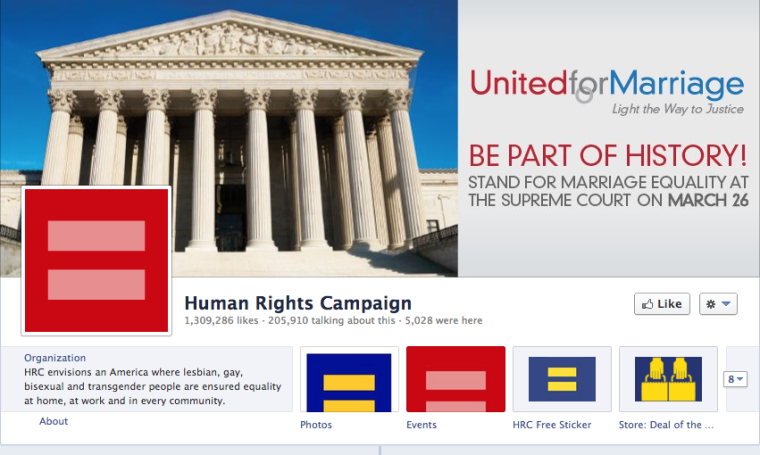
Can journalists change their social media avatars to political symbols?
Nisha Chittal asked a number of journalists (including me) about where they stand for on using same-sex marriage symbols on their social media profiles.
Here’s what she found: “The answer is a multi-layered one: it depends on the journalist, the outlet they work for, the social media platform, and whether the journalist is covering this week’s Supreme Court hearings.”
I was honored to see that Nisha gave me the “kicker quote” at the end. If you’d like to weigh in on your stance on this ethical issue, comment away.
Here’s the statement I submitted to her inquiry:
In general, the consensus answer amongst the journalists I respect is that changing your avatar to a symbol like this is not OK, based upon the ethics policies of places like the AP, WSJ, NYT, PBS or NPR.
I think the capacity to demonstrate support for one side of a contentious social issue like this varies, depending upon the masthead a journalist is working under, the ethics policy of that masthead, the role of the journalist and the coverage area of the journalist. Staking out positions on a reporter’s beat is generally frowned upon.
Opinion journalists who regularly take positions on the issues of the day as columnists have often already made it clear where they stand on a policy or law. Advocacy journalism has an established place in the marketplace for ideas. Readers know where a writer stands and are left to judge the strength of an argument and the evidence presented to back it.
If a reporter takes on overt, implicit position on an issue that she is reporting on, however, will it be possible to interview sources who oppose it?
On the other hand, there are a number of social issues that may have had “sides” in past public discourse but have now become viewpoints that few journalists would find tenable to support today.
How many journalists were able to remain neutral or objective in their coverage of slavery in the 1860s? Womens’ suffrage in the early 20th century? Civil rights in the 1960s? Child slavery, sex trafficking, so-called “honor rape” or the impression of child soldiers in the present?
Interracial marriage was illegal in some states in the Union, not so many years ago. That is not the case any longer. It seems to me that gay marriage is on the same trajectory. The arc of the moral universe is long indeed, but I tend to agree with Dr. Martin Luther King Jr. on its trajectory: it bends towards justice.
Filed under journalism, social media, technology, Twitter
Hacks at Twitter, New York Times, WSJ and Washington Post highlight need for better security hygiene
Earlier tonight, I received an email I would just as soon not have gotten from Twitter, along with 250,000 Twitter users who had their password reset. Twitter security director Bob Lord explained why I’d received the email on the company blog:
“This week, we detected unusual access patterns that led to us identifying unauthorized access attempts to Twitter user data. We discovered one live attack and were able to shut it down in process moments later. However, our investigation has thus far indicated that the attackers may have had access to limited user information – usernames, email addresses, session tokens and encrypted/salted versions of passwords – for approximately 250,000 users.”
Mike Isaac has been following the story the hack at Twitter at AllThingsD, if you want the latest news tonight.
After the password reset, I went through revoked Twitter authorization access to a number of unused apps, something I’ve been doing periodically for years now. That habit is among Twitter’s security recommendations.
I’m thinking about other social media accounts now, too. Shortly after Nicole Perloth began covering IT security for the New York Times, she shifted her practices:
“Within weeks, I set up unique, complex passwords for every Web site, enabled two-step authentication for my e-mail accounts, and even covered up my computer’s Web camera with a piece of masking tape — a precaution that invited ridicule from friends and co-workers who suggested it was time to get my head checked.”
She talked to two top-notch security experts and wrote up a useful list of good digital security practices. Unfortunately, it may be that it takes getting hacked and embarrassed (as I was on Twitter, on Christmas Eve a couple years ago) to change what how people approach securing their digital lives.
I don’t recommend that sort of experience to anyone. I was lucky, was tipped nearly right away and was able to quickly get help from the remarkable Del Harvey, head of the Twitter Safety team.
It could have been much, much worse. I’m thinking of Mat Honan, a Wired journalist who experienced an epic hacking that came about through a chain of compromised accounts at Amazon, iTunes, Gmail and Twitter. After a lot of work, Honan managed to recover his data, including some precious pictures of his child. In the wake of the hack, he turned on 2-factor authentication on Google and Facebook, turned off “Find my” Apple device, and set up dedicated, secret accounts for password management. Honan isn’t alone in the tech journalist ranks: he just happens to have a bigger platform than most and was willing to make his own painful experience the subject of an extensive story.
A jarring reality is that even people who are practicing reasonably good security hygiene can and do get p0wned. Unfortunately, the weakest point in many networks are the humans — that’s reportedly how Google ran into trouble, when key employees were “spear phished” during “Operation Aurora,” targeted with social engineering attacks that enabled hackers to access the networks.
The last paragraph of Lord’s post suggests that a similar expertise was at work at Twitter, although he does not specify a source.
“This attack was not the work of amateurs, and we do not believe it was an isolated incident. The attackers were extremely sophisticated, and we believe other companies and organizations have also been recently similarly attacked. For that reason we felt that it was important to publicize this attack while we still gather information, and we are helping government and federal law enforcement in their effort to find and prosecute these attackers to make the Internet safer for all users.”
It’s been true for a decade but it’s even clearer in the second month of 2013: practicing basic information security hygiene is now a baseline for anyone else online, particularly those entrusted with handling confidential sources or sensitive information.
Chris Soghoian was clear about the importance of journalists and media companies getting smarter about keeping sources and information safe in 2011. Tonight, I am not sanguine about how much has changed since in the news industry and beyond.
Two days ago, the New York Times disclosed that hackers had infiltrated …the New York Times. The next day, The Wall Street Journal has disclosed similar intrusions. Earlier today, Brian Krebs reported that the Washington Post was broadly infiltrated by Chinese hackers in 2012. The Post confirmed the broad outlines of an attack on its computers.
If you’re a journalist & you’re not using a password manager+unique, long random passwords per website: stop, install and configure one now.
— Christopher Soghoian (@csoghoian) February 2, 2013
If you have a moment this weekend, think through how you’re securing your devices, networks and information. If you use Twitter, visit Twitter.com and update your password. If you haven’t turned on 2-factor authentication for Facebook and Gmail, do so. Update your Web browser and use HTTPS to connect to websites. disable Java in your Web browser. Think through what would happen if you were hacked, in terms of what numbers you would call and where and how your data is backed up. Come up with tough passwords that aren’t easily subject to automated cracking software.
And then hope that researchers figure out a better way to handle authentication for all of the places that require a string of characters we struggle to remember and protect.
Filed under journalism, security
I Heard It Through The App Vine
After surfing around a bit tonight, I’m not sure yet whether the new Vine App will be to video what Instagram is for pictures. (Vine went live last Friday, when I was on vacation in Anguilla.) The amount of buzz I’ve found upon returning from vacation suggests at least a few of the people I follow and read think it’s possible.
It sounds like the initial launch was a bit buggy for some users, though I had no issues when I downloaded and installed Vine tonight. I found it quite easy to join, find friends from Twitter and my address book (if not Facebook) and then to create and share a 6 second spot using the app, which I promptly deleted.
Vine is Twitter’s first standalone app, like Facebook’s Poke or Messenger. As is the case with tweets, vines have their own permalink and play in embedded tweets, like Twitter CEO Dick Costolo’s tweet that shows how to make steak tartare:
Steak tartare in six seconds. vine.co/v/bOIqn6rLeIDvia @dhof
— dick costolo (@dickc) January 23, 2013
A mobile social network that’s built around mobile sharing of videos from iOS devices and integrated into other media, particularly tweets and blog posts, could have legs online — along with many other body parts. Tonight, posts on multiple outlets suggested that Vine has a “porn problem.”
I’m not sure if this revelation will not shock many long-time observers of people’s behavior online, when faced with webcams. Exhibit A: Chatroulette. I instantly thought of Avenue Q’s classic assessment of what the Internet is for.
So Vine now has porn on it. As someone once said, “porn is the mic check of the Internet. If you’re not getting porn, it’s not working.”
— jonathanstray (@jonathanstray) January 28, 2013
(With a little help from Twitter, I was able to source the quote to Ethan Zuckerman’s 2008 talk at ETech on the cute cat theory.)
I tend to agree with Joshua Topolsky’s assessment at The Verge: it’s Apple that has the porn problem, not Twitter or Vine. We’ll see how Apple responds. Steve Jobs was clear in 2010 when he wrote that Apple has a “moral responsibility to keep porn off the iPhone.” Apple does not, however, censor the websites or, critically, user-generated content (UGC) on them when users access them through the Safari mobile Web browser. Treating UGC platforms like Flickr, YouTube, Facebook, Instagram, Twitter, Google+ like Web browsers might make more sense to users. (I don’t know how that approach would sit in Cupertino or the Federal Trade Commission.)
Regardless of the larger issues surrounding Apple’s policies as a powerful gatekeeper for app makers, parents take note: letting young children search raw Twitter feeds or Vine apps for #porn is going to turn up media that’s NSFW, much less NSFK(ids).
While there’s certainly porn to be found, I didn’t see any when I watched the automagically randomized selection of vines at Vinepeek, which I found thanks to a tweet from Mitch Kapor. Despite inevitable flashes of crudity and banality, I found many of these glimpses of shared humanity endearing, just as YouTube can be at its best.
There are many other ways Vine can be used for business or other less salacious purposes, however, as Chris Brogan pointed out on Friday. Given my interest in cooking, I think creative spots that show how to make different recipes, like the one Costolo filmed, could be particularly interesting. While there are plenty of possibilities for media creation, for I’m not sure whether journalists will wholeheartedly move to quickly adopt Vine professionally, although there were certainly plenty of early adopters on Instagram.
I remember the idea of a social network of video shorts when it first floated to the top of my social stream: it was called Seesmic, and Loic Le Meur shuttered it in 2009. That said, the context for Vine is different, given the tens of millions of iPhones and iPads in people’s hands today.
I think Vine will be worth watching, so to speak. If Vine does catch on, expect “vining” and “vines” to become part of the tech vernacular.
Filed under blogging, journalism, microsharing, movies, photography, social media, technology, Twitter, video
Are online petitions the next step in e-democracy or an e-exercise in futility?
At noon today, I’m going to be on the Kojo Nnamdi Show on WAMU, DC’s local NPR station, to talk about the power of online petitions.
What do you think of them, in general? Have you signed one or more? Why? What outcomes have petitions created at Avaaz or Change.org had? What about White House e-petitions? What about e-petitions in the UK or in other countries? If you have comments on these questions or relevant research, please let me know in the comments or email me at alex [at] oreilly.com.
On one of those counts, I’ve linked up some relevant reading below on the White House e-petitions platform, “We The People,” which has been getting much more mainstream media attention in recent months. (The response to an e-petition to build a Death Star, at least, was epic.)
1. Jim Snider, White House’s ‘We The People’ Petitions Find Mixed Success, NPR’s All Things Considered, January 3, 2013.
2. Micah Sifry: How We The People could help form a more perfect union, TechPresident, 2012
3. Jim Snider: The White House’s We The People Petition Website: First Year Report Card, Huffington Post, September 23, 2012.
4. Jim Snider: The Case of the Missing White House Petitions, Huffington Post, October 31, 2011.
5. Nick Judd: Is the White House doing enough for We The People?, TechPresident, November 2, 2011.
6. Jim Snider: What Is the Democratic Function of the White House’s We The People Petition Website?, Huffington Post, October 20, 2011
7. Jim Snider: The White House’s New We the People Petition Website, Huffington Post, October 31, 2011
8. Alex Howard: White House launches e-petitions, National Journal, September 10, 2011
Filed under government 2.0, journalism, social media
Why journalists need to pay attention to Google Author Rank in 2013
Remember back in 2011, when Google linked the Google Plus profiles of journalists to Google News, and folks like Emily Bell, Erik Wemple, Amy Gahran, Megan Garber and I had a cross-platform conversation about it? (OK, probably not.) I thought then that Google integrating Plus with journalism online was probably inevitable. Here we are in 2013, where Google’s “Author Rank” is now putting journalists’ faces into search results and linking to their Google+ profiles.
If you focus on online marketing, journalism and SEO — and like it or not, if you publish on the Internet, you need to keep an eye on these areas — this is a noteworthy development. It’s worth taking the time to understand Author Rank, learn how it works, why it matters to SEO, and think about how it might apply to what you do online. To learn more, check out Google’s Authorship page on Plus.
I’m far from the first to point this out. Denis Pinsky wrote in December 2012 that journalists should care about Author Rank a lot more than Amazon sales rank. Megan Garber, who teased apart some of the issues in a November 2011 post on Google+ at the Nieman Lab, noted Google ran a pilot that in the summer of 2011 that put profiles into search engine results. The article that caught my attention yesterday and prompted this post was by Erin Griffith at Pando Daily, who looked at how Author Rank changes marketing and journalism.
As Griffith suggests, the addition of Author Rank is likely related to the quality of search results. By prioritizing posts written by verified authors who have authority in a given topic in search, Google users will be exposed to better results — and posts created by spammers and link factories will be deprecated. Or so the thinking goes.
According to an SEO agency president cited in a PandoDaily article about the shift, “bylined stories rank higher, and they get more real estate. Most importantly, they return clickthrough rates that are 40 percent greater than normal.”
If accurate, that’s quite a carrot for Google to dangle in front of SEO-obsessed media organizations and freelancers alike, which will lead to influence that may well call for renewed caution about the power the search engine giant holds to organize the world’s information. There are reasonable concerns about how Google has proceeded here. For instance, Google could have given journalists the option to link to a profile on another social network, or to a page on their masthead’s website. Instead, Google Plus is being put forward.
The road ahead
Is linking a Google+ profile to search results a negative for journalists? Given what I’ve seen since 2011, on the whole, I still don’t think so. I’m willing to be proven wrong, as always. As I wrote then (self-plagiarism alert!) Edd Dumbill opened my eyes to the transition ahead of us some time ago in his post about why he thinks Google Plus is the social backbone for the Internet.
I highly recommend reading Edd’s post and thinking through what else might be tied together beyond journalists and their articles. It could be connecting people and places. Or teachers to schools, bartenders to pubs, managers to stores. Or other makers or creators, like musicians to tracks, filmmakers to videos, or photographers to their photos. Connecting coders to their code would be a natural fit for Google. Communities could advance those signals.
Facebook has followed much the same sort of thinking in extending the semantics of its social graph within its network — and has more than 1 billion users at present. Given this shift, I have to wonder whether we’ll eventually see the public Facebook profiles of journalists associated with bylines and stories in Bing search results — and how quickly publishers and journalists will move to associate themselves with Google search engine results.
Media now have a clear choice before them: join Plus to connect profiles with their stories or stay out of the social fray. It will be a different decision than joining Twitter or Facebook was in years past, before it was clear to the general public that social networking would not be a passing fad. There will be more pressure for journalists to join Google Plus now, given the rewards in traffic and profile visibility that will accrue to having your face in Google News and search results.
I chose to tie my profile to my bylines in the summer of 2011, in that pilot, so that people looking for information would see my face in search results and connect to me. New readers are now finding me through many social networks (Twitter, Facebook, LinkedIn, Instagram, Pinterest, Tumblr, Plus and others) and search. Given what I do, it made sense for me.
It will likely not be the right choice for investigative journalists who cover organized crime or government corruption, or for those who operate from conflict zones or under autocratic regimes. For many others, however, being “discoverable” to their communities, beats and colleagues on Plus now looks as professionally relevant as participating on Twitter or Facebook.
Filed under article, blogging, journalism, social media, technology
It’s time for a national conversation on gun violence in the United States
“Our hearts are broken today“-President Obama, wiping tears from his eyes this afternoon.
I heard his comments on the radio, driving back to DC. I teared up, too. I’ve been mostly reading and listening today, not writing or reporting. I’m thankful I was not responsible for covering breaking news at a media outlet or on the ground in Connecticut, trying to sift fact from fiction or interview bereaved parents or photograph traumatized children.
I can write now with certainty that 27 people were killed by a gunman in Newtown, Connecticut, including 18 children in an elementary school. It’s one of the worst shootings in our nation’s history.
My Facebook feed is full of people offering prayers, voicing anger and frustration, and, happily sharing pictures of their own children. One of my friends announced the birth of his first child. Amidst grieving, new life and joy.
As the reality of this tragedy settles in, this moment may still be too raw to decide exactly what the way forward should be. In the wake of dozens of mass shootings in the past several years, there’s more interest in doing something to prevent them.
What, exactly, we should do to prevent more mass killings should be up for debate, but losing 18 children like this is unbearable. What science says about gun control and killings is not clear, though the literature should inform the debate.
If today is not the time to have that national conversation, many people would like to know when. A new White House epetition asks the President to set a time and place to debate gun policy. Another asks the White House to immediately address gun control through legislation*. As difficult as it may be to navigate the politics of gun control and the 2nd Amendment, that time may have come. That conversation should be balanced by one about mass shootings and mental illness, which is the other significant factor in these events.
In his remarks this afternoon, laden with the emotion that so many of his fellow citizens were feeling, President Obama said that “…we’re going to have to come together to prevent meaningful action to prevent more tragedies like this, regardless of the politics.”
As a country, we need to be able to have a national conversation about what to do next that does not vilify those on the other side of the debate.
I hope our Congress, our Supreme Court, our President and my fellow citizens are ready to work towards preventing more days like today in the year ahead.
The White House epetition to introduce legislation on gun control gained more than 197,000 signatures since its introduction. It was one of the fastest growing White House epetitions to date. By the end of the weekend, it became the most popular epetition in the nation’s history. (Another epetition subsequently passed it in popularly.)
On the evening of December 20, President Obama responded to 32 different epetitions related to gun violence in a video posted on YouTube. It was the first direct response to a White House epetition by a President of the United States.
Earlier in the day, Vice President Joe Biden held the first meeting of a task force formed by the White House to look for ways to reduce gun violence in schools. On December 21st, the National Rifle Association called for armed guards in schools to deter violence.
Filed under journalism, personal, research, video
Revisiting standards for moderation and community on social networks
If the Internet and social media represent the new public square, it’s important to talk about the rules of the road.
Over the past year, I’ve seen a lot of spam and pornography links on Google+, Facebook, Twitter and on comment sections of the blogs I maintain.
Google and Facebook both give us the ability to moderate comments and, if we wish, to block other people who do not respect the opinions or character of others.
Now that a lot more people are circling me on Google+, following me on Twitter and subscribing to me on Facebook, it’s time to revisit a post from earlier this years. If you have found your comment removed, I’d like to explain why and offer some guidelines. Here’s how I think about maintaining community, with a nod to ASU journalism professor Dan Gillmor‘s example:
I can and do block spammers and people posting links to pornography in my comment threads.
I generally leave comments on my blogs, precisely because I value conversations, despite the issues that persist online. I have been moderating discussion in online forums and blogs for many years, including those of my publishers. My full thoughts on the value of blog comments — and the social norms that I expect people comments to live within — are here.
Vilely insulting me won’t help your case. Insulting others will ruin it. I was a teacher in my twenties. I would not tolerate disrespectful behavior in my classroom, either to me or to other students. If you can’t be civil and continue to insult others, much less the person hosting the forum, you were asked to leave and see the principal.
If the behavior persists, you will lose the privilege of participating in the class at all. Eventually, you get expelled. On Google+ or blogs, that takes the form of being defriended, banned or blocked from my public updates. I prefer not to block users but I will do so. I respect your right to speak freely on your own blog, Twitter, Facebook or Google+ account, whether that involves cursing or ignorance.
I strongly believe in the First Amendment, with respect to government not censoring citizens. That said, I do not, however, feel obligated to host such speech on my own blog, particularly if it is directed towards other commenters. I believe that building and maintaining healthy communities, online of offline, requires that the people hosting them enforce standards for participation that encourage civil dialogue.
I hope that makes sense to readers. If not, you are welcome to let me know why in the comments. And if your approach differs, please explain how and why.
Following is a storify from a forum I participated in that featured perspectives from other people entrusted with online community moderation:
[View the story “A story of online community, comments and moderation” on Storify]
Filed under blogging, journalism, microsharing, social bookmarking, social media, technology, Twitter


Want good online comments? Create communities and moderate them.
I’ve been clear about why I value blog comments before. If you’ve spent any time online, however, you know how bad many comment sections are. Why is that the case? Read Bora Zivkovic on commenting threads, in easily one of the best posts on the topic that I’ve ever read. It’s a long post, but it’s well worth your time. Zivkovic links to a forthcoming paper [PDF] that anyone in charge of comments should read, regarding how the tone of comments affects readers.The short version is that unmoderated, acidic comment sections polarizes readers and can lead them to believe in science less.
I discovered the post through NYT Journalism professor Jay Rosen, when he tweeted it:
Zivkovic, who is the blogs editor at the Scientific American, did nail it. I guessed that the answer to Rosen’s tweet was a lack of active participation by a moderator/author, and that’s more or less what I took away from this post. (I suspect he may have been directing his tweet at journalists who don’t — or can’t — spend the time moderating blog posts and social media profiles, along with the editors and publishers who employ them.) Rosen explained more about why he thought the post was important on a public post on his Facebook profile:
I think good comments require persistent identity (not “real” identity), moderation tools and active moderation. Without that mix, you get the toxic stew that is pervasive across far too many forums online.
Agree? Disagree? Hey, let me know in the comments!
1 Comment
Filed under blogging, journalism, social media, Twitter
Tagged as blogging, comments, community managment, journalism, online community